

Categories
- Antiques & Collectibles 13
- Architecture 36
- Art 48
- Bibles 22
- Biography & Autobiography 815
- Body, Mind & Spirit 144
- Business & Economics 28
- Children's Books 15
- Children's Fiction 11
- Computers 4
- Cooking 94
- Crafts & Hobbies 4
- Drama 346
- Education 62
- Family & Relationships 59
- Fiction 11836
- Foreign Language Study 1
- Games 19
- Gardening 17
- Health & Fitness 34
- History 1378
- House & Home 1
- Humor 147
- Juvenile Fiction 1873
- Juvenile Nonfiction 202
- Language Arts & Disciplines 89
- Law 16
- Literary Collections 686
- Literary Criticism 179
- Mathematics 13
- Medical 41
- Music 40
- Nature 180
- Non-Classifiable 1768
- Performing Arts 7
- Periodicals 1453
- Philosophy 65
- Photography 2
- Poetry 896
- Political Science 203
- Psychology 44
- Reference 154
- Religion 515
- Science 127
- Self-Help 85
- Social Science 83
- Sports & Recreation 34
- Study Aids 3
- Technology & Engineering 60
- Transportation 23
- Travel 463
- True Crime 29
Honore de Balzac
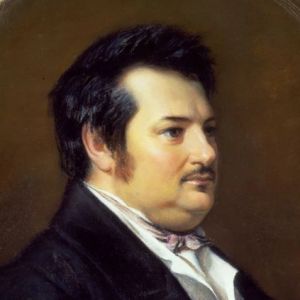
Honoré de Balzac was a prominent French novelist and playwright known for his extensive and detailed depiction of society in early 19th-century France. He is best known for "La Comédie Humaine," a series of over 90 interlinked novels and stories that explore a wide range of characters and social classes. Balzac's keen observations and complex characters significantly influenced the development of realism in literature.
Author's Books:
Sort by:

by:
Honore de Balzac
A DRAMA ON THE SEASHORE Nearly all young men have a compass with which they delight in measuring the future. When their will is equal to the breadth of the angle at which they open it the world is theirs. But this phenomenon of the inner life takes place only at a certain age. That age, which for all men lies between twenty-two and twenty-eight, is the period of great thoughts, of fresh conceptions,...
more...

by:
Honore de Balzac
CHAPTER I. EXPOSITION Notwithstanding the discipline which Marechal Suchet had introduced into his army corps, he was unable to prevent a short period of trouble and disorder at the taking of Tarragona. According to certain fair-minded military men, this intoxication of victory bore a striking resemblance to pillage, though the marechal promptly suppressed it. Order being re-established, each regiment...
more...

by:
Honore de Balzac
INTRODUCTION There is a general cry of paradox when scholars, struck by some historical error, attempt to correct it; but, for whoever studies modern history to its depths, it is plain that historians are privileged liars, who lend their pen to popular beliefs precisely as the newspapers of the day, or most of them, express the opinions of their readers. Historical independence has shown itself much...
more...

by:
Honore de Balzac
I In September, 1835, one of the richest heiresses of the faubourg Saint-Germain, Mademoiselle du Rouvre, the only daughter of the Marquis du Rouvre, married Comte Adam Mitgislas Laginski, a young Polish exile. We ask permission to write these Polish names as they are pronounced, to spare our readers the aspect of the fortifications of consonants by which the Slave language protects its...
more...

by:
Honore de Balzac
PIERRE GRASSOU Whenever you have gone to take a serious look at the exhibition of works of sculpture and painting, such as it has been since the revolution of 1830, have you not been seized by a sense of uneasiness, weariness, sadness, at the sight of those long and over-crowded galleries? Since 1830, the true Salon no longer exists. The Louvre has again been taken by assault,—this time by a populace...
more...

by:
Honore de Balzac
During winter nights noise never ceases in the Rue Saint-Honore except for a short interval. Kitchen-gardeners carrying their produce to market continue the stir of carriages returning from theatres and balls. Near the middle of this sustained pause in the grand symphony of Parisian uproar, which occurs about one o'clock in the morning, the wife of Monsieur Cesar Birotteau, a perfumer established...
more...

by:
Honore de Balzac
CHAPTER I. THE CHATEAU Les Aigues, August 6, 1823. To Monsieur Nathan, My dear Nathan,—You, who provide the public with such delightful dreams through the magic of your imagination, are now to follow me while I make you dream a dream of truth. You shall then tell me whether the present century is likely to bequeath such dreams to the Nathans and the Blondets of the year 1923; you shall estimate the...
more...

by:
Honore de Balzac
INTRODUCTION La Cousine Bette was perhaps the last really great thing that Balzac did—for Le Cousin Pons, which now follows it, was actually written before—and it is beyond all question one of the very greatest of his works. It was written at the highest possible pressure, and (contrary to the author's more usual system) in parts, without even seeing a proof, for the Constitutionnel in the...
more...

by:
Honore de Balzac
I. THE LORRAINS At the dawn of an October day in 1827 a young fellow about sixteen years of age, whose clothing proclaimed what modern phraseology so insolently calls a proletary, was standing in a small square of Lower Provins. At that early hour he could examine without being observed the various houses surrounding the open space, which was oblong in form. The mills along the river were already...
more...

by:
Honore de Balzac
CHAPTER I. DEPARTING PARIS The tourniquet Saint-Jean, the narrow passage entered through a turnstile, a description of which was said to be so wearisome in the study entitled "A Double Life" (Scenes from Private Life), that naive relic of old Paris, has at the present moment no existence except in our said typography. The building of the Hotel-de-Ville, such as we now see it, swept away a whole...
more...