Categories
- Antiques & Collectibles 13
- Architecture 36
- Art 48
- Bibles 22
- Biography & Autobiography 816
- Body, Mind & Spirit 145
- Business & Economics 32
- Children's Books 15
- Children's Fiction 13
- Computers 4
- Cooking 94
- Crafts & Hobbies 4
- Drama 346
- Education 69
- Family & Relationships 62
- Fiction 11845
- Foreign Language Study 2
- Games 19
- Gardening 17
- Health & Fitness 36
- History 1383
- House & Home 1
- Humor 147
- Juvenile Fiction 1884
- Juvenile Nonfiction 202
- Language Arts & Disciplines 89
- Law 16
- Literary Collections 687
- Literary Criticism 180
- Mathematics 13
- Medical 43
- Music 40
- Nature 181
- Non-Classifiable 1768
- Performing Arts 7
- Periodicals 1453
- Philosophy 65
- Photography 2
- Poetry 898
- Political Science 208
- Psychology 44
- Reference 154
- Religion 516
- Science 128
- Self-Help 89
- Social Science 84
- Sports & Recreation 34
- Study Aids 3
- Technology & Engineering 60
- Transportation 23
- Travel 463
- True Crime 29
Our website is made possible by displaying online advertisements to our visitors.
Please consider supporting us by disabling your ad blocker.
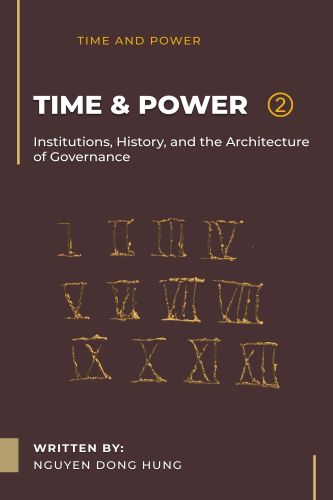
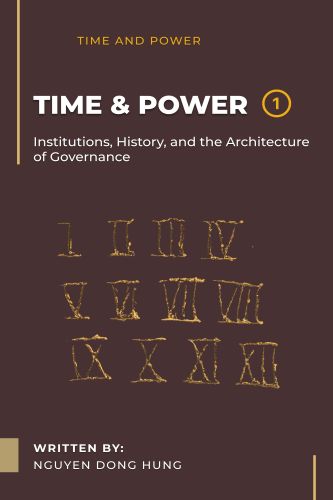
Times and Power I
by: Nguyễn Đông Hưng
Categories:
Download options:
-

1.43 MB
Description:
Why do some political systems endure for centuries while others collapse despite their apparent strength? What makes authority legitimate? And why does holding power not always mean being able to exercise it?
In Times and Power, Vietnamese physician and author Nguyen Dong Hung explores these enduring questions through an inquiry into political philosophy, historical change, human nature, and the institutions that shape collective life.
Drawing upon classical and modern political thought, the book examines power not merely as the ability to command or coerce, but as a complex relationship shaped by knowledge, social structures, economic interests, legitimacy, and historical circumstances.
Across four interconnected parts and sixteen chapters, the author traces the origins and changing forms of power: from early human communities and the emergence of the state to the development of bureaucracies, political elites, organizational hierarchies, and modern systems of governance.
Engaging with the ideas of Aristotle, Machiavelli, Thomas Hobbes, John Locke, Jean-Jacques Rousseau, Karl Marx, Friedrich Engels, Max Weber, Robert Michels, and other influential thinkers, the work considers how different intellectual traditions have understood political authority, obedience, social order, and institutional change.
Particular attention is given to the distinction between formal authority and actual influence. Why can individuals without official positions shape important decisions? How do organizations concentrate power? What enables institutions to preserve legitimacy, adapt to changing circumstances, and remain accountable to the societies they serve?
The final part turns toward political judgment and leadership, examining strategic choice, compromise, talent management, institutional responsibility, and decision-making under uncertainty.
Approaching history with the analytical curiosity of a physician, Nguyen Dong Hung emphasizes the importance of evidence, intellectual humility, and the recognition that complex political outcomes rarely arise from a single cause.
Rather than offering a manual for acquiring power or a collection of political formulas, Times and Power invites readers to examine how power is created, exercised, justified, constrained, and transformed throughout history.
Written for readers interested in political science, political philosophy, world history, leadership, governance, and the history of ideas, this book offers a reflective exploration of the relationship between human agency, institutions, and the forces of historical change.
Ultimately, it asks a question that reaches beyond rulers and governments: not simply who holds power, but how power shapes human life and how it might be exercised with greater responsibility.