

Categories
- Antiques & Collectibles 13
- Architecture 36
- Art 48
- Bibles 22
- Biography & Autobiography 816
- Body, Mind & Spirit 145
- Business & Economics 30
- Children's Books 15
- Children's Fiction 12
- Computers 4
- Cooking 94
- Crafts & Hobbies 4
- Drama 346
- Education 64
- Family & Relationships 59
- Fiction 11841
- Foreign Language Study 2
- Games 19
- Gardening 17
- Health & Fitness 35
- History 1383
- House & Home 1
- Humor 147
- Juvenile Fiction 1884
- Juvenile Nonfiction 202
- Language Arts & Disciplines 89
- Law 16
- Literary Collections 687
- Literary Criticism 179
- Mathematics 13
- Medical 43
- Music 40
- Nature 181
- Non-Classifiable 1768
- Performing Arts 7
- Periodicals 1453
- Philosophy 65
- Photography 2
- Poetry 897
- Political Science 205
- Psychology 44
- Reference 154
- Religion 516
- Science 128
- Self-Help 87
- Social Science 83
- Sports & Recreation 34
- Study Aids 3
- Technology & Engineering 60
- Transportation 23
- Travel 463
- True Crime 29
John Morley
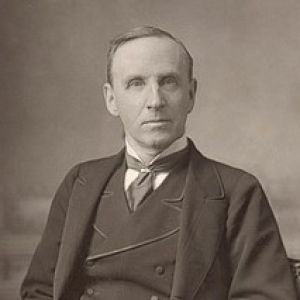
John Morley (1838-1923) was a British Liberal statesman, writer, and editor renowned for his contributions to politics and literature. He served as the Chief Secretary for Ireland and Secretary of State for India, advocating for Home Rule and liberal reforms. Morley is also remembered for his biographical works on influential figures like Edmund Burke and Voltaire, reflecting his deep engagement with historical and philosophical subjects.
Author's Books:
Sort by:
by:
John Morley
THE EXPANSION OF ENGLAND. 'There is a vulgar view of politics which sinks them into a mere struggle of interests and parties, and there is a foppish kind of history which aims only at literary display, which produces delightful books hovering between poetry and prose. These perversions, according to me, come from an unnatural divorce between two subjects which belong to one another. Politics are...
more...
by:
John Morley
BYRON. It is one of the singular facts in the history of literature, that the most rootedly conservative country in Europe should have produced the poet of the Revolution. Nowhere is the antipathy to principles and ideas so profound, nor the addiction to moderate compromise so inveterate, nor the reluctance to advance away from the past so unconquerable, as in England; and nowhere in England is there...
more...
by:
John Morley
I ON PRESENTING THE INDIAN BUDGET (HOUSE OF COMMONS. JUNE 6, 1907) I am afraid I shall have to ask the House for rather a large draft upon its indulgence. The Indian Secretary is like the aloe, that blooms once in 100 years: he only troubles the House with speeches of his own once in twelve months. There are several topics which the House will expect me to say something about, and of these are two or...
more...
by:
John Morley
THE DEATH OF MR. MILL. (May 1873.) The tragic commonplaces of the grave sound a fuller note as we mourn for one of the greater among the servants of humanity. A strong and pure light is gone out, the radiance of a clear vision and a beneficent purpose. One of those high and most worthy spirits who arise from time to time to stir their generation with new mental impulses in the deeper things, has...
more...

by:
John Morley
CHAPTER I.OTHER DIALOGUES. We may now pass to performances that are nearer to the accepted surface of things. A short but charming example of Diderot’s taste for putting questions of morals in an interesting way, is found in the Conversation of a Father with his Children (published in 1773). This little dialogue is perfect in the simple realism of its form. Its subject is the peril of setting one’s...
more...
by:
John Morley
ON PATTISON'S MEMOIRS. To reckon the subject of this volume among leading minds who have stamped a deep influence on our generation, is not possible even to the friendliest partiality. That was not his position, and nobody could be less likely than he would himself have been to claim it. Pattison started no new problem. His name is associated with no fertile speculation, and with no work of the...
more...
by:
John Morley
I. Anne-Robert-Jacques Turgot was born in Paris on the 10th of May 1727. He died in 1781. His life covered rather more than half a century, extending, if we may put it a little roughly, over the middle fifty years of the eighteenth century. This middle period marks the exact date of the decisive and immediate preparation for the Revolution. At its beginning neither the intellectual nor the social...
more...
by:
John Morley
W. R. GREG: A SKETCH. It is perhaps a little hard to undertake to write about the personality of a thinker whose ideas one does not share, and whose reading of the events and tendencies of our time was in most respects directly opposite to one's own. But literature is neutral ground. Character is more than opinion. Here we may forget the loud cries and sounding strokes, the watchwords and the...
more...
by:
John Morley
HARRIET MARTINEAU. In 1850 Charlotte Brontë paid a visit to Harriet Martineau at Ambleside, and she wrote to her friends various emphatic accounts of her hostess. 'Without adopting her theories,' Miss Brontë said, 'I yet find a worth and greatness in herself, and a consistency, benevolence, perseverance in her practice, such as wins the sincerest esteem and affection. She is not a...
more...
by:
John Morley
The proceedings which have now been brought satisfactorily to an end are of a kind which nobody who has sensibility as well as sense can take a part in without some emotion. An illustrious French philosopher who happened to be an examiner of candidates for admission to the Polytechnic School, once confessed that, when a youth came before him eager to do his best, competently taught, and of an apt...
more...