

Categories
- Antiques & Collectibles 13
- Architecture 36
- Art 48
- Bibles 22
- Biography & Autobiography 815
- Body, Mind & Spirit 144
- Business & Economics 28
- Children's Books 15
- Children's Fiction 12
- Computers 4
- Cooking 94
- Crafts & Hobbies 4
- Drama 346
- Education 63
- Family & Relationships 59
- Fiction 11839
- Foreign Language Study 1
- Games 19
- Gardening 17
- Health & Fitness 35
- History 1382
- House & Home 1
- Humor 147
- Juvenile Fiction 1873
- Juvenile Nonfiction 202
- Language Arts & Disciplines 89
- Law 16
- Literary Collections 687
- Literary Criticism 179
- Mathematics 13
- Medical 43
- Music 40
- Nature 181
- Non-Classifiable 1768
- Performing Arts 7
- Periodicals 1453
- Philosophy 65
- Photography 2
- Poetry 897
- Political Science 205
- Psychology 44
- Reference 154
- Religion 516
- Science 128
- Self-Help 86
- Social Science 83
- Sports & Recreation 34
- Study Aids 3
- Technology & Engineering 60
- Transportation 23
- Travel 463
- True Crime 29
Edward Bulwer Lytton Lytton
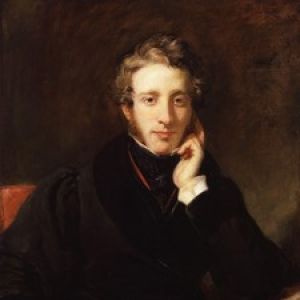
Edward Bulwer Lytton (1803–1873) was a prominent English writer, politician, and playwright, known for his prolific output in various literary genres. He authored the famous opening line "It was a dark and stormy night" in his novel "Paul Clifford" (1830) and popularized phrases such as "the pen is mightier than the sword." Lytton also served in the British Parliament and held the title of 1st Baron Lytton, significantly influencing Victorian literature and politics.
Author's Books:
Sort by:

INTRODUCTION. One of the peculiarities of Bulwer was his passion for occult studies. They had a charm for him early in life, and he pursued them with the earnestness which characterised his pursuit of other studies. He became absorbed in wizard lore; he equipped himself with magical implements,—with rods for transmitting influence, and crystal balls in which to discern coming scenes and persons; and...
more...
CHAPTER I. I'll tell you a story if you please to attend. G. KNIGHT:Limbo. It was the evening of a soft, warm day in the May of 17—. The sun had already set, and the twilight was gathering slowly over the large, still masses of wood which lay on either side of one of those green lanes so peculiar to England. Here and there, the outline of the trees irregularly shrunk back from the road, leaving...
more...
CHAPTER I. "The knight of arts and industry, And his achievements fair." THOMSON'S Castle of Indolence: Explanatory Verse to Canto II. In a popular and respectable, but not very fashionable quartier in Paris, and in the tolerably broad and effective locale of the Rue ——, there might be seen, at the time I now treat of,...
more...

CHAPTER I. Ou peut-on etre mieux qu'au sein de sa famille?—French Song. [Where can on be better than in the bosom of one's family?] I am an only child. My father was the younger son of one of our oldest earls; my mother the dowerless daughter of a Scotch peer. Mr. Pelham was a moderate whig, and gave sumptuous dinners; Lady Frances was a woman of taste, and particularly fond of diamonds and...
more...

CHAPTER XVII. When the scenes in some long diorama pass solemnly before us, there is sometimes one solitary object, contrasting, perhaps, the view of stately cities or the march of a mighty river, that halts on the eye for a moment, and then glides away, leaving on the mind a strange, comfortless, undefined impression. Why was the object presented to us? In itself it seemed comparatively insignificant....
more...
CHAPTER I. ABROAD uneasy, nor content at home. . . . . . . And Wisdom shows the ill without the cure. HAMMOND: Elegies. TWO or three days after the interview between Lord Vargrave and Maltravers, the solitude of Burleigh was relieved by the arrival of Mr. Cleveland. The good old gentleman, when free from attacks of the gout, which were now somewhat more frequent than formerly, was the...
more...

CHAPTER I. In the gardens at Naples, one summer evening in the last century, some four or five gentlemen were seated under a tree drinking their sherbet and listening, in the intervals of conversation, to the music which enlivened that gay and favorite resort of an indolent population. One of this little party was a young Englishman who had been the life of the whole group, but who for the last few...
more...

BOOK I.FROM ERASMUS FALKLAND, ESQ., TO THE HON. FREDERICK MONKTON.L—-, May —, 1822. You are mistaken, my dear Monkton! Your description of the gaiety of "the season" gives me no emotion. You speak of pleasure; I remember no labour so wearisome; you enlarge upon its changes; no sameness appears to me so monotonous. Keep, then, your pity for those who require it. From the height of my...
more...

CHAPTER I. Who art thou, fair one, who usurp'st the place Of Blanch, the lady of the matchless grace?—LAMB. IT was towards the evening of a day in early April that two ladies were seated by the open windows of a cottage in Devonshire. The lawn before them was gay with evergreens, relieved by the first few flowers and fresh turf of the reviving spring; and at a distance, through an opening...
more...

"The lopped tree in time may grow again, Most naked plants renew both fruit and flower; The sorriest wight may find release from pain, The driest soil suck in some moistening shower: Time goes by turns, and...
more...