Categories
- Antiques & Collectibles 13
- Architecture 36
- Art 48
- Bibles 22
- Biography & Autobiography 816
- Body, Mind & Spirit 145
- Business & Economics 30
- Children's Books 15
- Children's Fiction 12
- Computers 4
- Cooking 94
- Crafts & Hobbies 4
- Drama 346
- Education 64
- Family & Relationships 59
- Fiction 11841
- Foreign Language Study 2
- Games 19
- Gardening 17
- Health & Fitness 35
- History 1383
- House & Home 1
- Humor 147
- Juvenile Fiction 1884
- Juvenile Nonfiction 202
- Language Arts & Disciplines 89
- Law 16
- Literary Collections 687
- Literary Criticism 179
- Mathematics 13
- Medical 43
- Music 40
- Nature 181
- Non-Classifiable 1768
- Performing Arts 7
- Periodicals 1453
- Philosophy 65
- Photography 2
- Poetry 897
- Political Science 205
- Psychology 44
- Reference 154
- Religion 516
- Science 128
- Self-Help 87
- Social Science 83
- Sports & Recreation 34
- Study Aids 3
- Technology & Engineering 60
- Transportation 23
- Travel 463
- True Crime 29
Our website is made possible by displaying online advertisements to our visitors.
Please consider supporting us by disabling your ad blocker.
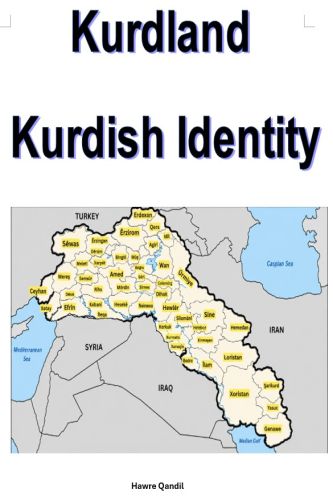
Kurdland Kurdish Identity
by: Hawre Qandil
Categories:
Download options:
-

7.00 MB
Description:
The question of the Kurdish people has existed for centuries, regarded with utmost seriousness and orderliness by the Kurds themselves. Armed occupiers have repeatedly invaded Kurdistan, forcing the Kurds to take up arms in self-defense. The enemies have refused to recognize the Kurds’ very existence, seeking through pressure and massacre to erase their identity and even their name from history. Kurdistan has been partitioned among six brutal occupiers, not merely colonized but subjected to the suppression of its very sense of nationhood—so much so that this national consciousness has been deeply wounded and, in many cases, severed altogether.
Though historically the Kurds have been peace-seeking and have often sought reconciliation—even making concessions to the occupiers of their land—the enemies have never accepted the Kurds’ existence, portraying them to neighboring peoples and to the world as a nuisance and an obstacle.
Another cause of the Kurds’ statelessness lies in the entrenched individualism that has taken root in the political thought of Kurdistan. Power has frequently fallen into the hands of a single dominant force, and whoever held it ruled autocratically. When one faction became stronger than another, it imposed itself, even within its own ranks. This individualism and clannishness have dealt the greatest blow to the sovereignty of Kurdistan, for Kurdish society has not yet evolved into a unified nation but has remained fragmented at the level of clans and loose associations.
Only when the Kurds, and the various peoples of Kurdistan, consciously and wisely recognize their collective national rights will they be able to reassert their national identity. It is for this purpose—and in order to contribute to the solution of this great national question—that I felt compelled to write The Kurdland Kurdish Identity and to lay its foundations firmly on the bedrock of a free Kurdistan.
It must be emphasized that Kurdish history is exceedingly ancient, and writing about it in all its dimensions is no simple task. Throughout history, whenever occupiers attacked Kurdistan, they plundered its resources, killed its scholars, and burned its historical writings. They stole Kurdish science and heritage whenever possible. For instance, during the era of Arab cultural imposition—carried out under the banner of spreading Islam—the Arab armies burned the libraries of Kurdistan, branding them as “infidel libraries,” and looted the people’s wealth. In the Samanid period, Persian-Tajik rulers standardized their own language by borrowing heavily from the rich Kurdish tongue, meanwhile forcing Kurdish to become a dialect of Persian. The Seljuk Turks and Mongols brought even greater calamities upon the Kurdish people—not only banning their language but also constructing a Turkic identity over the Kurdish nation. At the same time, all the sophisticated elements of Kurdish science and culture—music, cuisine, art—were claimed as part of Turkic civilization, while everything considered negative, primitive, or “barbaric” was ascribed to the Kurds.
It is important to recognize that empires and despots never observed any principle when it came to occupying Kurdistan; rather, they massacred Kurds whenever they could and deliberately distorted or erased their historical sources. During the centuries of occupation, pillage, and the systematic denial of Kurdish identity, the occupiers never granted the Kurds the right to write their own history. Therefore, modern methodology must not restrict itself when recounting Kurdish history, for the ruling powers of the region—even in the 21st century—have yet to honor the most basic human principles when it comes to acknowledging Kurdish nationhood.
This book is the result of two decades of meticulous research. It sheds light on several key events in the history of Kurdistan. Throughout this investigation, no side has been elevated or diminished; the facts of Kurdish history have been written with care and sincerity, for only by telling the truth can errors be addressed.
This work has cost me hundreds of sleepless nights and immense effort. I have met with hundreds of well-known and unknown Kurdish personalities and Kurd-friends, questioning them repeatedly on every topic and refusing to settle until I was convinced of the truth of each event. I even collected information in secrecy when necessary. My journey stretched from the Kurdish tribes of Quchan to Lachin, Aleppo, Qamishlo, Damascus, Istanbul, Diyarbakir, Siirt, Dersim, Van, Bazid, Cizre, Zakho, Duhok, Kirkuk, Khanaqin, Halabja, Qaladze, Qandil, Sulaymaniyah, Erbil, Sardasht, Sanandaj, Saqqez, Mahabad, Bokan, Mariwan, Baneh, Urmia, Khana, Salmas, Kermanshah, Ilam, and beyond—to Lebanon, Cairo, New York, Stockholm, Cologne, Lausanne, Luxembourg, Brussels, Rome, Paris, London, Edinburgh, Sydney, Israel, and hundreds of other towns and villages across the globe—so that I could gather knowledge and document it with the hope that Kurds, like other nations, might take pride in their history and identity.
For security reasons, the names and exact locations of the individuals I met are not mentioned here; only in the final section of this book do I reference a selection of the sources consulted. In my view, strict adherence to every detail of academic methodology would risk alienating the ordinary Kurdish reader, many of whom are not accustomed to academic works and might be discouraged from reading altogether.
A significant portion of ancient Kurdish history has been preserved by patriotic individuals, passed down from generation to generation. After extensive research, I became convinced that this heritage is priceless and worthy of preservation—so that both the present generation and future generations may take pride in it.
I have not hesitated to expose those pseudo-historians who fabricate lies and distort history, portraying falsehood as truth. These are not genuine authors but mere scribes of deception. Their aim is to erase identity, and even if a thousand years were to pass, they would still misrepresent history as the Pharaohs once did. I believe that one day, humanity will feel ashamed to say that it bowed to the false idols of religion, sectarianism, false democracy, and hollow ideologies such as communism or socialism. In reality, most of these movements were the handiwork of conscienceless opportunists.
True self-recognition and the struggle to attain a national identity for Kurdistan are, in my view, far more sacred than any scriptural reference or manifesto of philosophers such as Marx, Engels, or Darwin. Every Kurd must therefore learn the science of Kurdish identity and defend it against religious dogma, factionalism, and narrow self-interest.
I hope that this knowledge will become a source of inner reconciliation for the Kurdish people and a step toward enabling the long-oppressed Kurdish nation to finally achieve its rightful and universal human rights.
This book is written in the language of everyday life in Kurdistan, using clear and accessible wording, so that every reader can fully grasp its meaning.