

History
- Africa 30
- Americas (North Central South West Indies) 50
- Ancient
- Asia 58
- Australia & New Zealand 8
- Canada 41
- Caribbean & West Indies 1
- Civilization 20
- Eastern Europe 12
- Europe 311
- Expeditions & Discoveries 60
- General 79
- Historical Geography 1
- Jewish 9
- Latin America 3
- Medieval 8
- Middle East 14
- Military 248
- Revolutionary 8
- Social History 1
- Study & Teaching 5
- United States 353
- Western Europe 56
- World 13
Ancient Books
Sort by:
by:
H. B. Dewing
INTRODUCTION Procopius is known to posterity as the historian of the eventful reign of Justinian (527-565 A.D.), and the chronicler of the great deeds of the general Belisarius. He was born late in the fifth century in the city of Caesarea in Palestine. As to his education and early years we are not informed, but we know that he studied to fit himself for the legal profession. He came as a young man to...
more...
CHAPTER I—SENNACHERIB (705-681 B.C.) The struggle of Sennacherib with Judæa and Egypt—Destruction of Babylon. Sennacherib either failed to inherit his father's good fortune, or lacked his ability.* He was not deficient in military genius, nor in the energy necessary to withstand the various enemies who rose against him at widely removed points of his frontier, but he had neither the...
more...
Of Ammianus Marcellinus, the writer of the following History, we know very little more than what can be collected from that portion of it which remains to us. From that source we learn that he was a native of Antioch, and a soldier; being one of the prefectores domestici—the body-guard of the emperor, into which none but men of noble birth were admitted. He was on the staff of Ursicinus, whom he...
more...
by:
Hawre Qandil
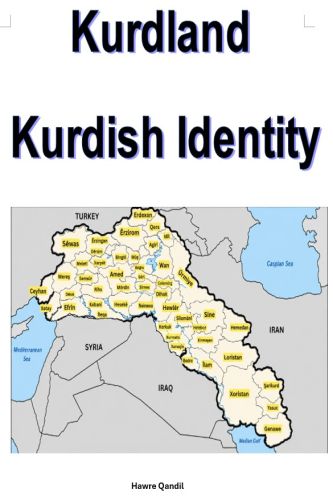
The question of the Kurdish people has existed for centuries, regarded with utmost seriousness and orderliness by the Kurds themselves. Armed occupiers have repeatedly invaded Kurdistan, forcing the Kurds to take up arms in self-defense. The enemies have refused to recognize the Kurds’ very existence, seeking through pressure and massacre to erase their identity and even their name from history....
more...

by:
George Long
PREFACE. Perhaps some may question the wisdom of putting out the Thoughts of Marcus Aurelius Antoninus to be used as a Reader by children in the schools. It may appear to them better suited to the mature mind. The principle, however, that has governed us in selecting reading for the young has been to secure the best that we could find in all ages for grown-up people. The milk and water diet provided...
more...
by:
George Rawlinson
CHAPTER I. EXTENT OF THE EMPIRE. The geographical extent of the Fifth Monarchy was far greater than that of any one of the four which had preceded it. While Persia Proper is a comparatively narrow and poor tract, extending in its greatest length only some seven or eight degrees (less than 500 miles), the dominions of the Persian kings covered a space fifty-six degrees long, and in places more than...
more...

by:
John Lord
BEACON LIGHTS OF HISTORY. ANCIENT RELIGIONS: EGYPTIAN, ASSYRIAN, BABYLONIAN, AND PERSIAN. It is my object in this book on the old Pagan civilizations to present the salient points only, since an exhaustive work is impossible within the limits of these volumes. The practical end which I have in view is to collate a sufficient number of acknowledged facts from which to draw sound inferences in reference...
more...
INTRODUCTORY ESSAYHELLENISM AND HEBRÆISM IN EGYPT UNDER THE PTOLEMIESI.When Alexander the Great bridged the gulf dividing Occident and Orient, the Greeks had attained to a state of maturity in the development of their national art and literature. Greek culture and civilisation, passing beyond the boundaries of their national domain, crossed this bridge and spread over the Asiatic world. To perpetuate...
more...

by:
Cassius Dio
DURATION OF TIME M. Asinius Marcellus, Manius Acilius Aviola. (A.D. 54 = a.u. 807 = First of Nero, from Oct. 13th). Nero Caesar Aug., L. Antistius Vetus. (A.D. 55 = a.u. 808 = Second of Nero). Q. Volusius Saturninus, P. Cornelius Scipio. (A.D. 56 = a.u. 809 = Third of Nero). Nero Caesar Aug. (II), L. Calpurnius Piso. (A.D. 57 = a.u. 810 = Fourth of Nero). Nero Caesar...
more...
CHAPTER I—EGYPT UNDER THE ROMAN EMPIRE The Roman dominion on the Nile: Settlement of the Egyptian frontiers: Religious developments: Rebellions. Augustus began his reign in Egypt in B.C. 30 by ordering all the statues of Antony, of which there were more than fifty ornamenting the various public buildings of the city, to be broken to pieces; and it is said he had the meanness to receive a bribe of one...
more...