

Categories
- Antiques & Collectibles 13
- Architecture 36
- Art 48
- Bibles 22
- Biography & Autobiography 816
- Body, Mind & Spirit 145
- Business & Economics 32
- Children's Books 15
- Children's Fiction 13
- Computers 4
- Cooking 94
- Crafts & Hobbies 4
- Drama 346
- Education 69
- Family & Relationships 62
- Fiction 11844
- Foreign Language Study 2
- Games 19
- Gardening 17
- Health & Fitness 36
- History 1383
- House & Home 1
- Humor 147
- Juvenile Fiction 1884
- Juvenile Nonfiction 202
- Language Arts & Disciplines 89
- Law 16
- Literary Collections 687
- Literary Criticism 180
- Mathematics 13
- Medical 43
- Music 40
- Nature 181
- Non-Classifiable 1768
- Performing Arts 7
- Periodicals 1453
- Philosophy 65
- Photography 2
- Poetry 897
- Political Science 208
- Psychology 44
- Reference 154
- Religion 516
- Science 128
- Self-Help 89
- Social Science 84
- Sports & Recreation 34
- Study Aids 3
- Technology & Engineering 60
- Transportation 23
- Travel 463
- True Crime 29
Robert Chambers
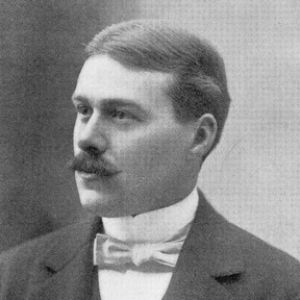
Robert Chambers (1865-1933) was an American author best known for his works in the horror and weird fiction genres, particularly his influential collection "The King in Yellow" (1895). Before transitioning to horror and supernatural tales, Chambers initially achieved success with historical romances and society novels. His blend of the macabre with a fin-de-siècle aesthetic has left a lasting impact on genre literature, influencing later writers such as H.P. Lovecraft.
Author's Books:
Sort by:

by:
Robert Chambers
THE DINNER-BELL. In one of Webster's magnificent speeches, he remarks that so vast are the possessions of England, that her morning drum-beat, following the sun and keeping company with the hours, circles the earth daily with one continuous and unbroken strain of its martial airs. There is another musical sound, within the British islands themselves, which does not as yet quite traverse the...
more...
by:
Robert Chambers
UNFASHIONABLE CLUBS. It is with a feeling doubtless somewhat analogous to that of the angler, that the London shopkeeper from time to time regards the moneyless crowds who throng in gaping admiration around the tempting display he makes in his window. His admirers and the fish, however, are in different circumstances: the one won't bite if they have no mind; the others can't bite if they...
more...

by:
Robert Chambers
THE DINGY HOUSE. London is like a large company, where it is necessary for the master or mistress of the house to introduce a great many people to each other. Everybody in that overgrown metropolis has things within a few doors of his residence, which, if they were suddenly described to him, he would hear of with deep interest or extreme astonishment. There is a plain back street near the Haymarket,...
more...
by:
Robert Chambers
ECONOMY IN DISTRIBUTION. We had lately occasion to proceed by an omnibus from a country town to a station on a railway, by which we were to return to the city where we have our customary abode. On arriving at the station, we learned that we should have to wait an hour for an up train, the omnibus being timed in relation to a down one, which was about to pass. Had this arrangement been the only one...
more...
by:
Robert Chambers
THE MEDIÆVAL MANIA. History is said to be a series of reactions. Society, like a pendulum, first drives one way, and then swings back in the opposite direction. At present, we may be said to be returning at full speed towards a taste for everything old, neglected, and for ages despised. Science and refinement have had their day, and now rude nature and the elemental are to be in the ascendant. In...
more...
by:
Robert Chambers
WOLF-CHILDREN. It is a pity that the present age is so completely absorbed in materialities, at a time when the facilities are so singularly great for a philosophy which would inquire into the constitution of our moral nature. In the North Pacific, we are in contact with tribes of savages ripening, sensibly to the eye, into civilised communities; and we are able to watch the change as...
more...

by:
Robert Chambers
THE HAPPY JACKS. 'On Saturday, then, at two—humble hours, humble fare; but plenty, and good of its kind; with a talk over old fellows and old times.' Such was the pith of an invitation to dinner, to accept which I started on a pleasant summer Saturday on the top of a Kentish-town omnibus. My host was Happy Jack. Everybody called him 'Happy Jack:' he called himself 'Happy...
more...
by:
Robert Chambers
THE WOMAN OF THE WORLD. We all know that there are certain conventional laws by which our social doings and seemings are regulated; but what is the power which compels the observance of these laws? There is no company police to keep people moving on, no fines or other penalties; nobody but the very outrageous need fear being turned out of the room; we have every one of us strong inclinations and...
more...

by:
Robert Chambers
PHILOSOPHY OF LAUGHTER. From the time of King Solomon downwards, laughter has been the subject of pretty general abuse. Even the laughers themselves sometimes vituperate the cachinnation they indulge in, and many of them——'laugh in such a sort,As if they mocked themselves, and scorned the spiritThat could be moved to laugh at anything.' The general notion is, that laughter is childish,...
more...
by:
Robert Chambers
HINTS ON THE USEFUL-KNOWLEDGE MOVEMENT. The advocates of the diffusion of useful knowledge among the great body of the people, found one of their greatest difficulties to lie in an inability on the part of the people themselves to see what benefit they were to derive from the knowledge proposed to be imparted. This knowledge consisted of such a huge mass of facts of all kinds, that few could...
more...