

Categories
- Antiques & Collectibles 13
- Architecture 36
- Art 48
- Bibles 22
- Biography & Autobiography 816
- Body, Mind & Spirit 145
- Business & Economics 32
- Children's Books 15
- Children's Fiction 13
- Computers 4
- Cooking 94
- Crafts & Hobbies 4
- Drama 346
- Education 64
- Family & Relationships 62
- Fiction 11848
- Foreign Language Study 2
- Games 19
- Gardening 17
- Health & Fitness 36
- History 1383
- House & Home 1
- Humor 147
- Juvenile Fiction 1884
- Juvenile Nonfiction 202
- Language Arts & Disciplines 89
- Law 16
- Literary Collections 687
- Literary Criticism 179
- Mathematics 13
- Medical 43
- Music 40
- Nature 181
- Non-Classifiable 1768
- Performing Arts 7
- Periodicals 1453
- Philosophy 65
- Photography 2
- Poetry 897
- Political Science 206
- Psychology 44
- Reference 154
- Religion 516
- Science 128
- Self-Help 89
- Social Science 84
- Sports & Recreation 34
- Study Aids 3
- Technology & Engineering 60
- Transportation 23
- Travel 463
- True Crime 29
Oliver Wendell Holmes
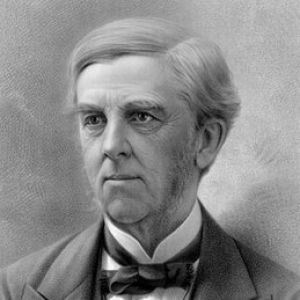
Oliver Wendell Holmes Sr. (1809-1894) was an American physician, poet, and polymath, renowned for his contributions to literature and medicine. A member of the Fireside Poets, he is best known for his humorous prose and poetry, including works like "Old Ironsides" and "The Autocrat of the Breakfast-Table." Holmes also played a significant role in medical education and practice, coining terms like "anesthesia" and advancing the understanding of contagious diseases.
Author's Books:
Sort by:

CHAPTER I. THE BRAHMIN CASTE OF NEW ENGLAND. There is nothing in New England corresponding at all to the feudal aristocracies of the Old World. Whether it be owing to the stock from which we were derived, or to the practical working of our institutions, or to the abrogation of the technical "law of honor," which draws a sharp line between the personally responsible class of "gentlemen"...
more...
CHAPTER I. AN ADVERTISEMENT. On Saturday, the 18th day of June, 1859, the "State Banner and Delphian Oracle," published weekly at Oxbow Village, one of the principal centres in a thriving river-town of New England, contained an advertisement which involved the story of a young life, and stained the emotions of a small community. Such faces of dismay, such shaking of heads, such gatherings at...
more...

INTRODUCTION This series of papers was begun in March, 1888. A single number was printed, when it was interrupted the course of events, and not resumed until nearly years later, in January, 1890. The plan of the series was not formed in my mind when I wrote the number. In returning to my task I found that my original plan had shaped itself in the underground laboratory of my thought so that some...
more...

PREFACE. In this, the third series of Breakfast-Table conversations, a slight dramatic background shows off a few talkers and writers, aided by certain silent supernumeraries. The machinery is much like that of the two preceding series. Some of the characters must seem like old acquaintances to those who have read the former papers. As I read these over for the first time for a number of years, I...
more...

10 HARVARD LAW REVIEW 457 (1897) When we study law we are not studying a mystery but a well-known profession. We are studying what we shall want in order to appear before judges, or to advise people in such a way as to keep them out of court. The reason why it is a profession, why people will pay lawyers to argue for them or to advise them, is that in societies like ours the command of the public force...
more...

After an interval of more than fifty years, I propose taking a second look at some parts of Europe. It is a Rip Van Winkle experiment which I am promising myself. The changes wrought by half a century in the countries I visited amount almost to a transformation. I left the England of William the Fourth, of the Duke of Wellington, of Sir Robert Peel; the France of Louis Philippe, of Marshal Soult, of...
more...

The Deacon’s Masterpiece Have you heard of the wonderful one-hoss shay,That was built in such a logical wayIt ran a hundred years to a day,And then, of a sudden, it—ah, but stay,I’ll tell you what happened without delay,Scaring the parson into fits,Frightening people out of their wits,—Have you ever heard of that, I say? Seventeen hundred and fifty-five, Georgius Secundus was then...
more...

BILL AND JOE COME, dear old comrade, you and IWill steal an hour from days gone by,The shining days when life was new,And all was bright with morning dew,The lusty days of long ago,When you were Bill and I was Joe. Your name may flaunt a titled trailProud as a cockerel's rainbow tail,And mine as brief appendix wearAs Tam O'Shanter's luckless mare;To-day, old friend, remember stillThat I...
more...

PREFACE. The character of the opposition which some of these papers have met with suggests the inference that they contain really important, but unwelcome truths. Negatives multiplied into each other change their sign and become positives. Hostile criticisms meeting together are often equivalent to praise, and the square of fault-finding turns out to be the same thing as eulogy. But a writer has rarely...
more...

TO MY READERS NAY, blame me not; I might have sparedYour patience many a trivial verse,Yet these my earlier welcome shared,So, let the better shield the worse. And some might say, "Those ruder songsHad freshness which the new have lost;To spring the opening leaf belongs,The chestnut-burs await the frost." When those I wrote, my locks were brown,When these I write—ah, well a-day!The autumn...
more...