

Categories
- Antiques & Collectibles 13
- Architecture 36
- Art 48
- Bibles 22
- Biography & Autobiography 813
- Body, Mind & Spirit 142
- Business & Economics 28
- Children's Books 17
- Children's Fiction 14
- Computers 4
- Cooking 94
- Crafts & Hobbies 4
- Drama 346
- Education 46
- Family & Relationships 57
- Fiction 11829
- Games 19
- Gardening 17
- Health & Fitness 34
- History 1377
- House & Home 1
- Humor 147
- Juvenile Fiction 1873
- Juvenile Nonfiction 202
- Language Arts & Disciplines 88
- Law 16
- Literary Collections 686
- Literary Criticism 179
- Mathematics 13
- Medical 41
- Music 40
- Nature 179
- Non-Classifiable 1768
- Performing Arts 7
- Periodicals 1453
- Philosophy 64
- Photography 2
- Poetry 896
- Political Science 203
- Psychology 42
- Reference 154
- Religion 513
- Science 126
- Self-Help 84
- Social Science 81
- Sports & Recreation 34
- Study Aids 3
- Technology & Engineering 59
- Transportation 23
- Travel 463
- True Crime 29
Henry James
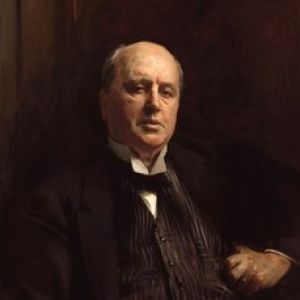
Henry James (1843-1916) was an American author known for his contributions to 19th-century literary realism and modernism. His works often explore themes of consciousness and perception, with notable novels including "The Portrait of a Lady," "The Turn of the Screw," and "The Wings of the Dove." James is celebrated for his intricate prose style and deep psychological insight into his characters.
Author's Books:
Sort by:

by:
Henry James
"She appears to have arrived this noon—coming up from Southampton; at an hotel. She dropped upon me after luncheon and was here for more than an hour." The young man heard with interest, though not with an interest too great for his gaiety. "You think then I've a share in it? What IS my share?" "Why, any you like—the one you seemed just now eager to take. It was you...
more...

by:
Henry James
I Intending to sail for America in the early part of June, I determined to spend the interval of six weeks in England, to which country my mind's eye only had as yet been introduced. I had formed in Italy and France a resolute preference for old inns, considering that what they sometimes cost the ungratified body they repay the delighted mind. On my arrival in London, therefore, I lodged at a...
more...

by:
Henry James
I Never say you know the last words about any human heart! I was once treated to a revelation which startled and touched me in the nature of a person with whom I had been acquainted—well, as I supposed—for years, whose character I had had good reasons, heaven knows, to appreciate and in regard to whom I flattered myself I had nothing more to learn. It was on the terrace of the Kursaal at Homburg,...
more...

by:
Henry James
CHAPTER I What determined the speech that startled him in the course of their encounter scarcely matters, being probably but some words spoken by himself quite without intentionвÐâspoken as they lingered and slowly moved together after their renewal of acquaintance. He had been conveyed by friends an hour or two before to the house at which she was staying; the party of visitors at the...
more...

by:
Henry James
BLACK AND WHITE If there be nothing new under the sun there are some things a good deal less old than others. The illustration of books, and even more of magazines, may be said to have been born in our time, so far as variety and abundance are the signs of it; or born, at any rate, the comprehensive, ingenious, sympathetic spirit in which we conceive and practise it. If the centuries are ever arraigned...
more...

by:
Henry James
The first one took place in the country, at a little tea-party, one snowy night. It must have been some seventeen years ago. My friend Latouche, going to spend Christmas with his mother, had persuaded me to go with him, and the good lady had given in our honor the entertainment of which I speak. To me it was really entertaining; I had never been in the depths of New England at that season. It had been...
more...

by:
Henry James
I had done a few things and earned a few pence—I had perhaps even had time to begin to think I was finer than was perceived by the patronising; but when I take the little measure of my course (a fidgety habit, for it's none of the longest yet) I count my real start from the evening George Corvick, breathless and worried, came in to ask me a service. He had done more things than I, and earned...
more...

by:
Henry James
"NO, my lord," Banks had replied, "no stranger has yet arrived. But I'll see if any one has come in—or who has." As he spoke, however, he observed Lady Sandgate's approach to the hall by the entrance giving upon the great terrace, and addressed her on her passing the threshold. "Lord John, my lady." With which, his duty majestically performed, he retired to the...
more...

by:
Henry James
"I say, you know, Kate—you did stay!" had been Merton Densher's punctual remark on their adventure after they had, as it were, got out of it; an observation which she not less promptly, on her side, let him see that she forgave in him only because he was a man. She had to recognise, with whatever disappointment, that it was doubtless the most helpful he could make in this character. The...
more...

by:
Henry James
CHAPTER I On a brilliant day in May, in the year 1868, a gentleman was reclining at his ease on the great circular divan which at that period occupied the centre of the Salon Carre, in the Museum of the Louvre. This commodious ottoman has since been removed, to the extreme regret of all weak-kneed lovers of the fine arts, but the gentleman in question had taken serene possession of its softest spot,...
more...