

Categories
- Antiques & Collectibles 13
- Architecture 36
- Art 48
- Bibles 22
- Biography & Autobiography 816
- Body, Mind & Spirit 145
- Business & Economics 30
- Children's Books 15
- Children's Fiction 12
- Computers 4
- Cooking 94
- Crafts & Hobbies 4
- Drama 346
- Education 64
- Family & Relationships 59
- Fiction 11841
- Foreign Language Study 2
- Games 19
- Gardening 17
- Health & Fitness 35
- History 1383
- House & Home 1
- Humor 147
- Juvenile Fiction 1884
- Juvenile Nonfiction 202
- Language Arts & Disciplines 89
- Law 16
- Literary Collections 687
- Literary Criticism 179
- Mathematics 13
- Medical 43
- Music 40
- Nature 181
- Non-Classifiable 1768
- Performing Arts 7
- Periodicals 1453
- Philosophy 65
- Photography 2
- Poetry 897
- Political Science 205
- Psychology 44
- Reference 154
- Religion 516
- Science 128
- Self-Help 87
- Social Science 83
- Sports & Recreation 34
- Study Aids 3
- Technology & Engineering 60
- Transportation 23
- Travel 463
- True Crime 29
Henry James
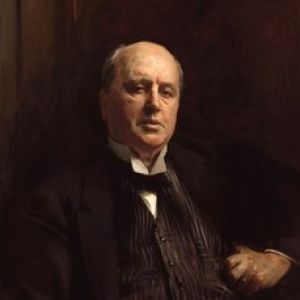
Henry James (1843-1916) was an American author known for his contributions to 19th-century literary realism and modernism. His works often explore themes of consciousness and perception, with notable novels including "The Portrait of a Lady," "The Turn of the Screw," and "The Wings of the Dove." James is celebrated for his intricate prose style and deep psychological insight into his characters.
Author's Books:
Sort by:

by:
Henry James
CHAPTER I It was in the early days of April; Bernard Longueville had been spending the winter in Rome. He had travelled northward with the consciousness of several social duties that appealed to him from the further side of the Alps, but he was under the charm of the Italian spring, and he made a pretext for lingering. He had spent five days at Siena, where he had intended to spend but two, and still...
more...

by:
Henry James
I "I guess my daughter's in here," the old man said leading the way into the little salon de lecture. He was not of the most advanced age, but that is the way George Flack considered him, and indeed he looked older than he was. George Flack had found him sitting in the court of the hotel—he sat a great deal in the court of the hotel—and had gone up to him with characteristic directness...
more...

by:
Henry James
I profess a certain vagueness of remembrance in respect to the origin and growth of The Tragic Muse, which appeared in the Atlantic Monthly again, beginning January 1889 and running on, inordinately, several months beyond its proper twelve. If it be ever of interest and profit to put one's finger on the productive germ of a work of art, and if in fact a lucid account of any such work involves that...
more...

by:
Henry James
I Never say you know the last words about any human heart! I was once treated to a revelation which startled and touched me in the nature of a person with whom I had been acquainted—well, as I supposed—for years, whose character I had had good reasons, heaven knows, to appreciate and in regard to whom I flattered myself I had nothing more to learn. It was on the terrace of the Kursaal at Homburg,...
more...

by:
Henry James
CHAPTER I It had occurred to her early that in her position—that of a young person spending, in framed and wired confinement, the life of a guinea-pig or a magpie—she should know a great many persons without their recognising the acquaintance. That made it an emotion the more lively—though singularly rare and always, even then, with opportunity still very much smothered—to see any one come in...
more...

by:
Henry James
BLACK AND WHITE If there be nothing new under the sun there are some things a good deal less old than others. The illustration of books, and even more of magazines, may be said to have been born in our time, so far as variety and abundance are the signs of it; or born, at any rate, the comprehensive, ingenious, sympathetic spirit in which we conceive and practise it. If the centuries are ever arraigned...
more...

by:
Henry James
Mrs. Gereth had said she would go with the rest to church, but suddenly it seemed to her that she should not be able to wait even till church-time for relief: breakfast, at Waterbath, was a punctual meal, and she had still nearly an hour on her hands. Knowing the church to be near, she prepared in her room for the little rural walk, and on her way down again, passing through corridors and observing...
more...

by:
Henry James
"But how—at the worst?" "Oh, 'the worst'—don't talk about the worst! I can keep them quiet at the best, I seem to feel, simply by our being there. It will work, from week to week, of itself. You'll see." He was willing enough to see, but he desired to provide—! "Yet if it doesn't work?" "Ah, that's talking about the worst!" Well, it...
more...

by:
Henry James
I. She was certainly a singular girl, and if he felt at the end that he did n't know her nor understand her, it is not surprising that he should have felt it at the beginning. But he felt at the beginning what he did not feel at the end, that her singularity took the form of a charm which—once circumstances had made them so intimate—it was impossible to resist or conjure away. He had a strange...
more...

by:
Henry James
I The view from the terrace at Saint-Germain-en-Laye is immense and famous. Paris lies spread before you in dusky vastness, domed and fortified, glittering here and there through her light vapours and girdled with her silver Seine. Behind you is a park of stately symmetry, and behind that a forest where you may lounge through turfy avenues and light-chequered glades and quite forget that you are within...
more...