

Categories
- Antiques & Collectibles 13
- Architecture 36
- Art 48
- Bibles 22
- Biography & Autobiography 816
- Body, Mind & Spirit 145
- Business & Economics 32
- Children's Books 15
- Children's Fiction 13
- Computers 4
- Cooking 94
- Crafts & Hobbies 4
- Drama 346
- Education 64
- Family & Relationships 62
- Fiction 11848
- Foreign Language Study 2
- Games 19
- Gardening 17
- Health & Fitness 36
- History 1383
- House & Home 1
- Humor 147
- Juvenile Fiction 1884
- Juvenile Nonfiction 202
- Language Arts & Disciplines 89
- Law 16
- Literary Collections 687
- Literary Criticism 179
- Mathematics 13
- Medical 43
- Music 40
- Nature 181
- Non-Classifiable 1768
- Performing Arts 7
- Periodicals 1453
- Philosophy 65
- Photography 2
- Poetry 897
- Political Science 206
- Psychology 44
- Reference 154
- Religion 516
- Science 128
- Self-Help 89
- Social Science 84
- Sports & Recreation 34
- Study Aids 3
- Technology & Engineering 60
- Transportation 23
- Travel 463
- True Crime 29
Henry Francis Cary
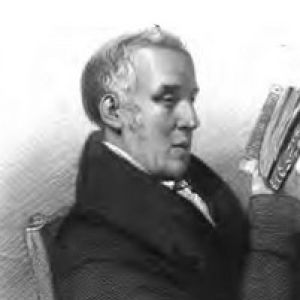
Henry Francis Cary was an English author and translator best known for his influential translation of Dante's "Divine Comedy," published in 1814. His translation, notable for its use of blank verse, made Dante's work accessible to English-speaking audiences and received widespread acclaim, particularly after a favorable review by Samuel Taylor Coleridge. Cary's contributions to literature also include his roles as a literary critic and a clergyman, reflecting his deep engagement with both literary and religious spheres.
Author's Books:
Sort by:
CANTO XXVI While singly thus along the rim we walk'd,Oft the good master warn'd me: "Look thou well.Avail it that I caution thee." The sunNow all the western clime irradiate chang'dFrom azure tinct to white; and, as I pass'd,My passing shadow made the umber'd flameBurn ruddier. At so strange a sight I mark'dThat many a spirit marvel'd on his way. This bred...
more...
CANTO I His glory, by whose might all things are mov'd,Pierces the universe, and in one partSheds more resplendence, elsewhere less. In heav'n,That largeliest of his light partakes, was I,Witness of things, which to relate againSurpasseth power of him who comes from thence;For that, so near approaching its desireOur intellect is to such depth absorb'd,That memory cannot follow....
more...
CANTO XIII ERE Nessus yet had reach'd the other bank,We enter'd on a forest, where no trackOf steps had worn a way. Not verdant thereThe foliage, but of dusky hue; not lightThe boughs and tapering, but with knares deform'dAnd matted thick: fruits there were none, but thornsInstead, with venom fill'd. Less sharp than these,Less intricate the brakes, wherein abideThose animals, that...
more...
CANTO XXII Astounded, to the guardian of my stepsI turn'd me, like the chill, who always runsThither for succour, where he trusteth most,And she was like the mother, who her sonBeholding pale and breathless, with her voiceSoothes him, and he is cheer'd; for thus she spake,Soothing me: "Know'st not thou, thou art in heav'n?And know'st not thou, whatever is in heav'n,Is...
more...
PURGATORY Cantos 1 - 33 O'er better waves to speed her rapid courseThe light bark of my genius lifts the sail,Well pleas'd to leave so cruel sea behind;And of that second region will I sing,In which the human spirit from sinful blotIs purg'd, and for ascent to Heaven prepares. Here, O ye hallow'd Nine! for in your trainI follow, here the deadened strain revive;Nor let Calliope...
more...
CANTO I IN the midway of this our mortal life,I found me in a gloomy wood, astrayGone from the path direct: and e'en to tellIt were no easy task, how savage wildThat forest, how robust and rough its growth,Which to remember only, my dismayRenews, in bitterness not far from death.Yet to discourse of what there good befell,All else will I relate discover'd there.How first I enter'd it I...
more...
CANTO I O'er better waves to speed her rapid courseThe light bark of my genius lifts the sail,Well pleas'd to leave so cruel sea behind;And of that second region will I sing,In which the human spirit from sinful blotIs purg'd, and for ascent to Heaven prepares. Here, O ye hallow'd Nine! for in your trainI follow, here the deadened strain revive;Nor let Calliope refuse to soundA...
more...

CANTO I His glory, by whose might all things are mov'd,Pierces the universe, and in one partSheds more resplendence, elsewhere less. In heav'n,That largeliest of his light partakes, was I,Witness of things, which to relate againSurpasseth power of him who comes from thence;For that, so near approaching its desireOur intellect is to such depth absorb'd,That memory cannot follow....
more...
CANTO XV True love, that ever shows itself as clearIn kindness, as loose appetite in wrong,Silenced that lyre harmonious, and still'dThe sacred chords, that are by heav'n's right handUnwound and tighten'd, flow to righteous prayersShould they not hearken, who, to give me willFor praying, in accordance thus were mute?He hath in sooth good cause for endless grief,Who, for the love of...
more...
CANTO I O'er better waves to speed her rapid courseThe light bark of my genius lifts the sail,Well pleas'd to leave so cruel sea behind;And of that second region will I sing,In which the human spirit from sinful blotIs purg'd, and for ascent to Heaven prepares. Here, O ye hallow'd Nine! for in your trainI follow, here the deadened strain revive;Nor let Calliope refuse to soundA...
more...