

Categories
- Antiques & Collectibles 13
- Architecture 36
- Art 48
- Bibles 22
- Biography & Autobiography 815
- Body, Mind & Spirit 144
- Business & Economics 28
- Children's Books 18
- Children's Fiction 14
- Computers 4
- Cooking 94
- Crafts & Hobbies 4
- Drama 346
- Education 58
- Family & Relationships 59
- Fiction 11835
- Games 19
- Gardening 17
- Health & Fitness 34
- History 1378
- House & Home 1
- Humor 147
- Juvenile Fiction 1873
- Juvenile Nonfiction 202
- Language Arts & Disciplines 89
- Law 16
- Literary Collections 686
- Literary Criticism 179
- Mathematics 13
- Medical 41
- Music 40
- Nature 180
- Non-Classifiable 1768
- Performing Arts 7
- Periodicals 1453
- Philosophy 65
- Photography 2
- Poetry 896
- Political Science 203
- Psychology 44
- Reference 154
- Religion 515
- Science 126
- Self-Help 85
- Social Science 83
- Sports & Recreation 34
- Study Aids 3
- Technology & Engineering 60
- Transportation 23
- Travel 463
- True Crime 29
Zitkala-sa
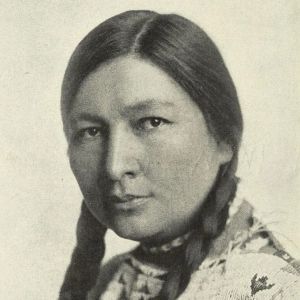
Zitkala-Ša (1876–1938) was a Native American writer, musician, and activist from the Yankton Sioux tribe. She is known for her autobiographical essays, which document her experiences of cultural conflict and assimilation in works like "American Indian Stories" and "Old Indian Legends." As a fierce advocate for Indigenous rights, she co-founded the National Council of American Indians in 1926. Zitkala-Ša also played a significant role in preserving Native American heritage through her writings and by composing the first Native American opera, "The Sun Dance."
Author's Books:
Sort by:

by:
Zitkala-sa
IKTOMI is a spider fairy. He wears brown deerskin leggins with long soft fringes on either side, and tiny beaded moccasins on his feet. His long black hair is parted in the middle and wrapped with red, red bands. Each round braid hangs over a small brown ear and falls forward over his shoulders. He even paints his funny face with red and yellow, and draws big black rings around his eyes. He wears a...
more...

by:
Zitkala-sa
IMPRESSIONS OF AN INDIAN CHILDHOOD I. MY MOTHER. A wigwam of weather-stained canvas stood at the base of some irregularly ascending hills. A footpath wound its way gently down the sloping land till it reached the broad river bottom; creeping through the long swamp grasses that bent over it on either side, it came out on the edge of the Missouri. Here, morning, noon, and evening, my mother came to draw...
more...