

Categories
- Antiques & Collectibles 13
- Architecture 36
- Art 48
- Bibles 22
- Biography & Autobiography 815
- Body, Mind & Spirit 145
- Business & Economics 28
- Children's Books 15
- Children's Fiction 12
- Computers 4
- Cooking 94
- Crafts & Hobbies 4
- Drama 346
- Education 63
- Family & Relationships 59
- Fiction 11841
- Foreign Language Study 1
- Games 19
- Gardening 17
- Health & Fitness 35
- History 1382
- House & Home 1
- Humor 147
- Juvenile Fiction 1884
- Juvenile Nonfiction 202
- Language Arts & Disciplines 89
- Law 16
- Literary Collections 687
- Literary Criticism 179
- Mathematics 13
- Medical 43
- Music 40
- Nature 181
- Non-Classifiable 1768
- Performing Arts 7
- Periodicals 1453
- Philosophy 65
- Photography 2
- Poetry 897
- Political Science 205
- Psychology 44
- Reference 154
- Religion 516
- Science 128
- Self-Help 87
- Social Science 83
- Sports & Recreation 34
- Study Aids 3
- Technology & Engineering 60
- Transportation 23
- Travel 463
- True Crime 29
Willis Fletcher Johnson
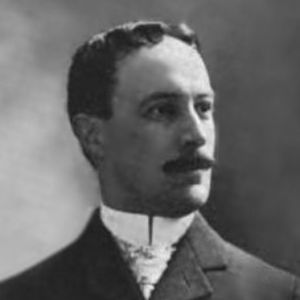
Willis Fletcher Johnson was an American author, journalist, and historian, best known for his works on American and world history. He wrote several notable books, including "Colonel Henry Ludington: A Memoir" and "Four Centuries of the Panama Canal." Johnson had a distinguished career as a foreign correspondent and editorial writer for the New York Tribune. His works often focused on U.S. history and infrastructure, contributing to the popular understanding of significant historical events.
Author's Books:
Sort by:
CHAPTER I Cuba for Cuba must be the grateful theme of the present volume. We have seen the identification of the Queen of the Antilles with the Spanish discovery and conquest of America. We have traced the development of widespread international interests in that island, especially implicating the vital attention of at least four great powers. We have reviewed the origin and development of a peculiar...
more...

PREFACE It is my purpose in these volumes to write a History of Cuba. The title may imply either the land and its natural conditions, or the people and the nation which inhabit it. It in fact implies both, and to both I shall address myself, though it will appropriately be with the latter rather than with the former that the narrative will be most concerned. For it is with Cuba as with other countries:...
more...