

Categories
- Antiques & Collectibles 13
- Architecture 36
- Art 48
- Bibles 22
- Biography & Autobiography 816
- Body, Mind & Spirit 145
- Business & Economics 30
- Children's Books 15
- Children's Fiction 12
- Computers 4
- Cooking 94
- Crafts & Hobbies 4
- Drama 346
- Education 64
- Family & Relationships 59
- Fiction 11841
- Foreign Language Study 2
- Games 19
- Gardening 17
- Health & Fitness 35
- History 1383
- House & Home 1
- Humor 147
- Juvenile Fiction 1884
- Juvenile Nonfiction 202
- Language Arts & Disciplines 89
- Law 16
- Literary Collections 687
- Literary Criticism 179
- Mathematics 13
- Medical 43
- Music 40
- Nature 181
- Non-Classifiable 1768
- Performing Arts 7
- Periodicals 1453
- Philosophy 65
- Photography 2
- Poetry 897
- Political Science 205
- Psychology 44
- Reference 154
- Religion 516
- Science 128
- Self-Help 87
- Social Science 83
- Sports & Recreation 34
- Study Aids 3
- Technology & Engineering 60
- Transportation 23
- Travel 463
- True Crime 29
William Edward Dodd
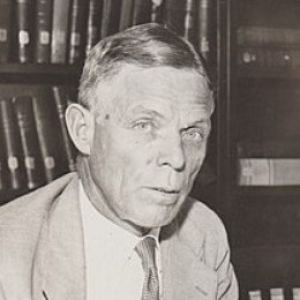
William Edward Dodd was an American historian and diplomat, best known for his role as the U.S. ambassador to Germany from 1933 to 1937 during Adolf Hitler's rise to power. A professor of history, Dodd specialized in the American Civil War and published works like "The Cotton Kingdom" and "Woodrow Wilson and His Work." His ambassadorship in Nazi Germany, documented in "Ambassador Dodd's Diary," highlighted his growing alarm over Hitler’s regime and his frustration with both the U.S. government and Germany. Dodd’s experiences were later made famous in the book "In the Garden of Beasts" by Erik Larson.
Author's Books:
Sort by:

CHAPTER I THE CIVIL WAR The military successes of the United States in its Civil War maintained the Union, but entailed readjustments in politics, finance, and business that shifted the direction of public affairs for many years. In the eyes of contemporaries these changes were obscured by the vivid scenes of the battlefield, whose intense impressions were not forgotten for a generation. It seemed as...
more...

PREFACE The purpose of this volume is to show the action and reaction of the most important social, economic, political, and personal forces that have entered into the make-up of the United States as a nation. The primary assumption of the author is that the people of this country did not compose a nation until after the close of the Civil War in 1865. Of scarcely less importance is the fact that the...
more...