

Categories
- Antiques & Collectibles 13
- Architecture 36
- Art 48
- Bibles 22
- Biography & Autobiography 815
- Body, Mind & Spirit 144
- Business & Economics 28
- Children's Books 15
- Children's Fiction 12
- Computers 4
- Cooking 94
- Crafts & Hobbies 4
- Drama 346
- Education 63
- Family & Relationships 59
- Fiction 11839
- Foreign Language Study 1
- Games 19
- Gardening 17
- Health & Fitness 35
- History 1382
- House & Home 1
- Humor 147
- Juvenile Fiction 1877
- Juvenile Nonfiction 202
- Language Arts & Disciplines 89
- Law 16
- Literary Collections 687
- Literary Criticism 179
- Mathematics 13
- Medical 43
- Music 40
- Nature 181
- Non-Classifiable 1768
- Performing Arts 7
- Periodicals 1453
- Philosophy 65
- Photography 2
- Poetry 897
- Political Science 205
- Psychology 44
- Reference 154
- Religion 516
- Science 128
- Self-Help 86
- Social Science 83
- Sports & Recreation 34
- Study Aids 3
- Technology & Engineering 60
- Transportation 23
- Travel 463
- True Crime 29
William Carleton
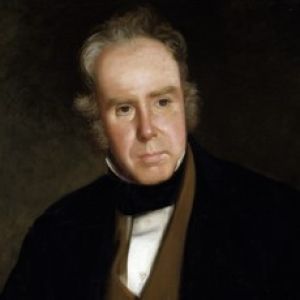
William Carleton (1794-1869) was an influential Irish writer best known for his vivid depictions of rural Irish life in the 19th century. His most celebrated work, "Traits and Stories of the Irish Peasantry," provides a rich, detailed portrayal of the social customs, struggles, and folklore of Irish peasants. Despite facing criticism for his negative portrayals of certain aspects of Irish life, Carleton's writings are valued for their authenticity and contribution to Irish literature.
Author's Books:
Sort by:

by:
William Carleton
A BORN AND BRED NEW ENGLANDER My great-grandfather was killed in the Revolution; my grandfather fought in the War of 1812; my father sacrificed his health in the Civil War; but I, though born in New England, am the first of my family to emigrate to this country—the United States of America. That sounds like a riddle or a paradox. It isn't; it's a plain statement of fact. As a matter of...
more...

by:
William Carleton
There is no country in the world whose scenery is more sweetly diversified, or more delicately shaded away into that exquisite variety of surface which presents us with those wavy outlines of beauty that softly melt into each other, than is that of our own green island. Alas! how many deep valleys, wild glens, green meadows, and pleasant hamlets, lie scattered over the bosom of a country, peopled by...
more...
by:
William Carleton
ELLEN DUNCAN There are some griefs so deep and overwhelming, that even the best exertions of friendship and sympathy are unequal to the task of soothing or dispelling them. Such was the grief of Ellen Duncan, who was silently weeping in her lone cottage on the borders of Clare—a county at that time in a frightful state of anarchy and confusion. Owen Duncan, her husband, at the period about which our...
more...

by:
William Carleton
THE HEDGE SCHOOL. There never was a more unfounded calumny, than that which would impute to the Irish peasantry an indifference to education. I may, on the contrary, fearlessly assert that the lower orders of no country ever manifested such a positive inclination for literary acquirements, and that, too, under circumstances strongly calculated to produce carelessness and apathy on this particular...
more...

by:
William Carleton
THE STATION. Our readers are to suppose the Reverend Philemy M'Guirk, parish priest of Tir-neer, to be standing upon the altar of the chapel, facing the congregation, after having gone through the canon of the Mass; and having nothing more of the service to perform, than the usual prayers with which he closes the ceremony. "Take notice, that the Stations for the following week will be held as...
more...

by:
William Carleton
CHAPTER I. Short and Preliminary. In a certain part of Ireland, inside the borders of the county of Waterford, lived two respectable families, named Lindsay and Goodwin, the former being of Scotch descent. Their respective residences were not more than three miles distant; and the intimacy that subsisted between them was founded, for many years, upon mutual good-will and esteem, with two exceptions...
more...

by:
William Carleton
CHAPTER I. A Mail-coach by Night, and a Bit of Moonshine. It has been long observed, that every season sent by the Almighty has its own peculiar beauties; yet, although this is felt to be universally true—just as we know the sun shines, or that we cannot breathe without air—still we are all certain that even the same seasons have brief periods when these beauties are more sensibly felt, and diffuse...
more...
by:
William Carleton
PART I. Fardorougha, the Miser. It was on one of those nights in August, when the moon and stars shine through an atmosphere clear and cloudless, with a mildness of lustre almost continental, that a horseman, advancing at a rapid pace, turned off a remote branch of road up a narrow lane, and, dismounting before a neat whitewashed cottage, gave a quick and impatient knock at the door. Almost instantly,...
more...

by:
William Carleton
CHAPTER I.—An Adventure and an Escape. Spirit of George Prince Regent James, Esq., forgive me this commencement! * * I mean no offence whatsoever to this distinguished andmultitudinous writer; but the commencement of this novel reallyresembled that of so many of his that I was anxious to avoid thecharge of imitating him. It was one evening at the close of a September month and a September day that...
more...

by:
William Carleton
CHAPTER I. — Glendhu, or the Black Glen; Scene of Domestic Affection. Some twenty and odd years ago there stood a little cabin at the foot of a round hill, that very much resembled a cupola in shape, and which, from its position and height, commanded a prospect of singular beauty. This hill was one of a range that ran from north to southwest; but in consequence of its standing, as it were, somewhat...
more...