

Categories
- Antiques & Collectibles 13
- Architecture 36
- Art 48
- Bibles 22
- Biography & Autobiography 815
- Body, Mind & Spirit 145
- Business & Economics 28
- Children's Books 15
- Children's Fiction 12
- Computers 4
- Cooking 94
- Crafts & Hobbies 4
- Drama 346
- Education 63
- Family & Relationships 59
- Fiction 11841
- Foreign Language Study 1
- Games 19
- Gardening 17
- Health & Fitness 35
- History 1382
- House & Home 1
- Humor 147
- Juvenile Fiction 1884
- Juvenile Nonfiction 202
- Language Arts & Disciplines 89
- Law 16
- Literary Collections 687
- Literary Criticism 179
- Mathematics 13
- Medical 43
- Music 40
- Nature 181
- Non-Classifiable 1768
- Performing Arts 7
- Periodicals 1453
- Philosophy 65
- Photography 2
- Poetry 897
- Political Science 205
- Psychology 44
- Reference 154
- Religion 516
- Science 128
- Self-Help 87
- Social Science 83
- Sports & Recreation 34
- Study Aids 3
- Technology & Engineering 60
- Transportation 23
- Travel 463
- True Crime 29
Washington Matthews
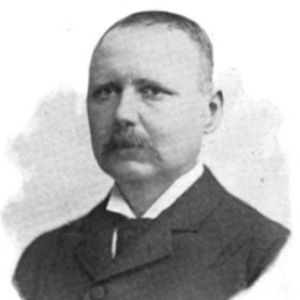
Washington Matthews (1843–1905) was an American ethnographer and U.S. Army surgeon who is renowned for his in-depth studies of Native American cultures, particularly the Navajo people. He documented Navajo ceremonies and traditions, and his works, such as "Navajo Legends" (1897) and "The Night Chant, a Navajo Ceremony" (1902), remain significant contributions to the field of anthropology. Matthews emphasized the importance of preserving Native oral traditions and was among the first scholars to record and analyze Navajo language and mythology. His work influenced the understanding of Native American culture in the late 19th and early 20th centuries.
Author's Books:
Sort by:
NAVAJO SILVERSMITHS. BY WASHINGTON MATTHEWS. Among the Navajo Indians there are many smiths, who sometimes forge iron and brass, but who work chiefly in silver. When and how the art of working metals was introduced among them I have not been able to determine; but there are many reasons for supposing that they have long possessed it; many believe that they are not indebted to the Europeans for it....
more...
INTRODUCTION. 1. The ceremony of dsilyÃdje qaçàl, or mountain chant—literally, chant towards (a place) within the mountains—is one of a large number practiced by the shamans, or medicine men, of the Navajo tribe. I have selected it as the first of those to be described, because I have witnessed it the most frequently, because it is the most interesting to the Caucasian spectator, and...
more...
NAVAJO WEAVERS. By Dr. Washington Matthews. § I. The art of weaving, as it exists among the Navajo Indians of New Mexico and Arizona, possesses points of great interest to the student of ethnography. It is of aboriginal origin; and while European art has undoubtedly modified it, the extent and nature of the foreign influence is easily traced. It is by no means certain, still there are many reasons for...
more...