

Categories
- Antiques & Collectibles 13
- Architecture 36
- Art 48
- Bibles 22
- Biography & Autobiography 816
- Body, Mind & Spirit 145
- Business & Economics 32
- Children's Books 15
- Children's Fiction 13
- Computers 4
- Cooking 94
- Crafts & Hobbies 4
- Drama 346
- Education 65
- Family & Relationships 62
- Fiction 11845
- Foreign Language Study 2
- Games 19
- Gardening 17
- Health & Fitness 36
- History 1383
- House & Home 1
- Humor 147
- Juvenile Fiction 1884
- Juvenile Nonfiction 202
- Language Arts & Disciplines 89
- Law 16
- Literary Collections 687
- Literary Criticism 179
- Mathematics 13
- Medical 43
- Music 40
- Nature 181
- Non-Classifiable 1768
- Performing Arts 7
- Periodicals 1453
- Philosophy 65
- Photography 2
- Poetry 898
- Political Science 206
- Psychology 44
- Reference 154
- Religion 516
- Science 128
- Self-Help 89
- Social Science 84
- Sports & Recreation 34
- Study Aids 3
- Technology & Engineering 60
- Transportation 23
- Travel 463
- True Crime 29
Standish O'Grady
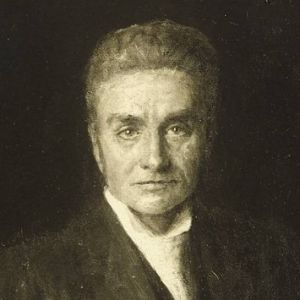
Standish O'Grady (1846–1928) was an Irish writer and historian, often called the "father of the Irish literary revival." He is best known for his works on Irish mythology and history, such as "History of Ireland: Heroic Period," which celebrated the ancient legends of Ireland's heroic age. O'Grady was deeply influenced by the Irish nationalist movement and sought to revive Ireland's cultural heritage through his writings. His work inspired later writers like W.B. Yeats and helped lay the foundation for the Irish Literary Renaissance.
Author's Books:
Sort by:
by:
Standish O'Grady
Scattered over the surface of every country in Europe may be found sepulchral monuments, the remains of pre-historic times and nations, and of a phase of life will civilisation which has long since passed away. No country in Europe is without its cromlechs and dolmens, huge earthen tumuli, great flagged sepulchres, and enclosures of tall pillar-stones. The men by whom these works were made, so...
more...
by:
Standish O'Grady
In this age we read so much that we lay too great a burden on the imagination. It is unable to create images which are the spiritual equivalent of the words on the printed page, and reading becomes for too many an occupation of the eye rather than of the mind. How rarely—out of the multitude of volumes a man reads in his lifetime—can he remember where or when he read any particular book, or with...
more...