

Categories
- Antiques & Collectibles 13
- Architecture 36
- Art 48
- Bibles 22
- Biography & Autobiography 816
- Body, Mind & Spirit 145
- Business & Economics 32
- Children's Books 15
- Children's Fiction 13
- Computers 4
- Cooking 94
- Crafts & Hobbies 4
- Drama 346
- Education 64
- Family & Relationships 62
- Fiction 11848
- Foreign Language Study 2
- Games 19
- Gardening 17
- Health & Fitness 36
- History 1383
- House & Home 1
- Humor 147
- Juvenile Fiction 1884
- Juvenile Nonfiction 202
- Language Arts & Disciplines 89
- Law 16
- Literary Collections 687
- Literary Criticism 179
- Mathematics 13
- Medical 43
- Music 40
- Nature 181
- Non-Classifiable 1768
- Performing Arts 7
- Periodicals 1453
- Philosophy 65
- Photography 2
- Poetry 897
- Political Science 206
- Psychology 44
- Reference 154
- Religion 516
- Science 128
- Self-Help 89
- Social Science 84
- Sports & Recreation 34
- Study Aids 3
- Technology & Engineering 60
- Transportation 23
- Travel 463
- True Crime 29
St. George Tucker
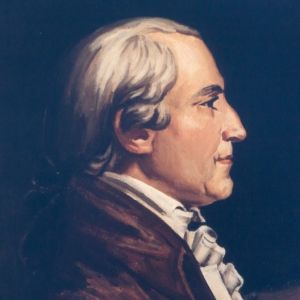
St. George Tucker (1752–1827) was an influential American lawyer, judge, and legal scholar, best known for his contributions to early American constitutional law. He authored "View of the Constitution of the United States," one of the first comprehensive commentaries on the U.S. Constitution, which advocated for states' rights and limited federal power. Tucker also edited and annotated an American edition of Blackstone's "Commentaries on the Laws of England," adapting English common law to the American legal system. Additionally, he was a prominent abolitionist, writing "A Dissertation on Slavery" in 1796, calling for the gradual emancipation of enslaved people in Virginia.
Author's Books:
Sort by:

The following pages form a part of a course of Lectures on Law and Police, delivered in the University of William and Mary, in this commonwealth. The Author considering the Abolition of Slavery in this State, as an object of the first importance, not only to our moral character and domestic peace, but even to our political salvation; and being persuaded that the accomplishment of so momentous and...
more...
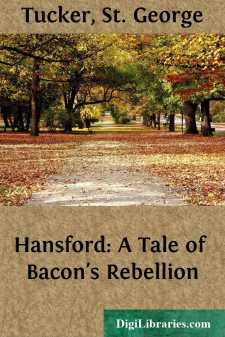
CHAPTER 1.“The rose of England bloomed on Gertrude's cheek;What though these shades had seen her birth? Her sireA Briton's independence taught to seekFar western worlds.” Gertrude of Wyoming. Among those who had been driven, by the disturbances in England, to seek a more quiet home in the wilds of Virginia, was a gentleman of the name of Temple. An Englishman by birth, he was an unwilling...
more...