

Categories
- Antiques & Collectibles 13
- Architecture 36
- Art 48
- Bibles 22
- Biography & Autobiography 815
- Body, Mind & Spirit 144
- Business & Economics 28
- Children's Books 15
- Children's Fiction 11
- Computers 4
- Cooking 94
- Crafts & Hobbies 4
- Drama 346
- Education 61
- Family & Relationships 59
- Fiction 11835
- Games 19
- Gardening 17
- Health & Fitness 34
- History 1378
- House & Home 1
- Humor 147
- Juvenile Fiction 1873
- Juvenile Nonfiction 202
- Language Arts & Disciplines 89
- Law 16
- Literary Collections 686
- Literary Criticism 179
- Mathematics 13
- Medical 41
- Music 40
- Nature 180
- Non-Classifiable 1768
- Performing Arts 7
- Periodicals 1453
- Philosophy 65
- Photography 2
- Poetry 896
- Political Science 203
- Psychology 44
- Reference 154
- Religion 515
- Science 127
- Self-Help 85
- Social Science 83
- Sports & Recreation 34
- Study Aids 3
- Technology & Engineering 60
- Transportation 23
- Travel 463
- True Crime 29
Samuel Rawson Gardiner
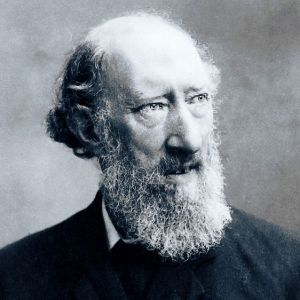
Samuel Rawson Gardiner (1829–1902) was a British historian, known for his comprehensive work on the history of England in the 17th century, particularly the English Civil War and the Stuart period. His most notable works include "History of England from the Accession of James I to the Outbreak of the Civil War" and "History of the Great Civil War." Gardiner's meticulous use of primary sources set a new standard for historical scholarship. He is regarded as a key figure in shaping the study of early modern British history.
Author's Books:
Sort by:
CHAPTER I HISTORICAL EVIDENCE In âWhat was the Gunpowder Plot? The Traditional Story tested by Original Evidence,â Father Gerard has set forth all the difficulties he found while sifting the accessible evidence, and has deduced from his examination a result which, though somewhat vague in itself, leaves upon his readers a very distinct impression that the celebrated conspiracy was mainly, if...
more...
The present work is intended for such students as have already an elementary knowledge of the main facts of English history, and aims at meeting their needs by the use of plain language on the one hand, and by the avoidance, on the other hand, of that multiplicity of details which is apt to overburden the memory. At the close of the book I have treated the last eleven years, 1874 to 1885, in a manner...
more...