

Categories
- Antiques & Collectibles 13
- Architecture 36
- Art 48
- Bibles 22
- Biography & Autobiography 813
- Body, Mind & Spirit 142
- Business & Economics 28
- Children's Books 17
- Children's Fiction 14
- Computers 4
- Cooking 94
- Crafts & Hobbies 4
- Drama 346
- Education 46
- Family & Relationships 57
- Fiction 11829
- Games 19
- Gardening 17
- Health & Fitness 34
- History 1377
- House & Home 1
- Humor 147
- Juvenile Fiction 1873
- Juvenile Nonfiction 202
- Language Arts & Disciplines 88
- Law 16
- Literary Collections 686
- Literary Criticism 179
- Mathematics 13
- Medical 41
- Music 40
- Nature 179
- Non-Classifiable 1768
- Performing Arts 7
- Periodicals 1453
- Philosophy 64
- Photography 2
- Poetry 896
- Political Science 203
- Psychology 42
- Reference 154
- Religion 513
- Science 126
- Self-Help 84
- Social Science 81
- Sports & Recreation 34
- Study Aids 3
- Technology & Engineering 59
- Transportation 23
- Travel 463
- True Crime 29
Rudyard Kipling
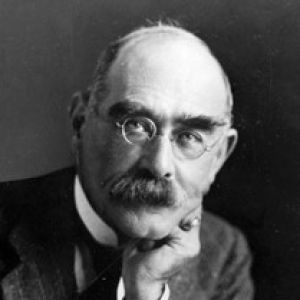
Rudyard Kipling (1865-1936) was a British author and poet, renowned for his works of fiction, including "The Jungle Book" and "Kim." He received the Nobel Prize in Literature in 1907, becoming the youngest recipient to that date. Kipling's writing is celebrated for its vivid storytelling and exploration of British imperialism, often reflecting his own experiences in British India.
Author's Books:
Sort by:

by:
Rudyard Kipling
THE CAPTIVE FROM THE MASJID-AL-AQSA OF SAYYID AHMED (WAHABI) Not with an outcry to Allah nor any complaining He answered his name at the muster and stood to the chaining. When the twin anklets were nipped on the leg-bars that held them, He brotherly greeted the armourers stooping to weld them. Ere the sad dust of the marshalled feet of the chain-gang swallowed him, Observing him...
more...

by:
Rudyard Kipling
Except for those who, under compulsion of a sick certificate, are flying Bombaywards, it is good for every man to see some little of the great Indian Empire and the strange folk who move about it. It is good to escape for a time from the House of Rimmon—be it office or cutchery—and to go abroad under no more exacting master than personal inclination, and with no more definite plan of travel than...
more...

by:
Rudyard Kipling
INTRODUCTION Mr. Kipling’s brilliant reconstruction of the genesis of the ‘Tempest’ may remind us how often that play has excited the creative fancy of its readers. It has given rise to many imitations, adaptations, and sequels. Fletcher copied its storm, its desert island, and its woman who had never seen a man. Suckling borrowed its spirits. Davenant and Dryden added a man who had never seen a...
more...
by:
Rudyard Kipling
Introduction In an issue of the London World in April, 1890, there appeared the following paragraph: "Two small rooms connected by a tiny hall afford sufficient space to contain Mr. Rudyard Kipling, the literary hero of the present hour, 'the man who came from nowhere,' as he says himself, and who a year ago was consciously nothing in the literary world." Six months previous to this...
more...

by:
Rudyard Kipling
'RIKKI-TIKKI-TAVI' At the hole where he went in Red-Eye called to Wrinkle-Skin. Hear what little Red-Eye saith: 'Nag, come up and dance with death!' Eye to eye and head to head, (Keep the measure, Nag.) This shall end when one is...
more...

by:
Rudyard Kipling
TheCities are full of pride,Challenging each to each—This from her mountain-side,That from her burthened beach.They count their ships full tale—Their corn and oil and wine,Derrick and loom and bale,And rampart's gun-flecked line;City by city they hail:"Hast aught to match with mine?"And the men that breed from themThey traffic up and down,But cling to their cities' hemAs a child to...
more...

by:
Rudyard Kipling
Danny Deever "What are the bugles blowin' for?" said Files-on-Parade."To turn you out, to turn you out", the Colour-Sergeant said."What makes you look so white, so white?" said Files-on-Parade."I'm dreadin' what I've got to watch", the Colour-Sergeant said.For they're hangin' Danny Deever, you can hear the Dead March play,The regiment's...
more...
by:
Rudyard Kipling
THE PHANTOM 'RICKSHAW May no ill dreams disturb my rest,Nor Powers of Darkness me molest.—Evening Hymn. One of the few advantages that India has over England is a great Knowability. After five years' service a man is directly or indirectly acquainted with the two or three hundred Civilians in his Province, all the Messes of ten or twelve Regiments and Batteries, and some fifteen hundred...
more...

by:
Rudyard Kipling
The polo-ball was an old one, scarred, chipped, and dinted. It stood on the mantelpiece among the pipe-stems which Imam Din, khitmatgar, was cleaning for me. "Does the Heaven-born want this ball?" said Imam Din, deferentially. The Heaven-born set no particular store by it; but of what use was a polo-ball to a khitmatgar? "By your Honor's favor, I have a little son. He has seen this...
more...

by:
Rudyard Kipling
DEPARTMENTAL DITTIES I have eaten your bread and salt,I have drunk your water and wine,The deaths ye died I have watched beside,And the lives that ye led were mine. Was there aught that I did not shareIn vigil or toil or ease,One joy or woe that I did not know,Dear hearts across the seas? I have written the tale of our lifeFor a sheltered people's mirth,In jesting guise—but ye are wise,And ye...
more...