

Categories
- Antiques & Collectibles 13
- Architecture 36
- Art 48
- Bibles 22
- Biography & Autobiography 816
- Body, Mind & Spirit 145
- Business & Economics 32
- Children's Books 15
- Children's Fiction 13
- Computers 4
- Cooking 94
- Crafts & Hobbies 4
- Drama 346
- Education 64
- Family & Relationships 62
- Fiction 11848
- Foreign Language Study 2
- Games 19
- Gardening 17
- Health & Fitness 36
- History 1383
- House & Home 1
- Humor 147
- Juvenile Fiction 1884
- Juvenile Nonfiction 202
- Language Arts & Disciplines 89
- Law 16
- Literary Collections 687
- Literary Criticism 179
- Mathematics 13
- Medical 43
- Music 40
- Nature 181
- Non-Classifiable 1768
- Performing Arts 7
- Periodicals 1453
- Philosophy 65
- Photography 2
- Poetry 897
- Political Science 206
- Psychology 44
- Reference 154
- Religion 516
- Science 128
- Self-Help 89
- Social Science 84
- Sports & Recreation 34
- Study Aids 3
- Technology & Engineering 60
- Transportation 23
- Travel 463
- True Crime 29
Rudyard Kipling
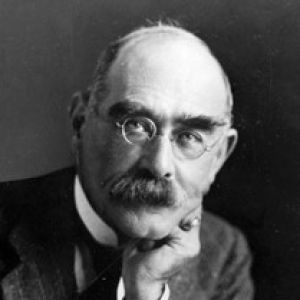
Rudyard Kipling (1865-1936) was a British author and poet, renowned for his works of fiction, including "The Jungle Book" and "Kim." He received the Nobel Prize in Literature in 1907, becoming the youngest recipient to that date. Kipling's writing is celebrated for its vivid storytelling and exploration of British imperialism, often reflecting his own experiences in British India.
Author's Books:
Sort by:
by:
Rudyard Kipling
POOR DEAR MAMMA The wild hawk to the wind-swept sky, The deer to the wholesome wold, And the heart of a man to the heart of a maid, As it was in the days of old. Gypsy Song. SCENE.—Interior of Miss MINNIE THREEGAN'S Bedroom at Simla. Miss THREEGAN, in window-seat, turning over a drawerful of things. Miss EMMA DEERCOURT, bosom—friend, who has come to spend the day, sitting on the bed,...
more...

by:
Rudyard Kipling
THE ROWERS 1902 (When Germany proposed that England should help her in a naval demonstration to collect debts from Venezuela.)The banked oars fell an hundred strong,And backed and threshed and ground,But bitter was the rowers' songAs they brought the war-boat round.They had no heart for the rally and roarThat makes the whale-bath smoke—When the great blades cleave and hold and leaveAs one on the...
more...

by:
Rudyard Kipling
Hunting.Certes it is a noble sportAnd men have quitted selle and swum for't,But I am of a meeker sortAnd I prefer Surtees in comfort.Reach down my "Handley Cross" again.My run, where never danger lurks, isWith Jorrocks and his deathless trainPigg, Binjimin and Arterxerxes! January. Most men harry the world for fun—Each man seeks it a different wayBut "of all daft devils under the...
more...
by:
Rudyard Kipling
BARRACK-ROOM BALLADS AND OTHER VERSES 1889-1891TO WOLCOTT BALESTIER Beyond the path of the outmost sun through utter darkness hurled —Further than ever comet flared or vagrant star-dust swirled —Live such as fought and sailed and ruled and loved and made our world. They are purged of pride because they died, they know the worth of their bays,They sit at wine with the Maidens Nine and the Gods of...
more...

by:
Rudyard Kipling
LISPETH. Look, you have cast out Love! What Gods are theseYou bid me please?The Three in One, the One in Three? Not so!To my own Gods I go.It may be they shall give me greater easeThan your cold Christ and tangled Trinities. The Convert. She was the daughter of Sonoo, a Hill-man, and Jadeh his wife. One year their maize failed, and two bears spent the night in their only poppy-field just above the...
more...
by:
Rudyard Kipling
THE EDUCATION OF OTIS YEEREIIn the pleasant orchard-closes'God bless all our gains,' say we;But 'May God bless all our losses,'Better suits with our degree.The Lost Bower. This is the history of a failure; but the woman who failed said that it might be an instructive tale to put into print for the benefit of the younger generation. The younger generation does not want instruction,...
more...

by:
Rudyard Kipling
With the Night Mail At nine o'clock of a gusty winter night I stood on the lower stages of one of the G. P. O. outward mail towers. My purpose was a run to Quebec in "Postal Packet 162 or such other as may be appointed"; and the Postmaster-General himself countersigned the order. This talisman opened all doors, even those in the despatching-caisson at the foot of the tower, where they...
more...
by:
Rudyard Kipling
WITH THE MAIN GUARDDer jungere UhlanenSit round mit open mouthWhile Breitmann tell dem stdoriesOf fightin' in the South;Und gif dem moral lessons,How before der battle pops,Take a little prayer to HimmelUnd a goot long drink of Schnapps. Hans Breitmann's Ballads. 'Mary, Mother av Mercy, fwhat the divil possist us to take an' kape this melancolious counthry? Answer me that,...
more...
by:
Rudyard Kipling
'RIKKI-TIKKI-TAVI' At the hole where he went in Red-Eye called to Wrinkle-Skin. Hear what little Red-Eye saith: 'Nag, come up and dance with death!' Eye to eye and head to head, (Keep the measure, Nag.) This shall end when one is...
more...
by:
Rudyard Kipling
Introduction In an issue of the London World in April, 1890, there appeared the following paragraph: "Two small rooms connected by a tiny hall afford sufficient space to contain Mr. Rudyard Kipling, the literary hero of the present hour, 'the man who came from nowhere,' as he says himself, and who a year ago was consciously nothing in the literary world." Six months previous to this...
more...