

Categories
- Antiques & Collectibles 13
- Architecture 36
- Art 48
- Bibles 22
- Biography & Autobiography 816
- Body, Mind & Spirit 145
- Business & Economics 32
- Children's Books 15
- Children's Fiction 13
- Computers 4
- Cooking 94
- Crafts & Hobbies 4
- Drama 346
- Education 64
- Family & Relationships 62
- Fiction 11848
- Foreign Language Study 2
- Games 19
- Gardening 17
- Health & Fitness 36
- History 1383
- House & Home 1
- Humor 147
- Juvenile Fiction 1884
- Juvenile Nonfiction 202
- Language Arts & Disciplines 89
- Law 16
- Literary Collections 687
- Literary Criticism 179
- Mathematics 13
- Medical 43
- Music 40
- Nature 181
- Non-Classifiable 1768
- Performing Arts 7
- Periodicals 1453
- Philosophy 65
- Photography 2
- Poetry 897
- Political Science 206
- Psychology 44
- Reference 154
- Religion 516
- Science 128
- Self-Help 89
- Social Science 84
- Sports & Recreation 34
- Study Aids 3
- Technology & Engineering 60
- Transportation 23
- Travel 463
- True Crime 29
Robert S. (Robert Stawell) Ball
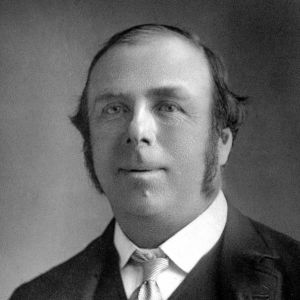
Robert Stawell Ball (1840–1913) was an Irish astronomer and mathematician known for his contributions to astronomy and popular science writing. He served as the Royal Astronomer of Ireland and later became the Lowndean Professor of Astronomy and Geometry at Cambridge University. Among his notable works are "The Story of the Heavens" and "The Cause of an Ice Age," both of which helped to make complex scientific ideas accessible to the public. Ball also made important contributions to the field of kinematics, particularly in the study of screw theory.
Author's Books:
Sort by:
LECTURE I. It is my privilege to address you this afternoon on a subject in which science and poetry are blended in a happy conjunction. If there be a peculiar fascination about the earlier chapters of any branch of history, how great must be the interest which attaches to that most primeval of all terrestrial histories which relates to the actual beginnings of this globe on which we stand. In our...
more...
Of all the natural sciences there is not one which offers such sublime objects to the attention of the inquirer as does the science of astronomy. From the earliest ages the study of the stars has exercised the same fascination as it possesses at the present day. Among the most primitive peoples, the movements of the sun, the moon, and the stars commanded attention from their supposed influence on human...
more...
CHAPTER I. THE ASTRONOMICAL OBSERVATORY. Early Astronomical Observations—The Observatory of Tycho Brahe—The Pupil of the Eye—Vision of Faint Objects—The Telescope—The Object-Glass—Advantages of Large Telescopes—The Equatorial—The Observatory—The Power of a Telescope—Reflecting Telescopes—Lord Rosse's Great Reflector at Parsonstown—How the mighty Telescope is...
more...