

Categories
- Antiques & Collectibles 13
- Architecture 36
- Art 48
- Bibles 22
- Biography & Autobiography 816
- Body, Mind & Spirit 145
- Business & Economics 32
- Children's Books 15
- Children's Fiction 13
- Computers 4
- Cooking 94
- Crafts & Hobbies 4
- Drama 346
- Education 64
- Family & Relationships 62
- Fiction 11848
- Foreign Language Study 2
- Games 19
- Gardening 17
- Health & Fitness 36
- History 1383
- House & Home 1
- Humor 147
- Juvenile Fiction 1884
- Juvenile Nonfiction 202
- Language Arts & Disciplines 89
- Law 16
- Literary Collections 687
- Literary Criticism 179
- Mathematics 13
- Medical 43
- Music 40
- Nature 181
- Non-Classifiable 1768
- Performing Arts 7
- Periodicals 1453
- Philosophy 65
- Photography 2
- Poetry 897
- Political Science 206
- Psychology 44
- Reference 154
- Religion 516
- Science 128
- Self-Help 89
- Social Science 84
- Sports & Recreation 34
- Study Aids 3
- Technology & Engineering 60
- Transportation 23
- Travel 463
- True Crime 29
Robert Louis Stevenson
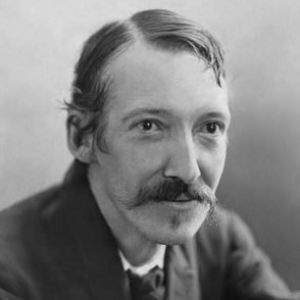
Robert Louis Stevenson was a Scottish novelist, poet, and travel writer, best known for his classic works such as "Treasure Island" and "Strange Case of Dr Jekyll and Mr Hyde." Born on November 13, 1850, in Edinburgh, his adventurous spirit and chronic health issues influenced much of his writing, which often explores themes of adventure, duality, and human nature. Stevenson's vivid storytelling and memorable characters have left a lasting impact on literature, making his works beloved by readers of all ages.
Author's Books:
Sort by:

CHAPTER I A BEGGAR ON HORSEBACK The 25th day of August, 1751, about two in the afternoon, I, David Balfour, came forth of the British Linen Company, a porter attending me with a bag of money, and some of the chief of these merchants bowing me from their doors. Two days before, and even so late as yestermorning, I was like a beggarman by the wayside, clad in rags, brought down to my last shillings, my...
more...

CHAPTER I NIGHT ON THE BEACH Throughout the island world of the Pacific, scattered men of many European races, and from almost every grade of society, carry activity and disseminate disease. Some prosper, some vegetate. Some have mounted the steps of thrones and owned islands and navies. Others again must marry for a livelihood; a strapping, merry, chocolate-coloured dame supports them in sheer...
more...

CHAPTER I INTRODUCES THE ADMIRAL When Dick Naseby was in Paris he made some odd acquaintances, for he was one of those who have ears to hear, and can use their eyes no less than their intelligence. He made as many thoughts as Stuart Mill; but his philosophy concerned flesh and blood, and was experimental as to its method. He was a type-hunter among mankind. He despised small game and insignificant...
more...
CHAPTER I I SET OFF UPON MY JOURNEY TO THE HOUSE OF SHAWS I will begin the story of my adventures with a certain morning early in the month of June, the year of grace 1751, when I took the key for the last time out of the door of my father's house. The sun began to shine upon the summit of the hills as I went down the road; and by the time I had come as far as the manse, the blackbirds were...
more...

CHAPTER I. THE FOREIGNER AT HOME “This is no my ain house;I ken by the biggin’ o’t.” Two recent books one by Mr. Grant White on England, one on France by the diabolically clever Mr. Hillebrand, may well have set people thinking on the divisions of races and nations. Such thoughts should arise with particular congruity and force to inhabitants of that United Kingdom, peopled from so many...
more...

A TALE OF A LION RAMPANT It was in the month of May 1813 that I was so unlucky as to fall at last into the hands of the enemy. My knowledge of the English language had marked me out for a certain employment. Though I cannot conceive a soldier refusing to incur the risk, yet to be hanged for a spy is a disgusting business; and I was relieved to be held a prisoner of war. Into the Castle of Edinburgh,...
more...

CHAPTER I. INTRODUCTORY. The ancient and famous metropolis of the North sits overlooking a windy estuary from the slope and summit of three hills. No situation could be more commanding for the head city of a kingdom; none better chosen for noble prospects. From her tall precipice and terraced gardens she looks far and wide on the sea and broad champaigns. To the east you may catch at sunset the...
more...

CHAPTER I IN WHICH THE PRINCE DEPARTS ON AN ADVENTURE You shall seek in vain upon the map of Europe for the bygone state of Grünewald. An independent principality, an infinitesimal member of the German Empire, she played, for several centuries, her part in the discord of Europe; and, at last, in the ripeness of time and at the spiriting of several bald diplomatists, vanished like a morning ghost. Less...
more...

CHAPTER I—THE ELEMENTS OF DISCORD: NATIVE The story I have to tell is still going on as I write; the characters are alive and active; it is a piece of contemporary history in the most exact sense. And yet, for all its actuality and the part played in it by mails and telegraphs and iron war-ships, the ideas and the manners of the native actors date back before the Roman Empire. They are...
more...

I LIFE OF STEVENSON Robert Louis Stevenson[1] was born at Edinburgh on the 13 November 1850. His father, Thomas, and his grandfather, Robert, were both distinguished light-house engineers; and the maternal grandfather, Balfour, was a Professor of Moral Philosophy, who lived to be ninety years old. There was, therefore, a combination of Lux et Veritas in the blood of young Louis Stevenson, which in Dr....
more...