

Categories
- Antiques & Collectibles 13
- Architecture 36
- Art 48
- Bibles 22
- Biography & Autobiography 816
- Body, Mind & Spirit 145
- Business & Economics 32
- Children's Books 15
- Children's Fiction 13
- Computers 4
- Cooking 94
- Crafts & Hobbies 4
- Drama 346
- Education 65
- Family & Relationships 62
- Fiction 11848
- Foreign Language Study 2
- Games 19
- Gardening 17
- Health & Fitness 36
- History 1383
- House & Home 1
- Humor 147
- Juvenile Fiction 1884
- Juvenile Nonfiction 202
- Language Arts & Disciplines 89
- Law 16
- Literary Collections 687
- Literary Criticism 179
- Mathematics 13
- Medical 43
- Music 40
- Nature 181
- Non-Classifiable 1768
- Performing Arts 7
- Periodicals 1453
- Philosophy 65
- Photography 2
- Poetry 898
- Political Science 206
- Psychology 44
- Reference 154
- Religion 516
- Science 128
- Self-Help 89
- Social Science 84
- Sports & Recreation 34
- Study Aids 3
- Technology & Engineering 60
- Transportation 23
- Travel 463
- True Crime 29
Plutarch
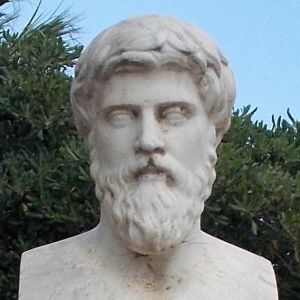
Plutarch was a Greek biographer, essayist, and moralist, best known for his work "Parallel Lives," a series of biographies comparing famous Greeks and Romans. Born in Chaeronea, Greece, around 46 AD, he was a philosopher who combined ethical philosophy with historical narratives. His other major work, "Moralia," is a collection of essays and dialogues covering various moral, religious, and philosophical topics. Plutarch's writings had a significant influence on later European literature, particularly during the Renaissance.
Author's Books:
Sort by:
by:
Plutarch
Epicurus's great confidant and familiar, Colotes, set forth a book with this title to it, that according to the tenets of the other philosophers it is impossible to live. Now what occurred to me then to say against him, in the defence of those philosophers, hath been already put into writing by me. But since upon breaking up of our lecture several things have happened to be spoken afterwards in...
more...
by:
Plutarch
§ i. Come let us consider what one might say on the education of free children, and by what training they would become good citizens. § ii. It is perhaps best to begin with birth: I would therefore warn those who desire to be fathers of notable sons, not to form connections with any kind of women, such as courtesans or mistresses: for those who either on the father or mother's side are ill-born...
more...
by:
Plutarch
THESEUS As geographers crowd into the edges of their maps parts of the world which they do not know about, adding notes in the margin to the effect that beyond this lies nothing but sandy deserts full of wild beasts, unapproachable bogs, Seythian ice, or frozen sea, so, in this great work of mine, in which I have compared the lives of the greatest men with one another, after passing through those...
more...