

Categories
- Antiques & Collectibles 13
- Architecture 36
- Art 48
- Bibles 22
- Biography & Autobiography 815
- Body, Mind & Spirit 145
- Business & Economics 28
- Children's Books 15
- Children's Fiction 12
- Computers 4
- Cooking 94
- Crafts & Hobbies 4
- Drama 346
- Education 63
- Family & Relationships 59
- Fiction 11841
- Foreign Language Study 1
- Games 19
- Gardening 17
- Health & Fitness 35
- History 1382
- House & Home 1
- Humor 147
- Juvenile Fiction 1884
- Juvenile Nonfiction 202
- Language Arts & Disciplines 89
- Law 16
- Literary Collections 687
- Literary Criticism 179
- Mathematics 13
- Medical 43
- Music 40
- Nature 181
- Non-Classifiable 1768
- Performing Arts 7
- Periodicals 1453
- Philosophy 65
- Photography 2
- Poetry 897
- Political Science 205
- Psychology 44
- Reference 154
- Religion 516
- Science 128
- Self-Help 87
- Social Science 83
- Sports & Recreation 34
- Study Aids 3
- Technology & Engineering 60
- Transportation 23
- Travel 463
- True Crime 29
Mrs. (Margaret) Oliphant
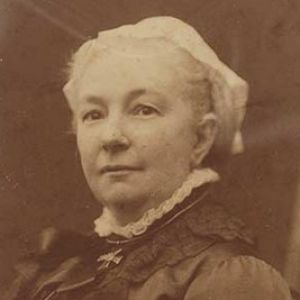
Mrs. Margaret Oliphant (1828–1897) was a prolific Scottish novelist and historical writer, known for her insightful portrayals of domestic life and society. She authored over 100 works, including novels, biographies, and histories, with notable series like the Chronicles of Carlingford. Despite facing personal hardships, including the loss of her husband and several children, Oliphant's writing career flourished, leaving a lasting impact on Victorian literature.
Author's Books:
Sort by:
I She was very old, and therefore it was very hard for her to make up her mind to die. I am aware that this is not at all the general view, but that it is believed, as old age must be near death, that it prepares the soul for that inevitable event. It is not so, however, in many cases. In youth we are still so near the unseen out of which we came, that death is rather pathetic than...
more...

HOW SIR TOM BECAME A GREAT PERSONAGE. Sir Thomas Randolph had lived a somewhat stormy life during the earliest half of his career. He had gone through what the French called a jeunesse orageuse; nothing very bad had ever been laid to his charge; but he had been adventurous, unsettled, a roamer about the world even after the period at which youthful extravagances cease. Nobody ever knew when or where he...
more...
I. IN THE UNSEEN. She had been talking of dying only the evening before, with a friend, and had described her own sensations after a long illness when she had been at the point of death. "I suppose," she said, "that I was as nearly gone as any one ever was to come back again. There was no pain in it, only a sense of sinking down, downвÐâthrough the bed as if nothing could hold me...
more...

I THE OPEN DOOR. I took the house of Brentwood on my return from India in 18вÐâ, for the temporary accommodation of my family, until I could find a permanent home for them. It had many advantages which made it peculiarly appropriate. It was within reach of Edinburgh; and my boy Roland, whose education had been considerably neglected, could go in and out to school; which was thought to be...
more...
THE NARRATIVE OF M. LE MAIRE: THE CONDITION OF THE CITY. I, Martin Dupin (de la Clairière), had the honour of holding the office of Maire in the town of Semur, in the Haute Bourgogne, at the time when the following events occurred. It will be perceived, therefore, that no one could have more complete knowledge of the facts—at once from my official position, and from the place of eminence in the...
more...
Young Dr Rider lived in the new quarter of Carlingford: had he aimed at a reputation in society, he could not possibly have done a more foolish thing; but such was not his leading motive. The young man, being but young, aimed at a practice. He was not particular in the mean time as to the streets in which his patients dwelt. A new house, gazing with all its windows over a brick-field, was as...
more...
She had been talking of dying only the evening before, with a friend, and had described her own sensations after a long illness when she had been at the point of death. "I suppose," she said, "that I was as nearly gone as any one ever was to come back again. There was no pain in it, only a sense of sinking down, down—through the bed as if nothing could hold me or give me support...
more...

Carlingford is, as is well known, essentially a quiet place. There is no trade in the town, properly so called. To be sure, there are two or three small counting-houses at the other end of George Street, in that ambitious pile called Gresham Chambers; but the owners of these places of business live, as a general rule, in villas, either detached or semi-detached, in the North-end, the new quarter,...
more...

MARGARET OF SCOTLAND, ATHELING—QUEEN AND SAINT It is strange yet scarcely difficult to the imagination to realise the first embodiment of what is now Edinburgh in the far distance of the early ages. Neither Pict nor Scot has left any record of what was going on so far south in the days when the king's daughters, primitive princesses with their rude surroundings, were placed for safety in the...
more...
I. THE LITTLE PILGRIM IN THE SEEN AND UNSEEN. The little Pilgrim, whose story has been told in another place, and who had arrived but lately on the other side, among those who know trouble and sorrow no more, was one whose heart was always full of pity for the suffering. And after the first rapture of her arrival, and of the blessed work which had been given to her to do, and all the wonderful things...
more...