

Categories
- Antiques & Collectibles 13
- Architecture 36
- Art 48
- Bibles 22
- Biography & Autobiography 816
- Body, Mind & Spirit 145
- Business & Economics 32
- Children's Books 15
- Children's Fiction 13
- Computers 4
- Cooking 94
- Crafts & Hobbies 4
- Drama 346
- Education 65
- Family & Relationships 62
- Fiction 11848
- Foreign Language Study 2
- Games 19
- Gardening 17
- Health & Fitness 36
- History 1383
- House & Home 1
- Humor 147
- Juvenile Fiction 1884
- Juvenile Nonfiction 202
- Language Arts & Disciplines 89
- Law 16
- Literary Collections 687
- Literary Criticism 179
- Mathematics 13
- Medical 43
- Music 40
- Nature 181
- Non-Classifiable 1768
- Performing Arts 7
- Periodicals 1453
- Philosophy 65
- Photography 2
- Poetry 898
- Political Science 206
- Psychology 44
- Reference 154
- Religion 516
- Science 128
- Self-Help 89
- Social Science 84
- Sports & Recreation 34
- Study Aids 3
- Technology & Engineering 60
- Transportation 23
- Travel 463
- True Crime 29
Mary Hartwell Catherwood
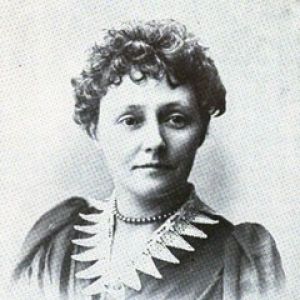
Mary Hartwell Catherwood (1847-1902) was an American author known for her historical fiction set in the American Midwest, particularly focusing on French colonial history. Her notable works include "The Romance of Dollard" and "The White Islander," which reflect her meticulous research and vivid storytelling. Catherwood's writing earned her a respected place in American literature during the late 19th and early 20th centuries.
Author's Books:
Sort by:
THE CHASE OF SAINT-CASTIN. The waiting April woods, sensitive in every leafless twig to spring, stood in silence and dim nightfall around a lodge. Wherever a human dwelling is set in the wilderness, it becomes, by the very humility of its proportions, a prominent and aggressive point. But this lodge of bark and poles was the color of the woods, and nearly escaped intruding as man's work. A glow...
more...

As his boat shot to the camp dock of beach stones, the camper thought he heard a child's voice behind the screen of brush. He leaped out and drew the boat to its landing upon a cross-piece held by two uprights in the water, and ascended the steep path worn in leaf mould. There was not only a child, there was a woman also in the camp. And Frank Puttany, his German feet planted outward in a line,...
more...

THE KING OF BEAVER Success was the word most used by the King of Beaver. Though he stood before his people as a prophet assuming to speak revelations, executive power breathed from him. He was a tall, golden-tinted man with a head like a dome, hair curling over his ears, and soft beard and mustache which did not conceal a mouth cut thin and straight. He had student hands, long and well kept. It was not...
more...

Maurice Barrett sat waiting in the old lime-kiln built by the British in the war of 1812—a white ruin like much-scattered marble, which stands bowered in trees on a high part of the island. He had, to the amusement of the commissioner, hired this place for a summer study, and paid a carpenter to put a temporary roof over it, with skylight, and to make a door which could be fastened. Here on the...
more...

Early in the Mackinac summer Owen Cunning took his shoemaker's bench and all his belongings to that open cavern on the beach called the Devil's Kitchen, which was said to derive its name from former practices of the Indians. They roasted prisoners there. The inner rock retained old smoke-stains. Though appearing a mere hole in the cliff to passing canoe-men, the Devil's Kitchen was...
more...

THE SKELETON ON ROUND ISLAND I am to carry Mamselle Rosalin of Green Bay from Mackinac to Cheboygan that time, and it is the end of March, and the wind have turn from east to west in the morning. A man will go out with the wind in the east, to haul wood from Boblo, or cut a hole to fish, and by night he cannot get home—ice, it is rotten; it goes to pieces quick when the March wind turns. I am not...
more...

When the British landed on the west side of Mackinac Island at three o'clock in the morning of July 17,1812, Canadians were ordered to transport the cannon. They had only a pair of six-pounders, but these had to be dragged across the long alluvial stretch to heights which would command the fortress, and sand, rock, bushes, trees, and fallen logs made it a dreadful portage. Voyageurs, however, were...
more...

ST. BAT'S "My name is Eagle," said the little girl. The boy said nothing. "My name is Eagle," she repeated. "Eagle de Ferrier. What is your name?" Still the boy said nothing. She looked at him surprised, but checked her displeasure. He was about nine years old, while she was less than seven. By the dim light which sifted through the top of St. Bat's church he did not...
more...

PART FIRST. THE BONFIRE OF ST. JOHN. Early in the century, on a summer evening, Jean Lozier stood on the bluff looking at Kaskaskia. He loved it with the homesick longing of one who is born for towns and condemned to the fields. Moses looking into the promised land had such visions and ideals as this old lad cherished. Jean was old in feeling, though not yet out of his teens. The training-masters of...
more...

* This story is set down exactly as it was told by theIsland Chronicler. Well, I wish you could have been here in Mrs. Gunning's day. She was the oddest woman on Mackinac. Not that she exerted herself to attract attention. But she was such a character, and her manners were so astonishing, that she furnished perennial entertainment to the few families of us constituting island society. She was an...
more...