

Categories
- Antiques & Collectibles 13
- Architecture 36
- Art 48
- Bibles 22
- Biography & Autobiography 816
- Body, Mind & Spirit 145
- Business & Economics 32
- Children's Books 15
- Children's Fiction 13
- Computers 4
- Cooking 94
- Crafts & Hobbies 4
- Drama 346
- Education 64
- Family & Relationships 62
- Fiction 11847
- Foreign Language Study 2
- Games 19
- Gardening 17
- Health & Fitness 36
- History 1383
- House & Home 1
- Humor 147
- Juvenile Fiction 1884
- Juvenile Nonfiction 202
- Language Arts & Disciplines 89
- Law 16
- Literary Collections 687
- Literary Criticism 179
- Mathematics 13
- Medical 43
- Music 40
- Nature 181
- Non-Classifiable 1768
- Performing Arts 7
- Periodicals 1453
- Philosophy 65
- Photography 2
- Poetry 897
- Political Science 206
- Psychology 44
- Reference 154
- Religion 516
- Science 128
- Self-Help 89
- Social Science 84
- Sports & Recreation 34
- Study Aids 3
- Technology & Engineering 60
- Transportation 23
- Travel 463
- True Crime 29
Martin Farquhar Tupper
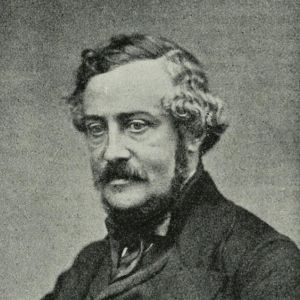
Martin Farquhar Tupper (1810–1889) was an English poet and writer best known for his work "Proverbial Philosophy", a collection of didactic moral and religious verses that gained considerable popularity during the Victorian era. Published in 1838, the book made Tupper one of the most widely read poets of his time, though his fame declined as literary tastes shifted. Tupper's work often emphasized traditional Christian values and was praised for its moral guidance but later criticized for its overly sentimental and moralistic tone. Despite the decline in his popularity, Tupper's influence on Victorian literature and culture remains significant.
Author's Books:
Sort by:
CHAPTER I. WHEREIN TWO ANXIOUS PARENTS HOLD A COLLOQUY. "Is he rich, ma'am? is he rich? ey? what—what? is he rich?" Sir Thomas was a rapid little man, and quite an epicure in the use of that luscious monosyllable. "Is he rich, Lady Dillaway? ey? what?" "Really, Thomas, you never give me time to answer," replied the quintescence of quietude, her ladyship; "and then it...
more...
AN AID TO FAITH. The certainty of those things which most surely are believed among us, is a matter quite distinct from their antecedent probability or improbability. We know, and take for facts, that Cromwell and Napoleon existed, and are persuaded that their characters and lives were such as history reports them: but it is another thing, and one eminently calculated to disturb any disbeliever of such...
more...

CHAPTER I. PRELIMINARY. I have often been asked to prepare an autobiography, but my objections to the task have ever been many and various. To one urgent appeal I sent this sonnet of refusal, which explains itself:—"You bid me write the story of my life,And draw what secrets in my memory dwellFrom the dried fountains of her failing well,With commonplaces mixt of peace and strife,And such small...
more...
CHAPTER I. PLACE: TIME: CIRCUMSTANCE. Burleigh-Singleton is a pleasant little watering-place on the southern coast of England, entirely suitable for those who have small incomes and good consciences. The latter, to residents especially, are at least as indispensable as the former: seeing that, however just the reputation of their growing little town for superior cheapness in matters of meat and drink,...
more...
CHAPTER I. THE LABOURER; AND HIS DAWNING DISCONTENT. Roger Acton woke at five. It was a raw March morning, still dark, and bitterly cold, while at gusty intervals the rain beat in against the crazy cottage-window. Nevertheless, from his poor pallet he must up and rouse himself, for it will be open weather by sunrise, and his work lies two miles off; Master Jennings is not the man to show him favour if...
more...