

Categories
- Antiques & Collectibles 13
- Architecture 36
- Art 48
- Bibles 22
- Biography & Autobiography 816
- Body, Mind & Spirit 145
- Business & Economics 32
- Children's Books 15
- Children's Fiction 13
- Computers 4
- Cooking 94
- Crafts & Hobbies 4
- Drama 346
- Education 68
- Family & Relationships 62
- Fiction 11845
- Foreign Language Study 2
- Games 19
- Gardening 17
- Health & Fitness 36
- History 1383
- House & Home 1
- Humor 147
- Juvenile Fiction 1884
- Juvenile Nonfiction 202
- Language Arts & Disciplines 89
- Law 16
- Literary Collections 687
- Literary Criticism 180
- Mathematics 13
- Medical 43
- Music 40
- Nature 181
- Non-Classifiable 1768
- Performing Arts 7
- Periodicals 1453
- Philosophy 65
- Photography 2
- Poetry 898
- Political Science 206
- Psychology 44
- Reference 154
- Religion 516
- Science 128
- Self-Help 89
- Social Science 84
- Sports & Recreation 34
- Study Aids 3
- Technology & Engineering 60
- Transportation 23
- Travel 463
- True Crime 29
Leonardo da Vinci
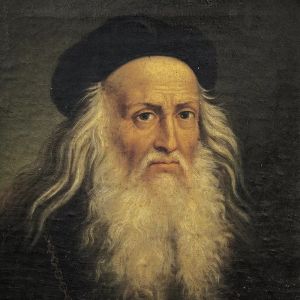
Leonardo da Vinci (1452–1519) was a Renaissance polymath, excelling in art, science, engineering, anatomy, and writing. Though most famous for masterpieces like "Mona Lisa" and "The Last Supper," he also authored numerous notebooks filled with ideas, sketches, and reflections on various subjects. His writings, often written in mirror script, covered topics from anatomy to engineering, and were later compiled into works like "Codex Atlanticus" and "Codex Leicester." Leonardo's interdisciplinary genius greatly influenced both his contemporaries and future generations, blending creativity and scientific inquiry in groundbreaking ways.
Author's Books:
Sort by:
The notes on Sculpture. Compared with the mass of manuscript treating of Painting, a very small number of passages bearing on the practice and methods of Sculpture are to be found scattered through the note books; these are here given at the beginning of this section (Nos. 706-709). There is less cause for surprise at finding that the equestrian statue of Francesco Sforza is only incidentally spoken...
more...
A singular fatality has ruled the destiny of nearly all the most famous of Leonardo da Vinci's works. Two of the three most important were never completed, obstacles having arisen during his life-time, which obliged him to leave them unfinished; namely the Sforza Monument and the Wall-painting of the Battle of Anghiari, while the third—the picture of the Last Supper at Milan—has suffered...
more...