

Categories
- Antiques & Collectibles 13
- Architecture 36
- Art 48
- Bibles 22
- Biography & Autobiography 815
- Body, Mind & Spirit 144
- Business & Economics 28
- Children's Books 15
- Children's Fiction 12
- Computers 4
- Cooking 94
- Crafts & Hobbies 4
- Drama 346
- Education 63
- Family & Relationships 59
- Fiction 11839
- Foreign Language Study 1
- Games 19
- Gardening 17
- Health & Fitness 35
- History 1382
- House & Home 1
- Humor 147
- Juvenile Fiction 1877
- Juvenile Nonfiction 202
- Language Arts & Disciplines 89
- Law 16
- Literary Collections 687
- Literary Criticism 179
- Mathematics 13
- Medical 43
- Music 40
- Nature 181
- Non-Classifiable 1768
- Performing Arts 7
- Periodicals 1453
- Philosophy 65
- Photography 2
- Poetry 897
- Political Science 205
- Psychology 44
- Reference 154
- Religion 516
- Science 128
- Self-Help 86
- Social Science 83
- Sports & Recreation 34
- Study Aids 3
- Technology & Engineering 60
- Transportation 23
- Travel 463
- True Crime 29
Kate Douglas Smith Wiggin
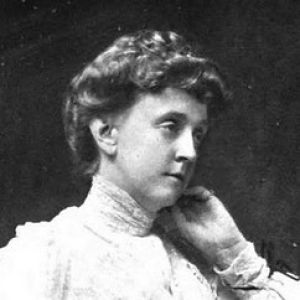
Kate Douglas Smith Wiggin (1856–1923) was an American educator and author known for her contributions to children's literature, most notably her classic novel "Rebecca of Sunnybrook Farm" (1903). She was also a pioneer in early childhood education, founding the first free kindergarten in San Francisco. Besides her work in education, Wiggin wrote numerous other books and stories that continue to be beloved by readers of all ages.
Author's Books:
Sort by:
I. SACO WATER FAR, far up, in the bosom of New Hampshire's granite hills, the Saco has its birth. As the mountain rill gathers strength it takes "Through Bartlett's vales its tuneful way,Or hides in Conway's fragrant brakes,Retreating from the glare of day." Now it leaves the mountains and flows through "green Fryeburg's woods and farms." In the course of its...
more...
First Chronicle. JACK O'LANTERNIMiss Miranda Sawyer's old-fashioned garden was the pleasantest spot in Riverboro on a sunny July morning. The rich color of the brick house gleamed and glowed through the shade of the elms and maples. Luxuriant hop-vines clambered up the lightning rods and water spouts, hanging their delicate clusters here and there in graceful profusion. Woodbine transformed...
more...
KATE DOUGLAS WIGGIN. It is an advantage for an author to have known many places and different sorts of people, though the most vivid impressions are commonly those received in childhood and youth. Mrs. Wiggin, as she is known in literature, was Kate Douglas Smith; she was born in Philadelphia, and spent her young womanhood in California, but when a very young child she removed to Hollis in the State of...
more...
SHE Winchester, May 28, 1891The Royal Garden Inn. We are doing the English cathedral towns, aunt Celia and I. Aunt Celia has an intense desire to improve my mind. Papa told her, when we were leaving Cedarhurst, that he wouldn’t for the world have it too much improved, and aunt Celia remarked that, so far as she could judge, there was no immediate danger; with which exchange of hostilities they...
more...

I MOTHER CAREY HERSELF "By and by there came along a flock of petrels, who are Mother Carey's own chickens…. They flitted along like a flock of swallows, hopping and skipping from wave to wave, lifting their little feet behind them so daintily that Tom fell in love with them at once." Nancy stopped reading and laid down the copy of "Water Babies" on the sitting-room table....
more...
A LITTLE SNOW BIRD. It was very early Christmas morning, and in the stillness of the dawn, with the soft snow falling on the housetops, a little child was born in the Bird household. They had intended to name the baby Lucy, if it were a girl; but they hadn't expected her on Christmas morning, and a real Christmas baby was not to be lightly named—the whole family agreed in that. They were...
more...
A DIFFERENCE IN HEARTS "I DON' know as I cal'lated to be the makin' of any child," Miranda had said as she folded Aurelia's letter and laid it in the light-stand drawer. "I s'posed of course Aurelia would send us the one we asked for, but it's just like her to palm off that wild young one on somebody else." "You remember we said that Rebecca, or even...
more...
"WE ARE SEVEN" The old stage coach was rumbling along the dusty road that runs from Maplewood to Riverboro. The day was as warm as midsummer, though it was only the middle of May, and Mr. Jeremiah Cobb was favoring the horses as much as possible, yet never losing sight of the fact that he carried the mail. The hills were many, and the reins lay loosely in his hands as he lolled back in his seat...
more...
Chapter I. The weekly bill. Smith's Hotel, 10 Dovermarle Street. Here we are in London again,—Francesca, Salemina, and I. Salemina is a philanthropist of the Boston philanthropists limited. I am an artist. Francesca is— It is very difficult to label Francesca. She is, at her present stage of development, just a nice girl; that is about all: the sense of humanity hasn't dawned upon her...
more...

CHAPTER I Edgewood, like all the other villages along the banks of the Saco, is full of sunny slopes and leafy hollows. There are little, rounded, green-clad hillocks that might, like their scriptural sisters, “skip with joy,” and there are grand, rocky hills tufted with gaunt pine trees—these leading the eye to the splendid heights of a neighbour State, where snow-crowned peaks tower in the...
more...