

Categories
- Antiques & Collectibles 13
- Architecture 36
- Art 48
- Bibles 22
- Biography & Autobiography 816
- Body, Mind & Spirit 144
- Business & Economics 30
- Children's Books 15
- Children's Fiction 12
- Computers 4
- Cooking 94
- Crafts & Hobbies 4
- Drama 346
- Education 64
- Family & Relationships 59
- Fiction 11841
- Foreign Language Study 2
- Games 19
- Gardening 17
- Health & Fitness 35
- History 1383
- House & Home 1
- Humor 147
- Juvenile Fiction 1884
- Juvenile Nonfiction 202
- Language Arts & Disciplines 89
- Law 16
- Literary Collections 687
- Literary Criticism 179
- Mathematics 13
- Medical 43
- Music 40
- Nature 181
- Non-Classifiable 1768
- Performing Arts 7
- Periodicals 1453
- Philosophy 65
- Photography 2
- Poetry 897
- Political Science 205
- Psychology 44
- Reference 154
- Religion 515
- Science 128
- Self-Help 86
- Social Science 83
- Sports & Recreation 34
- Study Aids 3
- Technology & Engineering 60
- Transportation 23
- Travel 463
- True Crime 29
John Torrey Morse
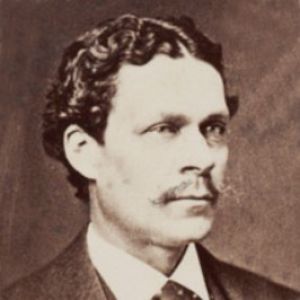
John Torrey Morse was an American biographer and historian, best known for his contributions to the "American Statesmen" series. He wrote biographies of notable figures such as Benjamin Franklin and John Quincy Adams. Morse's writing was characterized by his careful attention to detail and deep research, making him a respected figure in historical literature. His work continues to be a valuable resource for those interested in American political history.
Author's Books:
Sort by:
CHAPTER I During the spring and summer of 1861 the people of the North presented the appearance of a great political unit. All alleged emphatically that the question was simply of the Union, and upon this issue no Northerner could safely differ from his neighbors. Only a few of the more cross-grained ones among the Abolitionists were contemptuously allowed to publish the selfishness of their morality,...
more...
PREFACE Nearly sixteen years have elapsed since this book was written. In that time sundry inaccuracies have been called to my attention, and have been corrected, and it may be fairly hoped that after the lapse of so long a period all errors in matters of fact have been eliminated. I am not aware that any fresh material has been made public, or that any new views have been presented which would...
more...
The editor has often been asked: "Upon what principle have you constructed this series of lives of American statesmen?" The query has always been civil in form, while in substance it has often implied that the "principle," as to which inquiry is made, has been undiscoverable by the interrogator. Other queries, like pendants, have also come: Why have you not included A, or B, or C? The...
more...
CHAPTER I Abraham Lincoln knew little concerning his progenitors, and rested well content with the scantiness of his knowledge. The character and condition of his father, of whom alone upon that side of the house he had personal cognizance, did not encourage him to pry into the obscurity behind that luckless rover. He was sensitive on the subject; and when he was applied to for information, a brief...
more...