

Categories
- Antiques & Collectibles 13
- Architecture 36
- Art 48
- Bibles 22
- Biography & Autobiography 816
- Body, Mind & Spirit 145
- Business & Economics 31
- Children's Books 15
- Children's Fiction 13
- Computers 4
- Cooking 94
- Crafts & Hobbies 4
- Drama 346
- Education 64
- Family & Relationships 61
- Fiction 11845
- Foreign Language Study 2
- Games 19
- Gardening 17
- Health & Fitness 36
- History 1383
- House & Home 1
- Humor 147
- Juvenile Fiction 1884
- Juvenile Nonfiction 202
- Language Arts & Disciplines 89
- Law 16
- Literary Collections 687
- Literary Criticism 179
- Mathematics 13
- Medical 43
- Music 40
- Nature 181
- Non-Classifiable 1768
- Performing Arts 7
- Periodicals 1453
- Philosophy 65
- Photography 2
- Poetry 897
- Political Science 205
- Psychology 44
- Reference 154
- Religion 516
- Science 128
- Self-Help 89
- Social Science 83
- Sports & Recreation 34
- Study Aids 3
- Technology & Engineering 60
- Transportation 23
- Travel 463
- True Crime 29
John Henry Newman
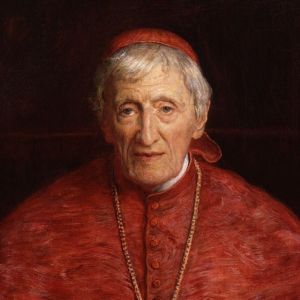
John Henry Newman was a 19th-century theologian, poet, and cardinal in the Catholic Church, originally an influential Anglican priest and leader in the Oxford Movement before converting to Catholicism in 1845. He is renowned for his extensive writings, including "Apologia Pro Vita Sua," which defends his religious journey, and "The Idea of a University," which explores the purpose and nature of higher education. Newman's works have left a lasting impact on both Anglican and Catholic thought, and he was canonized as a saint by the Catholic Church in 2019.
Author's Books:
Sort by:
PREFATORY NOTICE. The following sketch of Turkish history was the substance of Lectures delivered in the Catholic Institute of Liverpool during October, 1853. It may be necessary for its author to state at once, in order to prevent disappointment, that he only professes in the course of it to have brought together in one materials which are to be found in any ordinarily furnished library. Not intending...
more...
SERMON I. Reverence in Worship. "Samuel ministered before the Lord, being a child, girded with a linen ephod."—1 Samuel ii. 18. Samuel, viewed in his place in sacred history, that is, in the course of events which connect Moses with Christ, appears as a great ruler and teacher of his people; this is his prominent character. He was the first of the prophets; yet, when we read the sacred...
more...

Introduction "No autobiography in the English language has been more read; to the nineteenth century it bears a relation not less characteristic than Boswell's 'Johnson' to the eighteenth." Rev. Wm. Barry, D.D. Newman was already a recognised spiritual leader of over thirty year's standing, but not yet a Cardinal, when in 1864 he wrote the Apologia. He was London born, and...
more...
SERMON I. The Lapse of Time. "Whatsoever thy hand findeth to do, do it with thy might; for there is no work, nor device, nor knowledge, nor wisdom, in the grave, whither thou goest."—Eccles. ix. 10. Solomon's advice that we should do whatever our hand findeth to do with our might, naturally directs our thoughts to that great work in which all others are included, which will outlive all...
more...
My dear Dr. Russell,—Now that at length I take the step of printing my name in the Title-Page of this Volume, I trust I shall not be encroaching on the kindness you have so long shown to me, if I venture to follow it up by placing yours in the page which comes next, thus associating myself with you, and recommending myself to my readers by the association. Not that I am dreaming of bringing down upon...
more...