

Categories
- Antiques & Collectibles 13
- Architecture 36
- Art 48
- Bibles 22
- Biography & Autobiography 815
- Body, Mind & Spirit 144
- Business & Economics 28
- Children's Books 15
- Children's Fiction 11
- Computers 4
- Cooking 94
- Crafts & Hobbies 4
- Drama 346
- Education 62
- Family & Relationships 59
- Fiction 11835
- Foreign Language Study 1
- Games 19
- Gardening 17
- Health & Fitness 34
- History 1378
- House & Home 1
- Humor 147
- Juvenile Fiction 1873
- Juvenile Nonfiction 202
- Language Arts & Disciplines 89
- Law 16
- Literary Collections 686
- Literary Criticism 179
- Mathematics 13
- Medical 41
- Music 40
- Nature 180
- Non-Classifiable 1768
- Performing Arts 7
- Periodicals 1453
- Philosophy 65
- Photography 2
- Poetry 896
- Political Science 203
- Psychology 44
- Reference 154
- Religion 515
- Science 127
- Self-Help 85
- Social Science 83
- Sports & Recreation 34
- Study Aids 3
- Technology & Engineering 60
- Transportation 23
- Travel 463
- True Crime 29
John Galsworthy
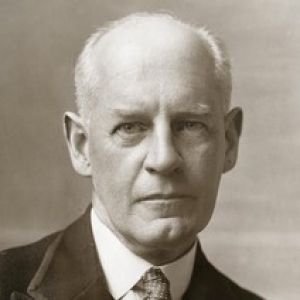
John Galsworthy (1867-1933) was an English novelist and playwright renowned for his series of novels collectively titled "The Forsyte Saga," which offers a critical portrayal of the upper-middle-class in Britain during the late 19th and early 20th centuries. He was awarded the Nobel Prize in Literature in 1932 for his distinguished art of narration which takes its highest form in "The Forsyte Saga." Galsworthy was also a social activist, advocating for prison reform, women's rights, and animal welfare throughout his life.
Author's Books:
Sort by:

by:
John Galsworthy
ACT I SCENE I The curtain rises on the BARTHWICK'S dining-room, large, modern, and well furnished; the window curtains drawn. Electric light is burning. On the large round dining-table is set out a tray with whisky, a syphon, and a silver cigarette-box. It is past midnight. A fumbling is heard outside the door. It is opened suddenly; JACK BARTHWICK seems to fall into the room. He stands holding by...
more...

by:
John Galsworthy
ACT I It is Ascension Day in a village of the West. In the low panelled hall-sittingroom of the BURLACOMBE'S farmhouse on the village green, MICHAEL STRANGWAY, a clerical collar round his throat and a dark Norfolk jacket on his back, is playing the flute before a very large framed photograph of a woman, which is the only picture on the walls. His age is about thirty-five his figure thin and very...
more...
by:
John Galsworthy
ACT I The MARCH'S dining-room opens through French windows on one of thosegardens which seem infinite, till they are seen to be coterminouswith the side walls of the house, and finite at the far end, becauseonly the thick screen of acacias and sumachs prevents another housefrom being seen. The French and other windows form practically allthe outer wall of that dining-room, and between them and the...
more...
by:
John Galsworthy
CHAPTER I Mayday afternoon in Oxford Street, and Felix Freeland, a little late, on his way from Hampstead to his brother John's house in Porchester Gardens. Felix Freeland, author, wearing the very first gray top hat of the season. A compromise, that—like many other things in his life and works—between individuality and the accepted view of things, aestheticism and fashion, the critical sense...
more...
by:
John Galsworthy
THE FIRST AND LAST "So the last shall be first, and the first last."—HOLY WRIT. It was a dark room at that hour of six in the evening, when just the single oil reading-lamp under its green shade let fall a dapple of light over the Turkey carpet; over the covers of books taken out of the bookshelves, and the open pages of the one selected; over the deep blue and gold of the coffee service on...
more...

by:
John Galsworthy
ACT I The time is morning, and the scene a level lawn, beyond whichthe river is running amongst fields. A huge old beech treeovershadows everything, in the darkness of whose hollow manythings are hidden. A rustic seat encircles it. A low wallclothed in creepers, with two openings, divides this lawn fromthe flowery approaches to the house. Close to the wall there isa swing. The sky is clear and sunny....
more...

by:
John Galsworthy
QUALITY I knew him from the days of my extreme youth, because he made my father's boots; inhabiting with his elder brother two little shops let into one, in a small by-street-now no more, but then most fashionably placed in the West End. That tenement had a certain quiet distinction; there was no sign upon its face that he made for any of the Royal Family—merely his own German name of Gessler...
more...
by:
John Galsworthy
SCENE I It is six o'clock of a November evening, in KEITH DARRANT'S study. A large, dark-curtained room where the light from a single reading-lamp falling on Turkey carpet, on books beside a large armchair, on the deep blue-and-gold coffee service, makes a sort of oasis before a log fire. In red Turkish slippers and an old brown velvet coat, KEITH DARRANT sits asleep. He has a dark,...
more...
by:
John Galsworthy
"The Forsyte Saga" was the title originally destined for that part of it which is called "The Man of Property"; and to adopt it for the collected chronicles of the Forsyte family has indulged the Forsytean tenacity that is in all of us. The word Saga might be objected to on the ground that it connotes the heroic and that there is little heroism in these pages. But it is used with a...
more...

by:
John Galsworthy
ACT I The SCENE is the pretty drawing-room of a flat. There are two doors, one open into the hall, the other shut and curtained. Through a large bay window, the curtains of which are not yet drawn, the towers of Westminster can be seen darkening in a summer sunset; a grand piano stands across one corner. The man-servant PAYNTER, clean-shaven and discreet, is arranging two tables for Bridge. BURNEY, the...
more...