

Categories
- Antiques & Collectibles 13
- Architecture 36
- Art 48
- Bibles 22
- Biography & Autobiography 816
- Body, Mind & Spirit 145
- Business & Economics 32
- Children's Books 15
- Children's Fiction 13
- Computers 4
- Cooking 94
- Crafts & Hobbies 4
- Drama 346
- Education 65
- Family & Relationships 62
- Fiction 11848
- Foreign Language Study 2
- Games 19
- Gardening 17
- Health & Fitness 36
- History 1383
- House & Home 1
- Humor 147
- Juvenile Fiction 1884
- Juvenile Nonfiction 202
- Language Arts & Disciplines 89
- Law 16
- Literary Collections 687
- Literary Criticism 179
- Mathematics 13
- Medical 43
- Music 40
- Nature 181
- Non-Classifiable 1768
- Performing Arts 7
- Periodicals 1453
- Philosophy 65
- Photography 2
- Poetry 898
- Political Science 206
- Psychology 44
- Reference 154
- Religion 516
- Science 128
- Self-Help 89
- Social Science 84
- Sports & Recreation 34
- Study Aids 3
- Technology & Engineering 60
- Transportation 23
- Travel 463
- True Crime 29
John Drinkwater
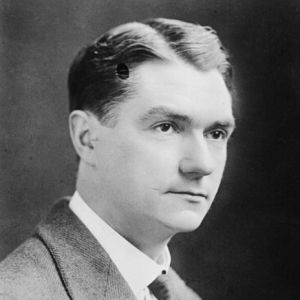
John Drinkwater (1882–1937) was an English poet and playwright, best known for his historical dramas and lyrical poetry. He gained prominence with his play "Abraham Lincoln" (1918), which was a significant success both in the UK and the US. Drinkwater was a co-founder of the Birmingham Repertory Theatre and part of the Georgian Poetry movement, focusing on pastoral and accessible themes in his works. Other notable works include "Mary Stuart" (1921) and "Oliver Cromwell" (1922).
Author's Books:
Sort by:
by:
John Drinkwater
ABRAHAM LINCOLN Two Chroniclers: The two speaking together: Kinsmen, you shall behold Our stage, in mimic action, mould A man's character. This is the wonder, always, everywhere—Not that vast mutability which is event,The pits and pinnacles of change,But man's desire and valiance that rangeAll circumstance, and come to port unspent. Agents are these events, these ecstasies,And tribulations,...
more...
by:
John Drinkwater
WHAT IS POETRY? If you were to ask twenty intelligent people, "What is the Thames?" the answer due to you from each would be—"a river." And yet this would hardly be matter to satisfy your enquiring mind. You would more probably say, "What do you know of the Thames?" or, "Describe the Thames to me." This would bring you a great variety of opinions, many...
more...
by:
John Drinkwater
PRELUDE Though black the night, I know upon the sky,A little paler now, if clouds were none,The stars would be. Husht now the thickets lie,And now the birds are moving one by one,—A note—and now from bush to bush it goes—A prelude—now victorious light alongThe west will come till every bramble glowsWith wash of sunlit dew shaken in song.Shaken in song; O heart, be ready now,Cold in your night,...
more...
by:
John Drinkwater
SCENE ICromwell'shouse at Ely, about the year 1639. An early summer evening. The window of the room opens on to a smooth lawn, used for bowling, and a garden full of flowers.Oliver'swife,Elizabeth Cromwell, is sitting at the table, sewing. In a chair by the open windowMrs. Cromwell, his mother, is reading. She is eighty years of age.Mrs. Cromwell:Oliver troubles me, persuading everywhere....
more...