

Categories
- Antiques & Collectibles 13
- Architecture 36
- Art 48
- Bibles 22
- Biography & Autobiography 816
- Body, Mind & Spirit 144
- Business & Economics 30
- Children's Books 15
- Children's Fiction 12
- Computers 4
- Cooking 94
- Crafts & Hobbies 4
- Drama 346
- Education 64
- Family & Relationships 59
- Fiction 11841
- Foreign Language Study 2
- Games 19
- Gardening 17
- Health & Fitness 35
- History 1383
- House & Home 1
- Humor 147
- Juvenile Fiction 1884
- Juvenile Nonfiction 202
- Language Arts & Disciplines 89
- Law 16
- Literary Collections 687
- Literary Criticism 179
- Mathematics 13
- Medical 43
- Music 40
- Nature 181
- Non-Classifiable 1768
- Performing Arts 7
- Periodicals 1453
- Philosophy 65
- Photography 2
- Poetry 897
- Political Science 205
- Psychology 44
- Reference 154
- Religion 515
- Science 128
- Self-Help 86
- Social Science 83
- Sports & Recreation 34
- Study Aids 3
- Technology & Engineering 60
- Transportation 23
- Travel 463
- True Crime 29
Jeanne Louise Henriette (Genet) Campan
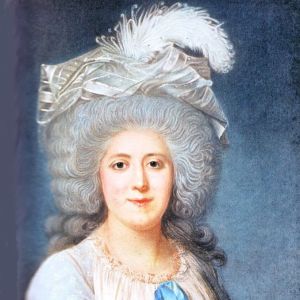
Jeanne Louise Henriette (Genet) Campan was a prominent French educator and lady-in-waiting, known for her service to Marie Antoinette. Born on October 6, 1752, in Paris, she founded an esteemed girls' boarding school in Saint-Germain-en-Laye after the French Revolution, where she implemented progressive educational methods. Campan's writings, including memoirs detailing her experiences at the royal court, provide valuable insights into the French aristocracy and the social upheavals of her time.
Author's Books:
Sort by:

About the close of the last century several of the Northern sovereigns took a fancy for travelling. Christian III., King of Denmark, visited the Court of France in 1763, during the reign of Louis XV. We have seen the King of Sweden and Joseph II. at Versailles. The Grand Duke of Russia (afterwards Paul I.), son of Catherine II., and the Princess of Wurtemberg, his wife, likewise resolved to visit...
more...
CHAPTER I. I was fifteen years of age when I was appointed reader to Mesdames. I will begin by describing the Court at that period. Maria Leczinska was just dead; the death of the Dauphin had preceded hers by three years; the Jesuits were suppressed, and piety was to be found at Court only in the apartments of Mesdames. The Duc de Choiseuil ruled. Etiquette still existed at Court with all the forms it...
more...
Louis XVI. possessed an immense crowd of confidants, advisers, and guides; he selected them even from among the factions which attacked him. Never, perhaps, did he make a full disclosure to any one of them, and certainly he spoke with sincerity, to but very few. He invariably kept the reins of all secret intrigues in his own hand; and thence, doubtless, arose the want of cooperation and the weakness...
more...
CHAPTER I. The ever-memorable oath of the States General, taken at the Tennis Court of Versailles, was followed by the royal sitting of the 23d of June. In this seance the King declared that the Orders must vote separately, and threatened, if further obstacles were met with, to himself act for the good of the people. The Queen looked on M. Necker's not accompanying the King as treachery or...
more...
During the first few months of his reign Louis XVI. dwelt at La Muette, Marly, and Compiegne. When settled at Versailles he occupied himself with a general examination of his grandfather's papers. He had promised the Queen to communicate to her all that he might discover relative to the history of the man with the iron mask, who, he thought, had become so inexhaustible a source of conjecture only...
more...
Louis XVI. possessed an immense crowd of confidants, advisers, and guides; he selected them even from among the factions which attacked him. Never, perhaps, did he make a full disclosure to any one of them, and certainly he spoke with sincerity, to but very few. He invariably kept the reins of all secret intrigues in his own hand; and thence, doubtless, arose the want of cooperation and the weakness...
more...
In the beginning of the spring of 1791, the King, tired of remaining at the Tuileries, wished to return to St. Cloud. His whole household had already gone, and his dinner was prepared there. He got into his carriage at one; the guard mutinied, shut the gates, and declared they would not let him pass. This event certainly proceeded from some suspicion of a plan to escape. Two persons who drew near the...
more...
The Queen having been robbed of her purse as she was passing from the Tuileries to the Feuillans, requested my sister to lend her twenty-five louis. [On being interrogated the Queen declared that these five and twenty louis had been lent to her by my sister; this formed a pretence for arresting her and me, and led to her death.—MADAME CAMPAN.] I spent part of the day at the Feuillans, and her Majesty...
more...