

Categories
- Antiques & Collectibles 13
- Architecture 36
- Art 48
- Bibles 22
- Biography & Autobiography 816
- Body, Mind & Spirit 145
- Business & Economics 30
- Children's Books 15
- Children's Fiction 13
- Computers 4
- Cooking 94
- Crafts & Hobbies 4
- Drama 346
- Education 64
- Family & Relationships 61
- Fiction 11842
- Foreign Language Study 2
- Games 19
- Gardening 17
- Health & Fitness 35
- History 1383
- House & Home 1
- Humor 147
- Juvenile Fiction 1884
- Juvenile Nonfiction 202
- Language Arts & Disciplines 89
- Law 16
- Literary Collections 687
- Literary Criticism 179
- Mathematics 13
- Medical 43
- Music 40
- Nature 181
- Non-Classifiable 1768
- Performing Arts 7
- Periodicals 1453
- Philosophy 65
- Photography 2
- Poetry 897
- Political Science 205
- Psychology 44
- Reference 154
- Religion 516
- Science 128
- Self-Help 87
- Social Science 83
- Sports & Recreation 34
- Study Aids 3
- Technology & Engineering 60
- Transportation 23
- Travel 463
- True Crime 29
Jagadis Chandra Bose
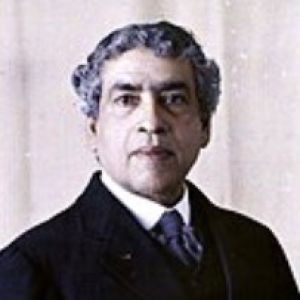
Jagadish Chandra Bose (1858–1937) was a pioneering Indian scientist and writer known for his groundbreaking research in plant physiology and physics. He demonstrated that plants have the ability to feel pain and respond to stimuli, challenging existing scientific views at the time. Bose authored books like "Response in the Living and Non-Living" and "The Nervous Mechanism of Plants," blending scientific discoveries with philosophical reflections. He was also instrumental in early radio technology, laying the foundation for wireless communication systems.
Author's Books:
Sort by:

On the 30th November, 1858, Jagadis Chunder was born, in a respectable Hindu family, which hails from village Rarikhal, situated in the Vikrampur Pargana of the Dacca District, in Bengal. He passed his boyhood at Faridpur, where his father, the late Babu Bhugwan Chunder Bose, a member of the then Subordinate Executive Service was the Sub-Divisional Officer; and it was there that he derived "the...
more...

CHAPTER ITHE MECHANICAL RESPONSE OF LIVING SUBSTANCES Mechanical response —Different kinds of stimuli —Myograph —Characteristics of response-curve: period, amplitude, form —Modification of response-curves. One of the most striking effects of external disturbance on certain types of living substance is a visible change of form. Thus, a piece of muscle when pinched contracts. The external...
more...