

Categories
- Antiques & Collectibles 13
- Architecture 36
- Art 48
- Bibles 22
- Biography & Autobiography 815
- Body, Mind & Spirit 144
- Business & Economics 28
- Children's Books 15
- Children's Fiction 12
- Computers 4
- Cooking 94
- Crafts & Hobbies 4
- Drama 346
- Education 63
- Family & Relationships 59
- Fiction 11841
- Foreign Language Study 1
- Games 19
- Gardening 17
- Health & Fitness 35
- History 1382
- House & Home 1
- Humor 147
- Juvenile Fiction 1877
- Juvenile Nonfiction 202
- Language Arts & Disciplines 89
- Law 16
- Literary Collections 687
- Literary Criticism 179
- Mathematics 13
- Medical 43
- Music 40
- Nature 181
- Non-Classifiable 1768
- Performing Arts 7
- Periodicals 1453
- Philosophy 65
- Photography 2
- Poetry 897
- Political Science 205
- Psychology 44
- Reference 154
- Religion 516
- Science 128
- Self-Help 86
- Social Science 83
- Sports & Recreation 34
- Study Aids 3
- Technology & Engineering 60
- Transportation 23
- Travel 463
- True Crime 29
Jacob Bryant
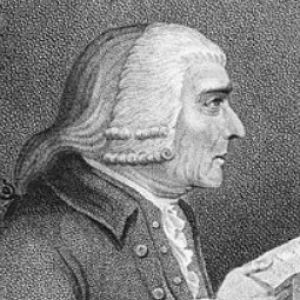
Jacob Bryant (1715–1804) was an English antiquary and mythographer, known for his scholarship in ancient mythology and history. He is most famous for his work "A New System, or, An Analysis of Ancient Mythology" (1774–1776), where he argued that all mythologies and religious beliefs originated from a common source—the biblical narrative. Bryant also wrote "Observations and Inquiries Relating to Various Parts of Ancient History," where he explored ancient civilizations and their connections. His ideas, though influential at the time, were later criticized for their speculative nature and lack of empirical evidence.
Author's Books:
Sort by:
by:
Jacob Bryant
The earliest authentic account we can obtain of the birth of this learned and celebrated writer, is from the Register Book of Eton College, in which he is entered "of Chatham, in the county of Kent, of the age of twelve years, in 1730,"—consequently, born in 1718. Whence a difference has arisen between the dates in this entry, and the inscription on his monument, hereafter given, we are...
more...
by:
Jacob Bryant
PHŒNIX and PHŒNICES. As there has been much uncertainty about the purport and extent of these terms; and they are of great consequence in the course of history; I will endeavour to state their true meaning. Phoinic, or Poinic, was an Egyptian and Canaanitish term of honour; from whence were formed Φοινιξ, Φοινικες, Φοινικοεις of the Greeks, and Phoinic, Poinicus, Poinicius of...
more...