

Categories
- Antiques & Collectibles 13
- Architecture 36
- Art 48
- Bibles 22
- Biography & Autobiography 816
- Body, Mind & Spirit 145
- Business & Economics 32
- Children's Books 15
- Children's Fiction 13
- Computers 4
- Cooking 94
- Crafts & Hobbies 4
- Drama 346
- Education 65
- Family & Relationships 62
- Fiction 11848
- Foreign Language Study 2
- Games 19
- Gardening 17
- Health & Fitness 36
- History 1383
- House & Home 1
- Humor 147
- Juvenile Fiction 1884
- Juvenile Nonfiction 202
- Language Arts & Disciplines 89
- Law 16
- Literary Collections 687
- Literary Criticism 179
- Mathematics 13
- Medical 43
- Music 40
- Nature 181
- Non-Classifiable 1768
- Performing Arts 7
- Periodicals 1453
- Philosophy 65
- Photography 2
- Poetry 898
- Political Science 206
- Psychology 44
- Reference 154
- Religion 516
- Science 128
- Self-Help 89
- Social Science 84
- Sports & Recreation 34
- Study Aids 3
- Technology & Engineering 60
- Transportation 23
- Travel 463
- True Crime 29
Herodotus
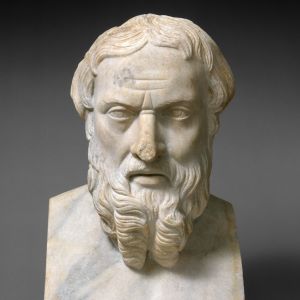
Herodotus, often called the "Father of History," was a Greek historian born in Halicarnassus around 484 BCE. His most famous work, "Histories," is a detailed account of the Greco-Persian Wars, offering insights into the customs, geography, and events of the ancient world. Herodotus is noted for his method of gathering information from various sources, including oral traditions and eyewitness accounts, though some of his stories blend history with myth. Despite criticism for occasional inaccuracies, his work laid the foundation for historical inquiry and has been influential for centuries.
Author's Books:
Sort by:
by:
Herodotus
BOOK V. THE FIFTH BOOK OF THE HISTORIES, CALLED TERPSICHORE 1. In the meantime those of the Persians who had been left behind in Europe by Dareios, of whom Megabazos was the commander, had subdued the people of Perinthos first of the Hellespontians, since they refused to be subject to Dareios. These had in former times also been hardly dealt with by the Paionians: for the Paionians from the Strymon had...
more...
by:
Herodotus
PREFACE If a new translation of Herodotus does not justify itself, it will hardly be justified in a preface; therefore the question whether it was needed may be left here without discussion. The aim of the translator has been above all things faithfulness—faithfulness to the manner of expression and to the structure of sentences, as well as to the meaning of the Author. At the same time it is...
more...

by:
Herodotus
BEING THE SECOND BOOK OF HIS HISTORIES CALLED EUTERPE When Cyrus had brought his life to an end, Cambyses received the royal power in succession, being the son of Cyrus and of Cassandane the daughter of Pharnaspes, for whose death, which came about before his own, Cyrus had made great mourning himself and also had proclaimed to all those over whom he bore rule that they should make mourning for her:...
more...