

Categories
- Antiques & Collectibles 13
- Architecture 36
- Art 48
- Bibles 22
- Biography & Autobiography 816
- Body, Mind & Spirit 145
- Business & Economics 30
- Children's Books 15
- Children's Fiction 12
- Computers 4
- Cooking 94
- Crafts & Hobbies 4
- Drama 346
- Education 64
- Family & Relationships 59
- Fiction 11841
- Foreign Language Study 2
- Games 19
- Gardening 17
- Health & Fitness 35
- History 1383
- House & Home 1
- Humor 147
- Juvenile Fiction 1884
- Juvenile Nonfiction 202
- Language Arts & Disciplines 89
- Law 16
- Literary Collections 687
- Literary Criticism 179
- Mathematics 13
- Medical 43
- Music 40
- Nature 181
- Non-Classifiable 1768
- Performing Arts 7
- Periodicals 1453
- Philosophy 65
- Photography 2
- Poetry 897
- Political Science 205
- Psychology 44
- Reference 154
- Religion 516
- Science 128
- Self-Help 87
- Social Science 83
- Sports & Recreation 34
- Study Aids 3
- Technology & Engineering 60
- Transportation 23
- Travel 463
- True Crime 29
Henry Rider Haggard
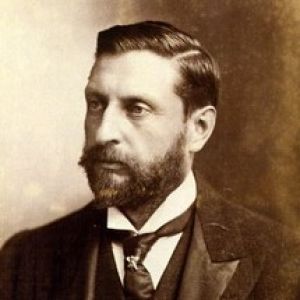
Henry Rider Haggard (1856-1925) was a prolific English writer best known for his adventure novels set in exotic locations, including "King Solomon's Mines" and "She." His works are considered early examples of the "Lost World" literary genre and often reflect themes of imperialism and exploration. Haggard's vivid storytelling and creation of enduring characters have left a lasting impact on popular literature and inspired numerous adaptations in various media.
Author's Books:
Sort by:

INTRODUCTION In giving to the world the record of what, looked at as an adventure only, is I suppose one of the most wonderful and mysterious experiences ever undergone by mortal men, I feel it incumbent on me to explain what my exact connection with it is. And so I may as well say at once that I am not the narrator but only the editor of this extraordinary history, and then go on to tell how it found...
more...
Salah-ed-din, Commander of the Faithful, the king Strong to Aid, Sovereign of the East, sat at night in his palace at Damascus and brooded on the wonderful ways of God, by Whom he had been lifted to his high estate. He remembered how, when he was but small in the eyes of men, Nour-ed-din, king of Syria, forced him to accompany his uncle, Shirkuh, to Egypt, whither he went, "like one driven to his...
more...
CHAPTER I SIR JOHN FOTERELL Who that has ever seen them can forget the ruins of Blossholme Abbey, set upon their mount between the great waters of the tidal estuary to the north, the rich lands and grazing marshes that, backed with woods, border it east and south, and to the west by the rolling uplands, merging at last into purple moor, and, far away, the sombre eternal hills! Probably the scene has...
more...
Chapter I. Arbuthnot Describes Himself I suppose that I, Humphrey Arbuthnot, should begin this history in which Destiny has caused me to play so prominent a part, with some short account of myself and of my circumstances. I was born forty years ago in this very Devonshire village in which I write, but not in the same house. Now I live in the Priory, an ancient place and a fine one in its way, with its...
more...
EARLY DAYS It may be remembered that in the last pages of his diary, written just before his death, Allan Quatermain makes allusion to his long dead wife, stating that he has written of her fully elsewhere. When his death was known, his papers were handed to myself as his literary executor. Among them I found two manuscripts, of which the following is one. The other is simply a record of events wherein...
more...
CHAPTER I "You lie; you always were a liar, and you always will be a liar. You told my father how I spent the money." "Well, and what if I did? I had to look after myself, I suppose. You forget that I am only here on sufferance, whilst you are the son of the house. It does not matter to you, but he would have turned me out of doors," whined George. "Oh! curse your fine words;...
more...

CHAPTER I HOW PETER MET THE SPANIARD It was a spring afternoon in the sixth year of the reign of King Henry VII. of England. There had been a great show in London, for that day his Grace opened the newly convened Parliament, and announced to his faithful people—who received the news with much cheering, since war is ever popular at first—his intention of invading France, and of leading the English...
more...

CHAPTER I THE BETROTHAL OF OLAF Of my childhood in this Olaf life I can regain but little. There come to me, however, recollections of a house, surrounded by a moat, situated in a great plain near to seas or inland lakes, on which plain stood mounds that I connected with the dead. What the dead were I did not quite understand, but I gathered that they were people who, having once walked about and been...
more...
I—GOBO STRIKES One day—it was about a week after Allan Quatermain told me his story of the "Three Lions," and of the moving death of Jim-Jim—he and I were walking home together on the termination of a day's shooting. He owned about two thousand acres of shooting round the place he had bought in Yorkshire, over a hundred of which were wood. It was the second year of his occupation of...
more...
CHAPTER I THE COMING OF THE RING Every one has read the monograph, I believe that is the right word, of my dear friend, Professor Higgs—Ptolemy Higgs to give him his full name—descriptive of the tableland of Mur in North Central Africa, of the ancient underground city in the mountains which surrounded it, and of the strange tribe of Abyssinian Jews, or rather their mixed descendants, by whom it is,...
more...