

Categories
- Antiques & Collectibles 13
- Architecture 36
- Art 48
- Bibles 22
- Biography & Autobiography 816
- Body, Mind & Spirit 145
- Business & Economics 30
- Children's Books 15
- Children's Fiction 12
- Computers 4
- Cooking 94
- Crafts & Hobbies 4
- Drama 346
- Education 64
- Family & Relationships 59
- Fiction 11841
- Foreign Language Study 2
- Games 19
- Gardening 17
- Health & Fitness 35
- History 1383
- House & Home 1
- Humor 147
- Juvenile Fiction 1884
- Juvenile Nonfiction 202
- Language Arts & Disciplines 89
- Law 16
- Literary Collections 687
- Literary Criticism 179
- Mathematics 13
- Medical 43
- Music 40
- Nature 181
- Non-Classifiable 1768
- Performing Arts 7
- Periodicals 1453
- Philosophy 65
- Photography 2
- Poetry 897
- Political Science 205
- Psychology 44
- Reference 154
- Religion 516
- Science 128
- Self-Help 87
- Social Science 83
- Sports & Recreation 34
- Study Aids 3
- Technology & Engineering 60
- Transportation 23
- Travel 463
- True Crime 29
Henry Rider Haggard
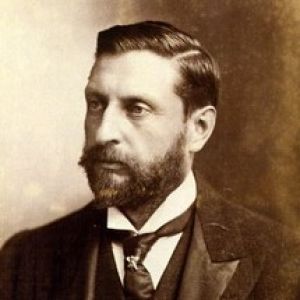
Henry Rider Haggard (1856-1925) was a prolific English writer best known for his adventure novels set in exotic locations, including "King Solomon's Mines" and "She." His works are considered early examples of the "Lost World" literary genre and often reflect themes of imperialism and exploration. Haggard's vivid storytelling and creation of enduring characters have left a lasting impact on popular literature and inspired numerous adaptations in various media.
Author's Books:
Sort by:
CHAPTER I HAROLD QUARITCH MEDITATES There are things and there are faces which, when felt or seen for the first time, stamp themselves upon the mind like a sun image on a sensitized plate and there remain unalterably fixed. To take the instance of a face—we may never see it again, or it may become the companion of our life, but there the picture is just as we /first/ knew it, the same smile or frown,...
more...
A MIST WRAITH The autumn afternoon was fading into evening. It had been cloudy weather, but the clouds had softened and broken up. Now they were lost in slowly darkening blue. The sea was perfectly and utterly still. It seemed to sleep, but in its sleep it still waxed with the rising tide. The eye could not mark its slow increase, but Beatrice, standing upon the farthest point of the Dog Rocks, idly...
more...
THE MAHATMA* [*] Mahatma, "great-souled." "One of a class of persons withpreter-natural powers, imagined to exist in India andThibet."—New English Dictionary. Everyone has seen a hare, either crouched or running in the fields, or hanging dead in a poulterer's shop, or lastly pathetic, even dreadful-looking and in this form almost indistinguishable from a skinned cat, on the...
more...

INTRODUCTION The writer on Colonial Affairs is naturally, to some extent, discouraged by the knowledge that the subject is an unattractive one to a large proportion of the reading public. It is difficult to get up anything beyond a transient interest in the affairs of our Colonial dependencies; indeed, I believe that the mind of the British public was more profoundly moved by the exodus of Jumbo, than...
more...
CHAPTER I. ALLAN QUATERMAIN HEARS OF MAMEENA We white people think that we know everything. For instance, we think that we understand human nature. And so we do, as human nature appears to us, with all its trappings and accessories seen dimly through the glass of our conventions, leaving out those aspects of it which we have forgotten or do not think it polite to mention. But I, Allan Quatermain,...
more...
This book suggests that the real Pharaoh of the Exodus was not Meneptah or Merenptah, son of Rameses the Great, but the mysterious usurper, Amenmeses, who for a year or two occupied the throne between the death of Meneptah and the accession of his son the heir-apparent, the gentle-natured Seti II. Of the fate of Amenmeses history says nothing; he may well have perished in the Red Sea or rather the Sea...
more...

CHAPTER I BROTHER JOHN I do not suppose that anyone who knows the name of Allan Quatermain would be likely to associate it with flowers, and especially with orchids. Yet as it happens it was once my lot to take part in an orchid hunt of so remarkable a character that I think its details should not be lost. At least I will set them down, and if in the after days anyone cares to publish them, well—he...
more...
The story which is narrated in the following pages came to me from the lips of my old friend Allan Quatermain, or Hunter Quatermain, as we used to call him in South Africa. He told it to me one evening when I was stopping with him at the place he bought in Yorkshire. Shortly after that, the death of his only son so unsettled him that he immediately left England, accompanied by two companions, his old...
more...
CHAPTER I JOHN HAS AN ADVENTURE The day had been very hot even for the Transvaal, where the days still know how to be hot in the autumn, although the neck of the summer is broken—especially when the thunderstorms hold off for a week or two, as they do occasionally. Even the succulent blue lilies—a variety of the agapanthus which is so familiar to us in English greenhouses—hung their long...
more...
CHAPTER I THE PRISON AT CÆSAREA It was but two hours after midnight, yet many were wakeful in Cæsarea on the Syrian coast. Herod Agrippa, King of all Palestine—by grace of the Romans—now at the very apex of his power, celebrated a festival in honour of the Emperor Claudius, to which had flocked all the mightiest in the land and tens of thousands of the people. The city was full of them, their...
more...