

Categories
- Antiques & Collectibles 13
- Architecture 36
- Art 48
- Bibles 22
- Biography & Autobiography 815
- Body, Mind & Spirit 145
- Business & Economics 28
- Children's Books 15
- Children's Fiction 12
- Computers 4
- Cooking 94
- Crafts & Hobbies 4
- Drama 346
- Education 63
- Family & Relationships 59
- Fiction 11841
- Foreign Language Study 1
- Games 19
- Gardening 17
- Health & Fitness 35
- History 1382
- House & Home 1
- Humor 147
- Juvenile Fiction 1884
- Juvenile Nonfiction 202
- Language Arts & Disciplines 89
- Law 16
- Literary Collections 687
- Literary Criticism 179
- Mathematics 13
- Medical 43
- Music 40
- Nature 181
- Non-Classifiable 1768
- Performing Arts 7
- Periodicals 1453
- Philosophy 65
- Photography 2
- Poetry 897
- Political Science 205
- Psychology 44
- Reference 154
- Religion 516
- Science 128
- Self-Help 87
- Social Science 83
- Sports & Recreation 34
- Study Aids 3
- Technology & Engineering 60
- Transportation 23
- Travel 463
- True Crime 29
Henry Frederick Cope
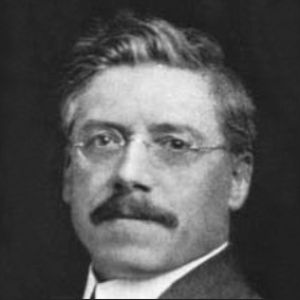
Henry Frederick Cope (1870–1923) was an English-born American Baptist minister and writer. He is best known for his works on Christian education and religious teaching, particularly his book "Religious Education in the Church". Cope emphasized the importance of nurturing moral and spiritual development through the church's educational programs. His influence extended through his leadership in the Religious Education Association, where he advocated for progressive religious education.
Author's Books:
Sort by:
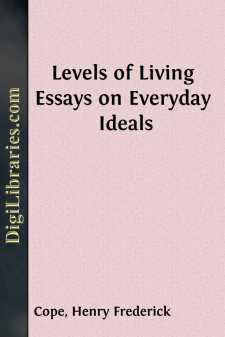
I The Higher Levels The Real and the Ideal The Bread of Life Life's Unvarying Values The ideal is the mold in which the real is cast. Half of success is in seeing the significance of little things. He finds no weal who flees all woe. You do not make life sacred by looking sad. Sympathy is a key that fits the lock of any heart. Soul health will not come by taking religion as a dose. Many a cloud...
more...

CHAPTER I AN INTERPRETATION OF THE FAMILY § 1. TAKING THE HOME IN RELIGIOUS TERMS The ills of the modern home are symptomatic. Divorce, childless families, irreverent children, and the decadence of the old type of separate home life are signs of forgotten ideals, lost motives, and insufficient purposes. Where the home is only an opportunity for self-indulgence, it easily becomes a cheap...
more...