

Categories
- Antiques & Collectibles 13
- Architecture 36
- Art 48
- Bibles 22
- Biography & Autobiography 815
- Body, Mind & Spirit 144
- Business & Economics 28
- Children's Books 18
- Children's Fiction 14
- Computers 4
- Cooking 94
- Crafts & Hobbies 4
- Drama 346
- Education 58
- Family & Relationships 59
- Fiction 11834
- Games 19
- Gardening 17
- Health & Fitness 34
- History 1378
- House & Home 1
- Humor 147
- Juvenile Fiction 1873
- Juvenile Nonfiction 202
- Language Arts & Disciplines 89
- Law 16
- Literary Collections 686
- Literary Criticism 179
- Mathematics 13
- Medical 41
- Music 40
- Nature 179
- Non-Classifiable 1768
- Performing Arts 7
- Periodicals 1453
- Philosophy 65
- Photography 2
- Poetry 896
- Political Science 203
- Psychology 44
- Reference 154
- Religion 515
- Science 126
- Self-Help 85
- Social Science 82
- Sports & Recreation 34
- Study Aids 3
- Technology & Engineering 59
- Transportation 23
- Travel 463
- True Crime 29
H. G. (Herbert George) Wells
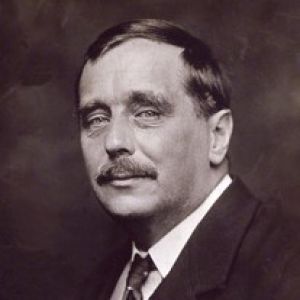
Herbert George Wells, commonly known as H.G. Wells, was an English writer renowned for his pioneering works in science fiction, such as "The War of the Worlds," "The Time Machine," and "The Invisible Man." Born in 1866, Wells was also a prolific social commentator and historian, whose writings often explored the impact of science and technology on society. His literary contributions have left a lasting legacy, influencing numerous authors and the genre of science fiction as a whole.
Author's Books:
Sort by:

In the year 1884 I was invited to give tuition by correspondence, in Biology. Although disposed at the time to ridicule the idea of imparting instruction in natural science by letter, I gladly accepted the opportunity thus afforded me of ascertaining for myself what could and could not be accomplished in that direction. Anyone familiar with the scope of biological enquiry, and the methods of biological...
more...

ON FEAR AND ARISTOCRACY1The story of William Porphyry Benham is the story of a man who was led into adventure by an idea. It was an idea that took possession of his imagination quite early in life, it grew with him and changed with him, it interwove at last completely with his being. His story is its story. It was traceably germinating in the schoolboy; it was manifestly present in his mind at the very...
more...
1. FILMER In truth the mastery of flying was the work of thousands of men—this man a suggestion and that an experiment, until at last only one vigorous intellectual effort was needed to finish the work. But the inexorable injustice of the popular mind has decided that of all these thousands, one man, and that a man who never flew, should be chosen as the discoverer, just as it has chosen to honour...
more...

This book is in all probability the last of a series of writings, of which—disregarding certain earlier disconnected essays—my Anticipations was the beginning. Originally I intended Anticipations to be my sole digression from my art or trade (or what you will) of an imaginative writer. I wrote that book in order to clear up the muddle in my own mind about innumerable social and political questions,...
more...

CHAPTER THE FIRST § 1 It was the sixth day of Mr. Direck's first visit to England, and he was at his acutest perception of differences. He found England in every way gratifying and satisfactory, and more of a contrast with things American than he had ever dared to hope. He had promised himself this visit for many years, but being of a sunny rather than energetic temperament—though he firmly...
more...

Miriam I It is an illogical consequence of one human being’s ill-treatment that we should fly immediately to another, but that is the way with us. It seemed to Mr. Polly that only a human touch could assuage the smart of his humiliation. Moreover it had for some undefined reason to be a feminine touch, and the number of women in his world was limited. He thought of the Larkins family—the Larkins...
more...

On the Night of the Strange Bird, many people at Sidderton (and some nearer) saw a Glare on the Sidderford moor. But no one in Sidderford saw it, for most of Sidderford was abed. All day the wind had been rising, so that the larks on the moor chirruped fitfully near the ground, or rose only to be driven like leaves before the wind. The sun set in a bloody welter of clouds, and the moon was hidden. The...
more...

CHAPTER I The stranger came early in February, one wintry day, through a biting wind and a driving snow, the last snowfall of the year, over the down, walking from Bramblehurst railway station, and carrying a little black portmanteau in his thickly gloved hand. He was wrapped up from head to foot, and the brim of his soft felt hat hid every inch of his face but the shiny tip of his nose; the snow had...
more...

I. THE ISONZO FRONT1My first impressions of the Italian war centre upon Udine. So far I had had only a visit to Soissons on an exceptionally quiet day and the sound of a Zeppelin one night in Essex for all my experience of actual warfare. But my bedroom at the British mission in Udine roused perhaps extravagant expectations. There were holes in the plaster ceiling and wall, betraying splintered laths,...
more...

CHAPTER THE FIRST - THE DREAM (1) IT was a scene of bitter disputation. A hawk-nosed young man with a pointing finger was prominent. His face worked violently, his lips moved very rapidly, but what he said was inaudible. Behind him the little rufous man with the big eyes twitched at his robe and offered suggestions. And behind these two clustered a great multitude of heated, excited, swarthy faces.......
more...