

Categories
- Antiques & Collectibles 13
- Architecture 36
- Art 48
- Bibles 22
- Biography & Autobiography 816
- Body, Mind & Spirit 144
- Business & Economics 30
- Children's Books 15
- Children's Fiction 12
- Computers 4
- Cooking 94
- Crafts & Hobbies 4
- Drama 346
- Education 64
- Family & Relationships 59
- Fiction 11841
- Foreign Language Study 2
- Games 19
- Gardening 17
- Health & Fitness 35
- History 1383
- House & Home 1
- Humor 147
- Juvenile Fiction 1884
- Juvenile Nonfiction 202
- Language Arts & Disciplines 89
- Law 16
- Literary Collections 687
- Literary Criticism 179
- Mathematics 13
- Medical 43
- Music 40
- Nature 181
- Non-Classifiable 1768
- Performing Arts 7
- Periodicals 1453
- Philosophy 65
- Photography 2
- Poetry 897
- Political Science 205
- Psychology 44
- Reference 154
- Religion 515
- Science 128
- Self-Help 86
- Social Science 83
- Sports & Recreation 34
- Study Aids 3
- Technology & Engineering 60
- Transportation 23
- Travel 463
- True Crime 29
Graham Wallas
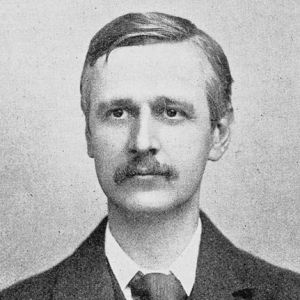
Graham Wallas (1858–1932) was an English social psychologist, educator, and writer, known for his pioneering work in political science and the psychology of social behavior. He was a founding member of the Fabian Society, a socialist organization aimed at promoting social reform, and he contributed extensively to discussions on democracy and social structures. His notable works, including "The Art of Thought" and "Human Nature in Politics," explored the processes behind decision-making, creativity, and the influence of human nature on political systems. Wallas’s ideas laid foundational concepts in both political theory and social psychology, influencing thinkers and reformers throughout the 20th century.
Author's Books:
Sort by:
by:
Graham Wallas
CHAPTER I Whoever sets himself to base his political thinking on a re-examination of the working of human nature, must begin by trying to overcome his own tendency to exaggerate the intellectuality of mankind. We are apt to assume that every human action is the result of an intellectual process, by which a man first thinks of some end which he desires, and then calculates the means by which that end...
more...