

Categories
- Antiques & Collectibles 13
- Architecture 36
- Art 48
- Bibles 22
- Biography & Autobiography 816
- Body, Mind & Spirit 145
- Business & Economics 30
- Children's Books 15
- Children's Fiction 13
- Computers 4
- Cooking 94
- Crafts & Hobbies 4
- Drama 346
- Education 64
- Family & Relationships 61
- Fiction 11842
- Foreign Language Study 2
- Games 19
- Gardening 17
- Health & Fitness 35
- History 1383
- House & Home 1
- Humor 147
- Juvenile Fiction 1884
- Juvenile Nonfiction 202
- Language Arts & Disciplines 89
- Law 16
- Literary Collections 687
- Literary Criticism 179
- Mathematics 13
- Medical 43
- Music 40
- Nature 181
- Non-Classifiable 1768
- Performing Arts 7
- Periodicals 1453
- Philosophy 65
- Photography 2
- Poetry 897
- Political Science 205
- Psychology 44
- Reference 154
- Religion 516
- Science 128
- Self-Help 87
- Social Science 83
- Sports & Recreation 34
- Study Aids 3
- Technology & Engineering 60
- Transportation 23
- Travel 463
- True Crime 29
George E. (George Edwin) Waring
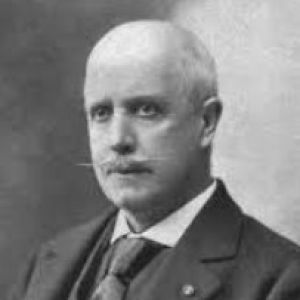
George Edwin Waring Jr. (1833–1898) was an American sanitary engineer, author, and civic reformer. He is best known for his contributions to urban sanitation, particularly for leading the design of New York City's sanitation system in the late 19th century. Waring authored several influential works, including "Draining for Profit, and Draining for Health" (1867), which addressed agricultural drainage. He also served as the head of New York City's Department of Street Cleaning, where his efforts significantly improved public health by introducing waste management practices that reduced disease.
Author's Books:
Sort by:

INTRODUCTION. What is the object of cultivating the soil? What is necessary in order to cultivate with economy? Are plants created from nothing? The object of cultivating the soil is to raise from it a crop of plants. In order to cultivate with economy, we must raise the largest possible quantity with the least expense, and without permanent injury to the soil. Before this can be done we must study the...
more...
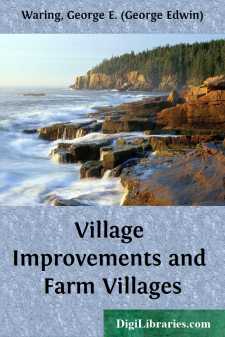
VILLAGE IMPROVEMENTS. It may be because the newness of our country and the fragile character of our early structures have prevented the accumulation of inferior, ugly, and uncomfortable houses, as the nucleus around which later building has crystallized; it may be from circumstances which have prevented the isolated residence of the better classes of our people; or it may be the result of accident....
more...