

Categories
- Antiques & Collectibles 13
- Architecture 36
- Art 48
- Bibles 22
- Biography & Autobiography 816
- Body, Mind & Spirit 145
- Business & Economics 30
- Children's Books 15
- Children's Fiction 13
- Computers 4
- Cooking 94
- Crafts & Hobbies 4
- Drama 346
- Education 64
- Family & Relationships 62
- Fiction 11847
- Foreign Language Study 2
- Games 19
- Gardening 17
- Health & Fitness 36
- History 1383
- House & Home 1
- Humor 147
- Juvenile Fiction 1884
- Juvenile Nonfiction 202
- Language Arts & Disciplines 89
- Law 16
- Literary Collections 687
- Literary Criticism 179
- Mathematics 13
- Medical 43
- Music 40
- Nature 181
- Non-Classifiable 1768
- Performing Arts 7
- Periodicals 1453
- Philosophy 65
- Photography 2
- Poetry 897
- Political Science 205
- Psychology 44
- Reference 154
- Religion 516
- Science 128
- Self-Help 88
- Social Science 83
- Sports & Recreation 34
- Study Aids 3
- Technology & Engineering 60
- Transportation 23
- Travel 463
- True Crime 29
G. A. (George Alfred) Henty
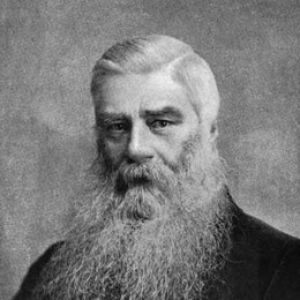
George Alfred Henty (1832-1902) was a prolific English novelist and war correspondent best known for his historical adventure novels. He authored over 120 books, many of which were targeted towards young readers, emphasizing themes of courage, integrity, and resilience. Henty's works, such as "With Clive in India" and "The Dragon and the Raven," were widely popular in the late 19th and early 20th centuries, offering vivid narratives set against significant historical events.
Author's Books:
Sort by:
CHAPTER I. ALONE. "You heard what he said, George?" "Oh, mother, mother!" "Don't sob so, my boy; he is right. I have seen it coming a long time, and, hard as it seems, it will be better. There is no disgrace in it. I have tried my best, and if my health had not broken down we might have managed, but you see it was not to be. I shall not mind it, dear; it is really only for your...
more...
Preface. The story of the war in which the power of the great Mahratta confederacy was broken is one of the most stirring pages of the campaigns which, begun by Clive, ended in the firm establishment of our great empire in the Indian Peninsula. When the struggle began, the Mahrattas were masters of no small portion of India; their territory comprising the whole country between Bombay and Delhi, and...
more...
It was a dull evening in the month of September, 1728. The apprentices had closed and barred the shutters and the day's work was over. Supper was laid in the long room over the shop, the viands were on the table, and round it were standing Bailie Anderson and his wife, his foreman John Gillespie, and his two apprentices. The latter were furtively eying the eatables, and wondering how much longer...
more...
CHAPTER I. A QUARREL. The great Abbey of Westminster was approaching its completion; an army of masons and labourers swarmed like bees upon and around it, and although differing widely in its massive architecture, with round Saxon windows and arches, from the edifice that was two or three generations later to be reared in its place,—to serve as a still more fitting tomb for the ashes of its pious...
more...
Chapter 1: Windthorpe Chace. "One, two, three, four, one, two, three, four--turn to your lady; one, two, three, four--now deep reverence. Now you take her hand; no, not her whole hand--the tips of her fingers; now you lead her to her seat; now a deep bow, so. That will do. You are improving, but you must be more light, more graceful, more courtly in your air; still you will do. "Now run away,...
more...
Preface. In following the hero of this story through the last Afghan war, you will be improving your acquaintance with a country which is of supreme importance to the British Empire and, at the same time, be able to trace the operations by which Lord Roberts made his great reputation as a general, and a leader of men. Afghanistan stands as a line between the two great empires of England and Russia; and...
more...
CHAPTER I "I don't know what to say, my dear." "Why, surely, James, you are not thinking for a moment of letting him go?" "Well, I don't know. Yes, I am certainly thinking of it, though I haven't at all made up my mind. There are advantages and disadvantages." "Oh, but it is such a long way, and to live among those French people, who have been doing such...
more...
CHAPTER I. Jeremiah Brander was one of the most prominent personages in the Cathedral town of Abchester. He inhabited an old-fashioned, red brick house near the end of the High Street. On either side was a high wall facing the street, and from this a garden, enclosing the house, stretched away to a little stream some two hundred yards in the rear; so that the house combined the advantage of a business...
more...
The sun was blazing down upon a city on the western shore of the Caspian. It was a primitive city, and yet its size and population rendered it worthy of the term. It consisted of a vast aggregation of buildings, which were for the most part mere huts. Among them rose, however, a few of more solid build and of higher pretensions. These were the abodes of the chiefs and great men, the temples, and places...
more...
CHAPTER I. WESTMINSTER! WESTMINSTER! CRIPPLE boy was sitting in a box on four low wheels, in a little room in a small street in Westminster; his age was some fifteen or sixteen years; his face was clear-cut and intelligent, and was altogether free from the expression either of discontent or of shrinking sadness so often seen in the face of those afflicted. Had he been sitting on a chair at a table,...
more...