

Categories
- Antiques & Collectibles 13
- Architecture 36
- Art 48
- Bibles 22
- Biography & Autobiography 815
- Body, Mind & Spirit 144
- Business & Economics 28
- Children's Books 15
- Children's Fiction 11
- Computers 4
- Cooking 94
- Crafts & Hobbies 4
- Drama 346
- Education 62
- Family & Relationships 59
- Fiction 11838
- Foreign Language Study 1
- Games 19
- Gardening 17
- Health & Fitness 35
- History 1381
- House & Home 1
- Humor 147
- Juvenile Fiction 1873
- Juvenile Nonfiction 202
- Language Arts & Disciplines 89
- Law 16
- Literary Collections 687
- Literary Criticism 179
- Mathematics 13
- Medical 43
- Music 40
- Nature 180
- Non-Classifiable 1768
- Performing Arts 7
- Periodicals 1453
- Philosophy 65
- Photography 2
- Poetry 897
- Political Science 205
- Psychology 44
- Reference 154
- Religion 515
- Science 127
- Self-Help 86
- Social Science 83
- Sports & Recreation 34
- Study Aids 3
- Technology & Engineering 60
- Transportation 23
- Travel 463
- True Crime 29
F. B. (Frank Byron) Jevons
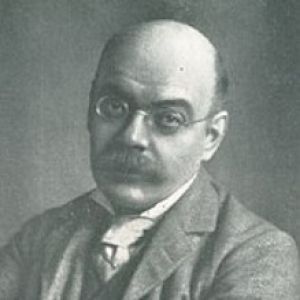
Frank Byron Jevons (1858–1936) was a British scholar, writer, and clergyman known for his work in philosophy, comparative religion, and classical studies. He authored several influential books, including "An Introduction to the History of Religion" and "A History of Greek Literature." Jevons also contributed to discussions on ethics and moral philosophy, particularly focusing on the connections between early religious practices and the development of civilization. His work combined academic rigor with an accessible writing style, making him a significant figure in early 20th-century religious and philosophical scholarship.
Author's Books:
Sort by:
Every child that is born is born of a community and into a community, which existed before his birth and will continue to exist after his death. He learns to speak the language which the community spoke before he was born, and which the community will continue to speak after he has gone. In learning the language he acquires not only words but ideas; and the words and ideas he acquires, the thoughts he...
more...
INTRODUCTION The use of any science lies in its application to practical purposes. For Christianity, the use of the science of religion consists in applying it to show that Christianity is the highest manifestation of the religious spirit. To make this use of the science of religion, we must fully and frankly accept the facts it furnishes, and must recognise that others are at liberty to use them for...
more...