

Categories
- Antiques & Collectibles 13
- Architecture 36
- Art 48
- Bibles 22
- Biography & Autobiography 816
- Body, Mind & Spirit 145
- Business & Economics 30
- Children's Books 15
- Children's Fiction 13
- Computers 4
- Cooking 94
- Crafts & Hobbies 4
- Drama 346
- Education 64
- Family & Relationships 61
- Fiction 11842
- Foreign Language Study 2
- Games 19
- Gardening 17
- Health & Fitness 35
- History 1383
- House & Home 1
- Humor 147
- Juvenile Fiction 1884
- Juvenile Nonfiction 202
- Language Arts & Disciplines 89
- Law 16
- Literary Collections 687
- Literary Criticism 179
- Mathematics 13
- Medical 43
- Music 40
- Nature 181
- Non-Classifiable 1768
- Performing Arts 7
- Periodicals 1453
- Philosophy 65
- Photography 2
- Poetry 897
- Political Science 205
- Psychology 44
- Reference 154
- Religion 516
- Science 128
- Self-Help 87
- Social Science 83
- Sports & Recreation 34
- Study Aids 3
- Technology & Engineering 60
- Transportation 23
- Travel 463
- True Crime 29
Emile Cammaerts
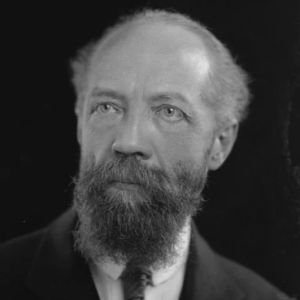
Émile Cammaerts (1878–1953) was a Belgian poet, playwright, and author who wrote primarily in French. He is best known for his poetry and his works on religious and philosophical themes, often exploring Christian faith and European identity. Cammaerts also wrote several biographies, including "The Laughing Prophet" about G.K. Chesterton, with whom he shared a deep intellectual friendship. His other notable works include "Belgium: From the Roman Invasion to the Present Day" and "The Poetry of Nonsense."
Author's Books:
Sort by:
by:
Emile Cammaerts
I.THE PRISON GATES.The English-speaking public is generally well informed concerning the part played in the war by the Belgian troops. The resistance of our small field army at Liège, before Antwerp, and on the Yser has been praised and is still being praised wherever the tale runs. This is easy enough to understand. The fact that those 100,000 men should have been able to hold so long in check the...
more...
by:
Emile Cammaerts
INTRODUCTION The history of the Belgian nation is little known in England. This ignorance, or rather this neglect, may seem strange if we consider the frequent relations which existed between the two countries from the early Middle Ages. It is, however, easy enough to explain, and even to justify. The general idea has been for a long time that the existence of Belgium, as a nation, dated from its...
more...