

Categories
- Antiques & Collectibles 13
- Architecture 36
- Art 48
- Bibles 22
- Biography & Autobiography 816
- Body, Mind & Spirit 145
- Business & Economics 28
- Children's Books 17
- Children's Fiction 14
- Computers 4
- Cooking 94
- Crafts & Hobbies 4
- Drama 346
- Education 58
- Family & Relationships 59
- Fiction 11834
- Foreign Language Study 3
- Games 19
- Gardening 17
- Health & Fitness 34
- History 1378
- House & Home 1
- Humor 147
- Juvenile Fiction 1873
- Juvenile Nonfiction 202
- Language Arts & Disciplines 89
- Law 16
- Literary Collections 686
- Literary Criticism 179
- Mathematics 13
- Medical 41
- Music 40
- Nature 179
- Non-Classifiable 1768
- Performing Arts 7
- Periodicals 1453
- Philosophy 66
- Photography 2
- Poetry 897
- Political Science 203
- Psychology 45
- Reference 154
- Religion 516
- Science 126
- Self-Help 85
- Social Science 82
- Sports & Recreation 34
- Study Aids 3
- Technology & Engineering 59
- Transportation 23
- Travel 463
- True Crime 29
Elinor Glyn
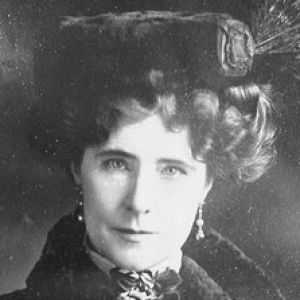
Elinor Glyn was a British novelist and scriptwriter known for her pioneering work in romantic fiction and for popularizing the concept of the "It Girl." Born in 1864, she achieved fame in the early 20th century with her scandalous novels, such as "Three Weeks," which challenged contemporary social norms. Glyn also worked in Hollywood, contributing to the early film industry by writing screenplays and consulting on romantic scenes.
Author's Books:
Sort by:
by:
Elinor Glyn
INTRODUCTION I have called this little collection of articles which I have written “THREE THINGS” because to me there seem to be just three essentials to strive after in life. Truth—Common Sense and Happiness. To be able to see the first enables us to employ the second, and so realise the third. And in these papers I have tried to suggest some points which may be of use to others who, like...
more...

by:
Elinor Glyn
I The hours were composed mostly of dull or rebellious moments during the period of Theodora's engagement to Mr. Brown. From the very first she had thought it hard that she should have had to take this situation, instead of Sarah or Clementine, her elder step-sisters, so much nearer his age than herself. To do them justice, either of these ladies would have been glad to relieve her of the...
more...
by:
Elinor Glyn
I I have wondered sometimes if there are not perhaps some disadvantages in having really blue blood in one's veins, like grandmamma and me. For instance, if we were ordinary, common people our teeth would chatter naturally with cold when we have to go to bed without fires in our rooms in December; but we pretend we like sleeping in "well-aired rooms"—at least I have to. Grandmamma simply...
more...
by:
Elinor Glyn
CHAPTER I Now this is an episode in a young man's life, and has no real beginning or ending. And you who are old and have forgotten the passions of youth may condemn it. But there are others who are neither old nor young who, perhaps, will understand and find some interest in the study of a strange woman who made the illumination of a brief space. Paul Verdayne was young and fresh and foolish when...
more...
by:
Elinor Glyn
CHAPTER I Outside one of the park gates there was a little house. In the prosperous days of the La Sarthe it had been the land steward's—but when there was no longer any land to steward it had gone with the rest, and for several years had been uninhabited. One day in early spring Halcyone saw smoke coming out of the chimney. This was too interesting a fact not to be investigated; she resented...
more...

by:
Elinor Glyn
HEAVILAND MANOR Heaviland Manor Dearest Mamma,—I hope you are taking every possible care of Hurstbridge and Ermyntrude and seeing that the sweet angels do not eat pounds of chocolate between meals. If I had known how Harry was going to behave to me over such a simple thing as the Vicomte's letter, I could never have let you take the children with you to Arcachon for these next months—I am...
more...
by:
Elinor Glyn
RED HAIRBranches Park,November 3. I wonder so much if it is amusing to be an adventuress, because that is evidently what I shall become now. I read in a book all about it; it is being nice looking and having nothing to live on, and getting a pleasant time out of life—and I intend to do that! I have certainly nothing to live on, for one cannot count £300 a year; and I am extremely pretty, and I know...
more...
by:
Elinor Glyn
I February, 1918. I am sick of my lifeâThe war has robbed it of all that a young man can find of joy. I look at my mutilated face before I replace the black patch over the left eye, and I realize that, with my crooked shoulder, and the leg gone from the right knee downwards, that no woman can feel emotion for me again in this world. So be itâI must be a philosopher. Mercifully I have no near...
more...
by:
Elinor Glyn
CHAPTER I t was Springtime in Switzerland! Once more the snow-capped mountains mirrored their proud heads in sapphire lakes; and on the beeches by the banks of Lake Lucerne green buds were bursting into leaves. Everywhere were bright signs of the earth's awakening. Springtime in Switzerland! And that, you know—you young hearts to whom the gods are kind—is only another way of saying Paradise!...
more...
by:
Elinor Glyn
CHAPTER I Michael Arranstoun folded a letter which he had been reading for the seventh time, with a vicious intentness, and then jumping up from the big leather chair in which he had been buried, he said aloud, "Damn!" When a young, rich and good-looking man says that particular word aloud with a fearful grind of the teeth, one may know that he is in the very devil of a temper! Michael...
more...