

Categories
- Antiques & Collectibles 13
- Architecture 36
- Art 48
- Bibles 22
- Biography & Autobiography 815
- Body, Mind & Spirit 144
- Business & Economics 28
- Children's Books 15
- Children's Fiction 12
- Computers 4
- Cooking 94
- Crafts & Hobbies 4
- Drama 346
- Education 63
- Family & Relationships 59
- Fiction 11841
- Foreign Language Study 1
- Games 19
- Gardening 17
- Health & Fitness 35
- History 1382
- House & Home 1
- Humor 147
- Juvenile Fiction 1877
- Juvenile Nonfiction 202
- Language Arts & Disciplines 89
- Law 16
- Literary Collections 687
- Literary Criticism 179
- Mathematics 13
- Medical 43
- Music 40
- Nature 181
- Non-Classifiable 1768
- Performing Arts 7
- Periodicals 1453
- Philosophy 65
- Photography 2
- Poetry 897
- Political Science 205
- Psychology 44
- Reference 154
- Religion 516
- Science 128
- Self-Help 86
- Social Science 83
- Sports & Recreation 34
- Study Aids 3
- Technology & Engineering 60
- Transportation 23
- Travel 463
- True Crime 29
Edwin Bjorkman
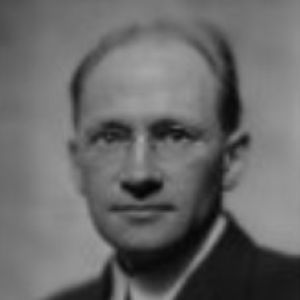
Edwin Björkman was a Swedish-American author, journalist, and translator, born in 1866 in Stockholm, Sweden. He moved to the United States in the late 19th century and became known for his work translating Swedish literature into English, including the plays of August Strindberg and Selma Lagerlöf’s works. Among his notable publications are "Voices of To-morrow" and "Is There Anything New Under the Sun?" in which he explored social and philosophical themes. He also contributed significantly to theater criticism and literary journals during his career, passing away in 1951.
Author's Books:
Sort by:
by:
Edwin Bjorkman
ACT I (A Cloister opening upon a Convent Close planted with groups of trees. The convent church forms the right side of the quadrangle. A brick wall runs along the rear. Fruit trees in blossom appear above the wall. Olof is seated on a stone bench. Before him stand two scholars, who are reading their respective parts out of "The Comedy of Tobit.") First Scholar. Now have our enemies trapped us...
more...
by:
Edwin Bjorkman
This is one of the three plays which Strindberg placed at the head of his dramatic production during the middle ultra-naturalistic period, the other two being "The Father" and "Miss Julia." It is, in many ways, one of the strongest he ever produced. Its rarely excelled unity of construction, its tremendous dramatic tension, and its wonderful psychological analysis combine to make it a...
more...
by:
Edwin Bjorkman
INTRODUCTION Hermann Bahr, the noted playwright and critic, tried one day to explain the spirit of certain Viennese architecture to a German friend, who persisted in saying: "Yes, yes, but always there remains something that I find curiously foreign." At that moment an old-fashioned Spanish state carriage was coming along the street, probably on its way to or from the imperial palace. The...
more...
by:
Edwin Bjorkman
I The oldest part of Stockholm is a little rocky island. Once it was the whole city. Popularly it is still spoken of as "The City." At one end of it stands the huge square-cut pile of the Royal Palace, looking with solemn indifference toward the more modern quarters across the ever hurried waters of the North River. Nearer the centre, and at the very top of the island, lies an open place called...
more...