

Categories
- Antiques & Collectibles 13
- Architecture 36
- Art 48
- Bibles 22
- Biography & Autobiography 815
- Body, Mind & Spirit 145
- Business & Economics 28
- Children's Books 15
- Children's Fiction 12
- Computers 4
- Cooking 94
- Crafts & Hobbies 4
- Drama 346
- Education 63
- Family & Relationships 59
- Fiction 11841
- Foreign Language Study 1
- Games 19
- Gardening 17
- Health & Fitness 35
- History 1382
- House & Home 1
- Humor 147
- Juvenile Fiction 1884
- Juvenile Nonfiction 202
- Language Arts & Disciplines 89
- Law 16
- Literary Collections 687
- Literary Criticism 179
- Mathematics 13
- Medical 43
- Music 40
- Nature 181
- Non-Classifiable 1768
- Performing Arts 7
- Periodicals 1453
- Philosophy 65
- Photography 2
- Poetry 897
- Political Science 205
- Psychology 44
- Reference 154
- Religion 516
- Science 128
- Self-Help 87
- Social Science 83
- Sports & Recreation 34
- Study Aids 3
- Technology & Engineering 60
- Transportation 23
- Travel 463
- True Crime 29
Edward Everett Hale
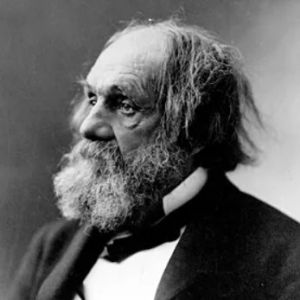
Edward Everett Hale (1822–1909) was an American author, historian, and Unitarian minister best known for his short story "The Man Without a Country" (1863), which became a patriotic classic during the Civil War. A prolific writer, Hale contributed extensively to periodicals and authored numerous books, blending his literary skills with his social activism, notably in promoting educational and philanthropic causes. His legacy includes founding the Lend a Hand Society, an organization dedicated to social welfare and community service.
Author's Books:
Sort by:
ATHEISM AMONG THE PEOPLE. I. I have often asked myself, “Why am I a Republican?—Why am I the partizan of equitable Democracy, organized and established as a good and strong Government?—Why have I a real love of the People—a love always serious, and sometimes even tender?—What has the People done for me? I was not born in the ranks of the People. I was born between the high Aristocracy and...
more...
It may be observed that there are thirty-four of them. They make up a very nice set, or would do so if they belonged together. But, in truth, they live in many regions, not to say countries. None of them are too bright or too stupid, only one of them is really selfish, all but one or two are thoroughly sorry for their faults when they commit them, and all of them who are good for anything think of...
more...
Introduction Love of country is a sentiment so universal that it is only on such rare occasions as called this book into being that there is any need of discussing it or justifying it. There is a perfectly absurd statement by Charles Kingsley, in the preface to one of his books, written fifty years ago, in which he says that, while there can be loyalty to a king or a queen, there cannot be loyalty to...
more...
CHAPTER I. — EARLY LIFE OF COLUMBUS. HIS BIRTH AND BIRTH-PLACE—HIS EARLY EDUCATION—HIS EXPERIENCE AT SEA—HIS MARRIAGE AND RESIDENCE IN LISBON—HIS PLANS FOR THE DISCOVERY OF A WESTWARD PASSAGE TO THE INDIES. Christopher Columbus was born in the Republic of Genoa. The honor of his birth-place has been claimed by many villages in that Republic, and the house in which he was born cannot be now...
more...
THE MAN WITHOUT A COUNTRY. This story was written in the summer of 1863, as a contribution, however humble, towards the formation of a just and true national sentiment, or sentiment of love to the nation. It was at the time when Mr. Vallandigham had been sent across the border. It was my wish, indeed, that the story might be printed before the autumn elections of that year,—as my "testimony"...
more...
The title to this book has met with general opprobrium, except in a few quarters, where it was fortunately regarded as beneath contempt. Colonel Ingham even exacted an explanation by telegraph from the Editor, when he learned from the Governor-General of Northern Siberia what the title was. This explanation the Editor gave in the following note. It is, however, impossible to change the title, as he...
more...