

Categories
- Antiques & Collectibles 13
- Architecture 36
- Art 48
- Bibles 22
- Biography & Autobiography 816
- Body, Mind & Spirit 145
- Business & Economics 30
- Children's Books 15
- Children's Fiction 12
- Computers 4
- Cooking 94
- Crafts & Hobbies 4
- Drama 346
- Education 64
- Family & Relationships 59
- Fiction 11841
- Foreign Language Study 2
- Games 19
- Gardening 17
- Health & Fitness 35
- History 1383
- House & Home 1
- Humor 147
- Juvenile Fiction 1884
- Juvenile Nonfiction 202
- Language Arts & Disciplines 89
- Law 16
- Literary Collections 687
- Literary Criticism 179
- Mathematics 13
- Medical 43
- Music 40
- Nature 181
- Non-Classifiable 1768
- Performing Arts 7
- Periodicals 1453
- Philosophy 65
- Photography 2
- Poetry 897
- Political Science 205
- Psychology 44
- Reference 154
- Religion 516
- Science 128
- Self-Help 87
- Social Science 83
- Sports & Recreation 34
- Study Aids 3
- Technology & Engineering 60
- Transportation 23
- Travel 463
- True Crime 29
Daniel Defoe
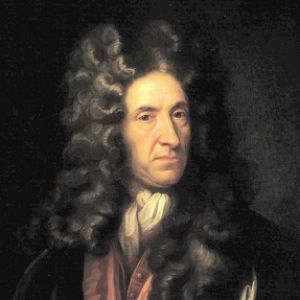
Daniel Defoe (1660-1731) was an English writer, journalist, and pamphleteer, best known for his novel "Robinson Crusoe," which is considered one of the first novels in the English language. His diverse body of work includes adventure stories, political treatises, and economic tracts, reflecting his varied career and interests. Defoe's writing style and themes have had a significant impact on the development of the modern novel and journalism.
Author's Books:
Sort by:
by:
Daniel Defoe
INTRODUCTION. The father of Daniel Defoe was a butcher in the parish of St. Giles's, Cripplegate, London. In this parish, probably, Daniel Defoe was born in 1661, the year after the restoration of Charles II. The boy's parents wished him to become a dissenting minister, and so intrusted his education to a Mr. Morton who kept an academy for the training of nonconformist divines. How long Defoe...
more...

by:
Daniel Defoe
It is not that I see any reason to alter my opinion in any thing I have writ, which occasions this epistle; but I find it necessary for the satisfaction of some persons of honour, as well as wit, to pass a short explication upon it; and tell the world what I mean, or rather, what I do not mean, in some things wherein I find I am liable to be misunderstood. I confess myself something surpris'd to...
more...

by:
Daniel Defoe
THE MEMOIRS OF Alexander Ramkins, &c. I was not above Seventeen Years of Age when the Battle of Gillycranky was fought between the Two Highland Generals, the Lord Viscount Dundee and Mackay. And being then a Stripling at the University of Aberdeen and understanding that several Clans were gathering into a Body in defence of King James III sold my Books and Furniture of my Lodgings, and...
more...
by:
Daniel Defoe
MEMOIRSOF AN English Officer, &c. In the year one Thousand six Hundred seventy two, War being proclaimed with Holland, it was looked upon among Nobility and Gentry, as a Blemish, not to attend the Duke of York aboard the Fleet, who was then declared Admiral. With many others, I, at that Time about twenty Years of Age, enter'd my self a Voluntier on board the London, commanded by Sir Edward...
more...

by:
Daniel Defoe
It was about the beginning of September, 1664, that I, among the rest of my neighbours, heard in ordinary discourse that the plague was returned again in Holland; for it had been very violent there, and particularly at Amsterdam and Rotterdam, in the year 1663, whither, they say, it was brought, some said from Italy, others from the Levant, among some goods which were brought home by their Turkey...
more...

by:
Daniel Defoe
INTRODUCTION Being to direct this discourse to the tradesmen of this nation, it is needful, in order to make the substance of this work and the subject of it agree together, that I should in a few words explain the terms, and tell the reader who it is we understand by the word tradesman, and how he is to be qualified in order to merit the title of complete. This is necessary, because the said term...
more...
by:
Daniel Defoe
APPEAL, &c. I hope the time is come at last when the voice of moderate principles may be heard. Hitherto the noise has been so great, and the prejudices and passions of men so strong, that it had been but in vain to offer at any argument, or for any man to talk of giving a reason for his actions; and this alone has been the cause why, when other men, who, I think, have less to say in their own...
more...

by:
Daniel Defoe
PREFACE The formality of a preface to this little book might have been very well omitted, if it were not to gratify the curiosity of some inquisitive people, who, I foresee, will be apt to make objections against the reality of the narrative. Indeed the public has too often been imposed upon by fictitious stories, and some of a very late date, so that I think myself obliged by the usual respect which...
more...
by:
Daniel Defoe
CHAPTER I—REVISITS ISLAND That homely proverb, used on so many occasions in England, viz. “That what is bred in the bone will not go out of the flesh,” was never more verified than in the story of my Life. Any one would think that after thirty-five years’ affliction, and a variety of unhappy circumstances, which few men, if any, ever went through before, and after near seven years of peace...
more...
by:
Daniel Defoe
A man who has the public good in view, ought not in the least to be alarmed at the tribute of ridicule which scoffers constantly pay to projecting heads. It is the business of a writer, who means well, to go directly forward, without regard to criticism, but to offer his thoughts as they occur; and if in twenty schemes he hits but on one to the purpose, he ought to be excused failing in the nineteen...
more...